
Worried about your teen driving on weekends? This parent-approved checklist covers curfews, passengers, alcohol rules, and safety plans for peace of mind.
It's Friday afternoon, and once again, there's unspoken tension in the air. Your teen, once again, has expressed a desire to drive alone. On a weekend. You're not wrong to feel worried or slightly tight in the chest. Even if you trust them and even if they've done "everything right" so far. It's perfectly understandable; teen or no teen, they're still your baby.
So here's what you need to know. It's true that teen drivers get into more accidents than adults. It's also true they're more at risk if they're driving at night or, you guessed it, on weekends. However, this fact shouldn't scare you so much that you keep saying no forever. They do have to drive on their own, sooner or later. The point we're trying to convey with this uncomfortable fact is that teen drivers need to be encouraged, repeatedly, to follow traffic rules and be careful. Repeatedly.
This checklist can help with that. With it, you can say yes with important guardrails and make them feel normal, not punitive.
On Friday: No Lecture But a Reset
Your kid already knows the rules, so there's no need to lecture them about the basics. Instead, reset the expectations before the car leaves the driveway.
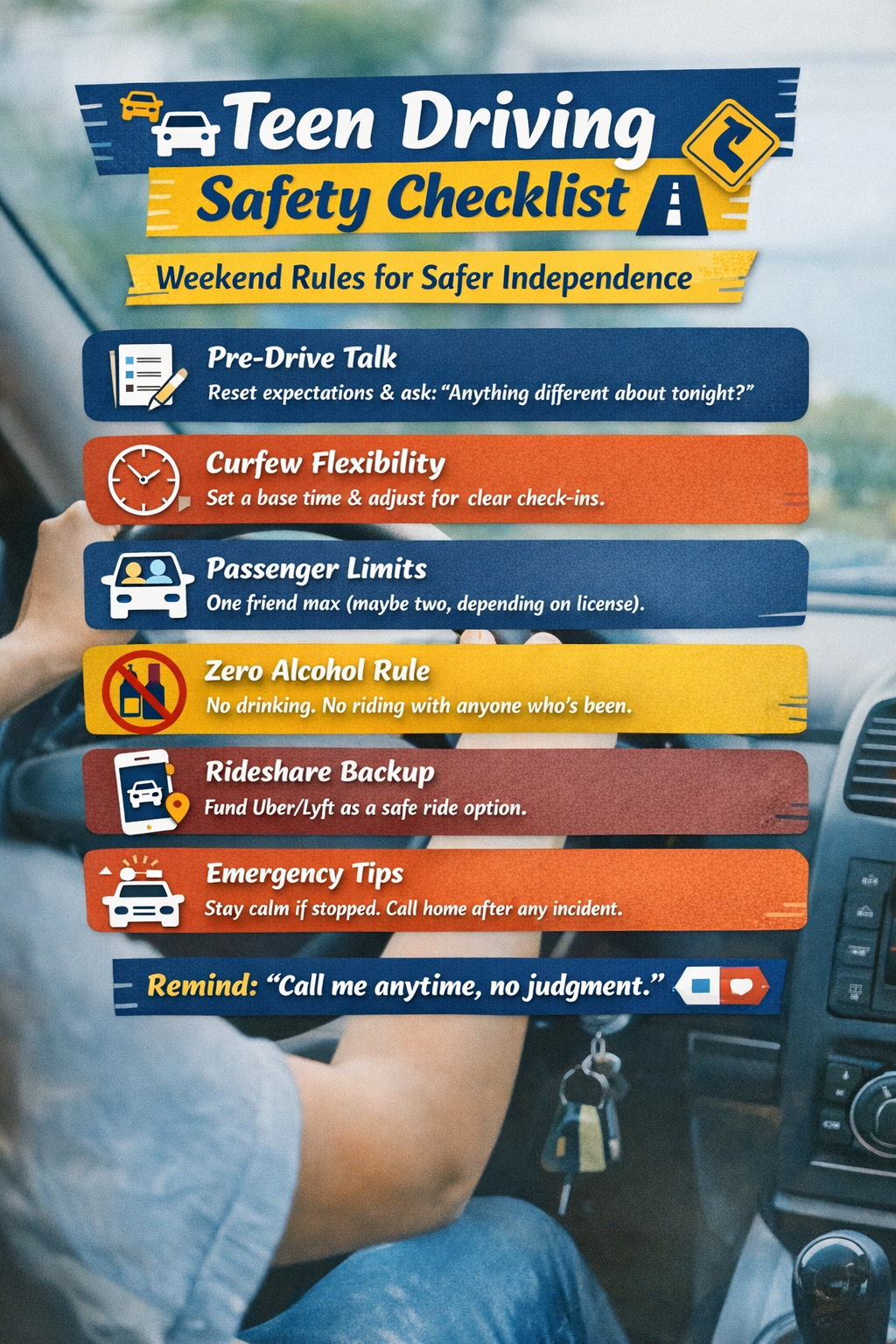
Friday afternoon or early evening is the sweet spot. You keep it short. You cover the non-negotiables. You ask one question that matters: "Anything different about tonight?"
That one question surfaces parties, late events, extra passengers, or emotional stuff they won't volunteer otherwise. And it signals that weekends follow a slightly different playbook (because they do).
Curfew Agreements That Adjust for Reality
Listen, it's understandable if you demand strict curfews. But don't make them static, simply because they tend to not be followed. Instead, be slightly flexible because they hold better.
You set a base time, then outline what earns extensions, such as :
- Clear communication
- Location sharing
- Answering calls
You also outline what shrinks the window:
- Last-minute plan changes
- Extra passengers
- Silence
This can obviously be adjusted to your preferences but it gives you a baseline. Next, you put it in writing somewhere shared. Not as a threat, more like a reference point when emotions run high at 11:47 p.m.
Passenger Limits Aren't About Trust
We mentioned extra passengers as a potential con, and this is for a reason. They raise crash risk.
According to IIHS, the presence of other teens in the car significantly increases the likelihood of a fatal crash for teen drivers. So you cap passengers. One friend. Maybe two (big maybe), depending on age and license stage.
Importantly, you also hold the line even when "everyone else's parents are fine with it" (because chances are, they probably aren't).
A Zero-Alcohol Pledge
Texas and many other states operate under zero-tolerance laws for drivers under 21. Any detectable alcohol can trigger consequences. Not "buzzed." Not "one sip." Any.
In Texas, even a BAC below 0.08 can lead to administrative license suspension for minors. That's why many parents only learn how quickly a routine traffic stop can turn serious after the fact. This League City DWI lawyer page has a great breakdown and explains when you can defend against a DWI.
But of course, the goal is avoid this completely. So your pledge needs three parts:
- No alcohol, period
- No riding with anyone who's been drinking
- No penalty at home for calling for help
That last point matters, so don't skip it.
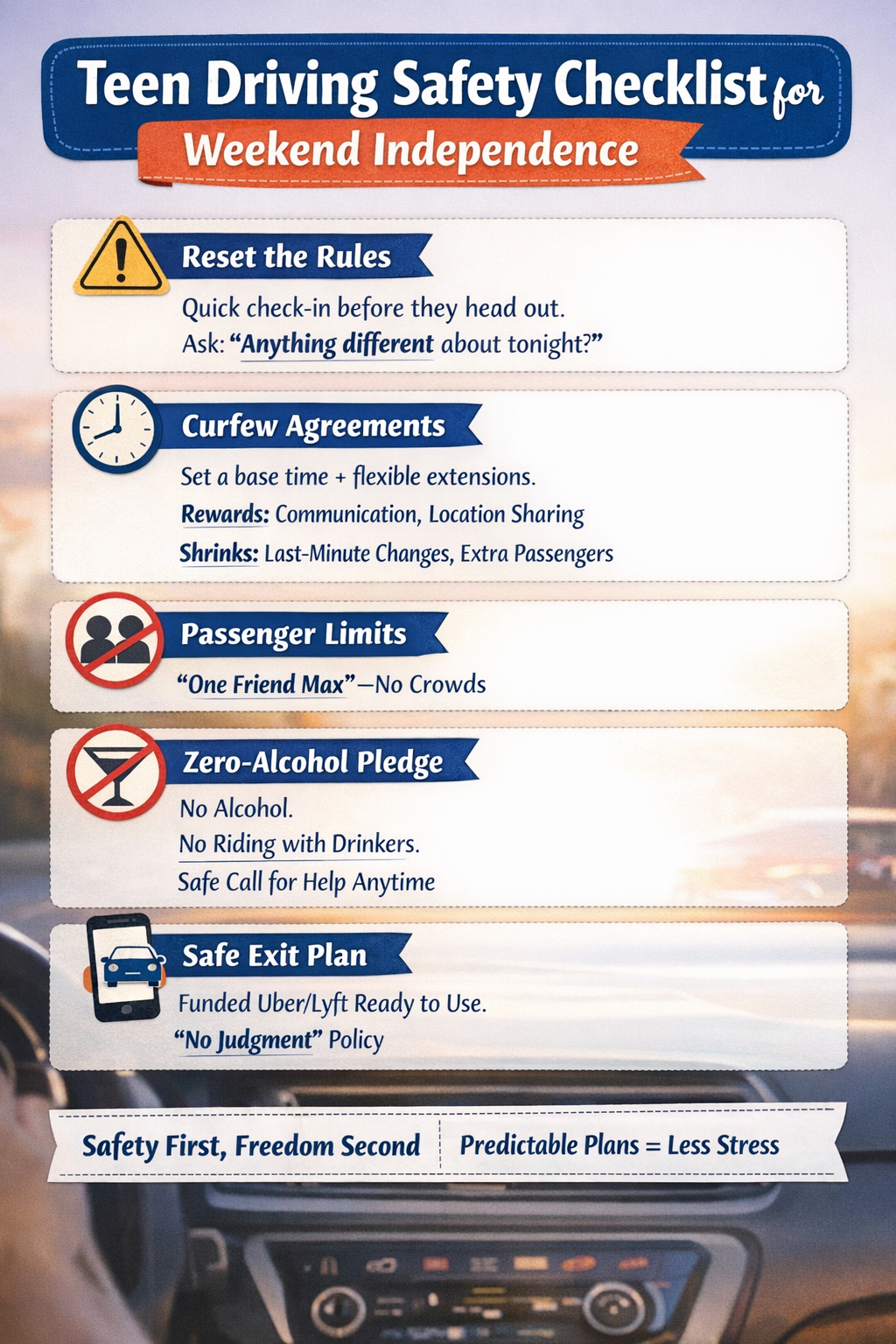
You preload Uber or Lyft. You don't ask for explanations later.
And you tell your teen, clearly, that using it never gets them in trouble.
This works because it removes the internal debate at the worst moment. They don't have to decide whether you'll be mad. The decision is already made.
Some families even set a monthly "ride fund" so it feels planned, not reactive.
Scripts for Declining Drinks
Yes, you need scripts, and no, it's not too much. Why? Because many teens freeze when they don't know what to say or how to refuse a drink without sounding awkward. Peer pressure can feel enormous.
But you can fix that. Here are a few simple lines:
- "I'm driving."
- "My parents track the car."
- "I've got a game tomorrow."
- "I don't want to lose my license."
Short. Boring. Effective.
What to Do If Pulled Over
Stress makes teens talk too much. You coach this in advance.
They keep hands visible. They stay respectful. They answer basic questions. They do not argue roadside. They do not consent to searches without understanding the request.
And they call you afterward, no matter how small the stop feels. The goal is for them to remain composed, not defiant.
Special Events Need Their Own Mini-Plan
Football games, concerts, graduation, birthday parties...These deserve extra structure. Again, it's better to be somewhat flexible, but still clear.
You clarify:
- Who's driving there and back
- Where the car stays
- When check-ins happen
- What happens if plans change
And you repeat the zero-alcohol and rideshare rules, even if it feels redundant. Redundancy works when emotions run high.
The Goal Is Predictability
Weekend driving doesn't fail because teens want to break rules. It fails when expectations blur under pressure.
But when your teen knows exactly what happens in common scenarios, they will make safer calls faster. And you'll worry less; not because risk disappears, but because it's managed.
Final Thoughts on Having A Teen Driving Safety Checklist
Letting your teen drive on their own is one of those parenting milestones that feels equal parts pride and panic. You want them to gain independence, confidence, and real-world experience - but you also want them to be safe every single second they're out of sight. That's exactly where a teen driving safety checklist makes such a difference. It turns emotional, last-minute lectures into calm, predictable conversations and replaces vague worries with clear expectations.
A checklist isn't about control or mistrust. It's about preparation. When teens already know the rules around curfews, passengers, alcohol, and backup plans, they don't have to make high-pressure decisions in the moment. The safer choice becomes the easier choice. And for parents, that predictability brings real peace of mind. You may still worry (because you're a parent), but you'll worry less knowing you've given them tools - not just warnings.
Most importantly, this approach keeps communication open. Your teen learns that safety isn't about punishment; it's about support. When they know they can call you anytime, ask for help, or change plans without fear, they're far more likely to make responsible choices. In the end, a teen driving safety checklist doesn't just protect your child on the road - it strengthens trust, confidence, and the kind of independence that actually lasts.


As Seen on TikTok
Come behind the scenes of our farmhouse build, decor projects, and cozy everyday life. Tap a video to watch, then follow @nikkisplate on TikTok for more.
Watch this video on TikTok
Watch this video on TikTok
Watch this video on TikTok





Leave a Reply