
Not all power strips are created equal! Learn how to choose the right power strip for your home, office, or commercial space, with practical tips for electrical safety, surge protection, cord management, and outlet placement.

Have you ever looked behind your desk or entertainment centre and wondered how you ended up with so many cords and not nearly enough outlets? Between laptops, phone chargers, lamps, and all the little electronics we use every day, keeping everything powered and organized can quickly become a challenge!
Whether you're setting up a cozy home office, organizing your living room, or planning a larger workspace, knowing how to choose a power strip can make a big difference. And while it might seem like a simple purchase, not all power strips are created equal. From outlet spacing and cord length to surge protection and electrical safety, there are a few important things worth considering before buying one.
In this guide, I'm sharing everything you need to know about choosing the right power strip for your home, office, or commercial space. We'll cover the different features to look for, common mistakes to avoid, and practical tips for keeping your cords organized without sacrificing the look of your space. Because a functional home should feel just as beautiful as it is practical!
Start With the Electrical Load and the Physical Space
The first practical question is not how many outlets a power strip has, but what will be connected to it. Every connected device contributes to the total electrical load, and that load must remain within the strip's rated capacity as well as the capacity of the branch circuit serving the wall receptacle. Computers, monitors, printers, chargers, lamps, and networking equipment usually have different power requirements, so counting plugs alone gives an incomplete picture.
High-demand appliances such as portable heaters, large cooking equipment, certain power tools, and other heavy loads require particular caution and may not be suitable for ordinary power strips. Product labeling should be reviewed before installation rather than after a problem develops. The more varied the equipment, the more important it becomes to understand actual electrical demand instead of assuming that every outlet can be filled indiscriminately.
Physical conditions deserve equal attention because a technically adequate strip can still be inconvenient if it does not fit the installation. A compact desk may need a narrow unit that can be mounted beneath the work surface, while a media cabinet may benefit from wider outlet spacing for bulky adapters. Conference tables often require power access that is easy for visitors to reach without creating loose cords across walkways.
Retail fixtures may require discreet mounting so that customers see merchandise rather than electrical hardware. Cord length also matters because excessive cable can create clutter, while a cord that is too short can encourage the unsafe use of improvised extensions. Measurements of the intended location, furniture clearances, plug sizes, and cable paths should therefore be taken before a specific configuration is selected.
Product research is easier when buyers compare electrical specifications alongside the practical details of the installation. A supplier such as BuyRite Electric can be useful when a project involves electrical supplies as well as lighting, tools, or other related components, because those decisions often overlap during a renovation or interior buildout.
Buyers evaluating outlet count, form factor, cord configuration, and application can also review available power strip options as part of that comparison process. The objective should not be to choose the unit with the longest feature list, but to match the product to the expected load and the geometry of the space. That may mean prioritizing a compact format in one room and greater outlet spacing in another. A disciplined comparison at the purchasing stage can prevent awkward installations and unnecessary replacements later.
Understand Ratings, Certification, and Electrical Limits
Electrical ratings provide the basic boundary within which a power strip is intended to operate. Buyers should review the voltage, amperage, wattage, and other specifications printed on the product or provided by the manufacturer. In the United States, many general-purpose strips are designed for common household and office circuits, but that does not mean every connected appliance is appropriate for them. The total load should remain within the manufacturer's stated limits, and local electrical requirements should always take precedence over convenience. A power strip cannot increase the capacity of the branch circuit feeding the receptacle. It simply distributes access to the power already available from that circuit.
Certification and testing information can provide another layer of assurance. Products evaluated by recognized testing organizations are generally preferable to unverified devices whose construction, wiring, and protective components may be difficult to assess. Buyers should look for clear markings rather than relying on packaging language that merely suggests durability or safety. This is especially important when strips will remain energized for long periods or support expensive electronic equipment. Commercial purchasers may also have internal facility standards, insurance requirements, or procurement rules governing acceptable electrical products. Those requirements should be checked before a large order is placed because replacing dozens or hundreds of noncompliant units can be far more expensive than reviewing specifications at the beginning.
The surrounding circuit also deserves consideration. Several power strips connected to receptacles on the same circuit can collectively place substantial demand on that circuit even when each individual strip appears lightly loaded. This situation is common in offices where multiple workstations share a branch circuit or in retail environments where displays and charging equipment are concentrated in one area. Circuit breakers provide important protection, but repeated tripping should be treated as a sign that the load or distribution strategy needs attention. It is not a signal to keep resetting the breaker while adding equipment. When the expected electrical demand approaches the practical limits of the existing installation, a qualified electrician should evaluate whether additional circuits or properly located receptacles are needed.
Decide Whether Surge Protection Is Necessary
A power strip and a surge protector are related products, but the terms should not automatically be treated as interchangeable. A basic power strip primarily expands the number of available receptacles, while a surge-protective device is designed to help limit transient voltage events that could reach connected equipment. Those events can originate from switching activity within an electrical system, utility disturbances, or other sources. Sensitive electronics such as computers, televisions, networking hardware, audio equipment, and certain office devices may benefit from appropriate surge protection. Buyers should therefore determine whether they simply need additional outlets or whether protecting connected electronics is also a priority. The distinction becomes especially important when the value of the connected devices greatly exceeds the cost of the power accessory.
Surge-protection specifications require more attention than a simple label on the package. Depending on the product and market, buyers may encounter ratings related to surge energy handling, clamping or protection voltage, response characteristics, and status indicators. These figures should be interpreted in the context of the manufacturer's documentation rather than as isolated marketing numbers. Higher advertised figures do not necessarily make one product the best fit for every installation. Construction quality, certification, product design, and the electrical environment remain important. For critical systems or high-value equipment, surge protection at the point of use may also form only one part of a broader electrical protection strategy.
Users should also recognize that surge-protective components do not necessarily last indefinitely. Repeated electrical events can degrade certain protective components over time, and some units include indicator lights that show whether surge protection remains functional. Those indicators are valuable only if occupants know what they mean and check them periodically. A strip that continues to supply power may no longer provide the same surge-protection function it originally offered. Facilities teams can address this by tracking installation dates or incorporating inspection into routine maintenance. Residential users can follow the same principle by replacing questionable or damaged products rather than assuming continued electrical output proves that every protective feature remains effective.

Selecting Power Strips for Homes
Residential selection should begin with the way each room is actually used. A home office may require outlets for a computer, monitor, dock, desk lamp, printer, speakers, and several charging adapters, while a living room may need power for a television, streaming equipment, game consoles, lamps, and audio components. Bedrooms increasingly contain chargers, clocks, lighting, air-quality devices, and other small electronics. These combinations favor different outlet layouts and cord lengths, so buying the same strip for every room can be inefficient. A low-profile design might be ideal behind furniture but awkward on a desktop where users frequently connect and disconnect devices. Matching the format to the activity generally produces a cleaner and more usable installation.
Households should pay particular attention to where children, pets, furniture, and foot traffic intersect with electrical cords. A strip left loose on the floor can collect dust, be kicked, or become entangled with cleaning equipment and furniture legs. Heavy furniture should not compress cords, and cables should not be routed through locations where insulation can be damaged. Mounting a strip to an appropriate surface can improve organization when the product is designed for that installation method. Outlet covers and other safeguards may be relevant in households with young children, but they should be used in accordance with the product's instructions. Good residential power management combines electrical suitability with thoughtful placement.
Homeowners should also resist using power strips as substitutes for insufficient permanent wiring. A room that consistently needs several strips may be signaling that the number or location of installed receptacles no longer reflects how the space is used. Renovations, home-office conversions, entertainment installations, and major furniture changes are logical opportunities to reassess permanent electrical access. Adding properly located receptacles can reduce cable clutter and dependence on temporary distribution devices. Such work should comply with applicable electrical codes and be performed by qualified professionals where required. Power strips are useful tools for flexible distribution, but they work best when the underlying electrical system is adequate for the household's needs.
Power Strip Planning for Offices
Office environments require a broader view because the number of users and devices can multiply small design mistakes. A single poorly positioned strip may inconvenience one employee, while a poor specification repeated across 100 workstations can create a facility-wide cable-management problem. Modern desks often support laptops, docking stations, two or more monitors, phone chargers, task lighting, and specialized peripherals. Some teams also use desktop printers, label makers, test equipment, or audiovisual devices that add further demand. Procurement teams should therefore develop a typical equipment profile for each workstation type rather than purchasing solely by outlet count. Standardization can be useful, but it should be based on real workplace requirements.
Accessibility is another important consideration. Employees should be able to connect approved equipment without crawling under desks or stretching cords across circulation paths. Under-desk mounting can keep surfaces clear, while desktop or furniture-integrated power may be better for shared workstations and conference rooms. The correct solution depends on furniture design, maintenance access, and how frequently devices are plugged in and removed. Generous spacing can be important when transformers or charging bricks occupy adjacent outlets. USB or other integrated charging ports may reduce the need for separate adapters, although buyers should evaluate their output specifications and long-term usefulness before treating them as essential.
Facilities managers should also think about consistency, labeling, and replacement. A standardized range of approved products can simplify purchasing and reduce the number of unfamiliar electrical devices entering the workplace. Asset or installation records can be particularly useful in large offices where equipment moves between departments over time. Damaged cords, cracked housings, loose receptacles, discoloration, or unreliable switches should prompt removal from service rather than improvised repair. Employee policies can clarify whether personally supplied strips are allowed and what standards they must meet. The objective is to create an environment where access to power is convenient enough that workers are not tempted to create unsafe workarounds.
Commercial Interiors Require Application-Specific Choices
Commercial interiors often impose tougher operational demands than homes or conventional offices. Retail stores, restaurants, hotels, studios, healthcare support areas, classrooms, workshops, and public-facing facilities can expose electrical equipment to frequent handling, cleaning, rearrangement, and longer operating hours. The appropriate product for a back-office computer station may therefore be different from one used near a sales counter or inside a display fixture. Designers and facility operators should consider who will interact with the strip, how often plugs will be changed, and whether the installation is visible to customers. Environmental factors such as dust, moisture, heat, and mechanical contact can also influence suitability. Products should be selected for the specific environment rather than assumed to be universal.
Retail and hospitality projects often place special importance on appearance and cable concealment. Electrical access may need to support point-of-sale systems, digital displays, decorative lighting, chargers, and operational equipment without undermining the design of the space. This creates a tension between accessibility and concealment because a hidden strip can be difficult to maintain while a visible one may appear unfinished. Mounting locations should allow reasonable inspection and replacement while keeping cords away from customer pathways. Furniture, millwork, and equipment layouts should ideally include cable routes and access points from the beginning. Retrofitting electrical distribution after fixtures are installed is usually more complicated and visually disruptive.
Commercial operators should also consider the consequences of downtime. If a strip serves several devices at a checkout station, service desk, communications area, or display system, one failure can affect multiple functions at once. Dividing critical equipment across appropriate circuits and distribution points may reduce that concentration of risk. Some applications may warrant more robust equipment or professionally installed power-distribution solutions rather than ordinary consumer strips. Local codes, landlord requirements, occupational safety policies, and industry-specific standards may impose additional restrictions. When the installation is permanent, high-load, exposed to unusual conditions, or operationally critical, electrical professionals should be involved in the planning process.
Outlet Layout, Cord Length, and Mounting Matter More Than They Appear
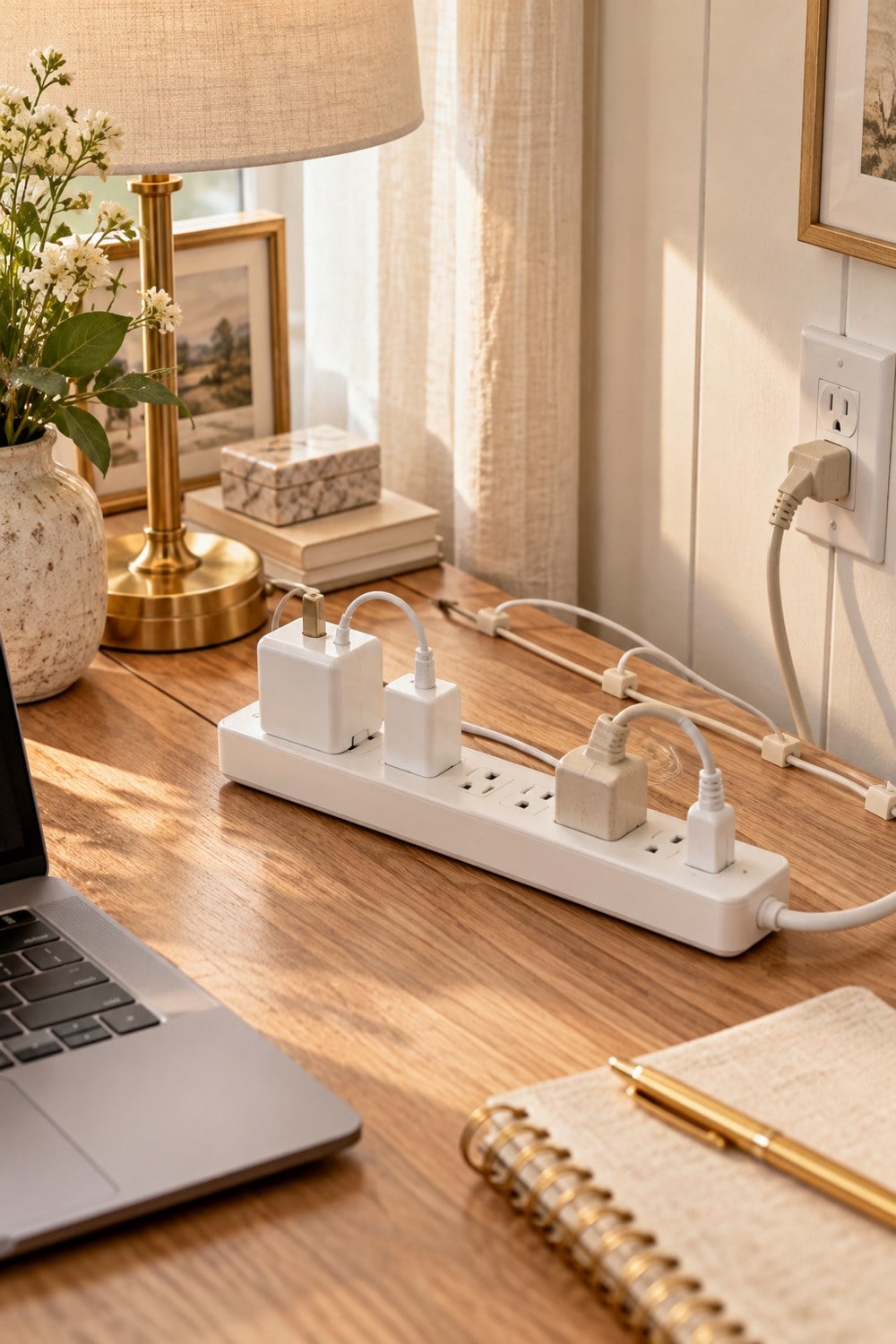
Outlet count is easy to compare, but outlet geometry often determines whether all of those receptacles can actually be used. Large adapters can block neighboring positions on tightly spaced strips, effectively reducing capacity even though the electrical rating has not changed. Rotating outlets, wider spacing, or mixed layouts can improve compatibility with transformers and chargers. Some strips also orient receptacles sideways to reduce cable interference in confined spaces. Buyers should look at the shape of the plugs they expect to use rather than judging the unit by the number printed on the package. A six-outlet design that accommodates every plug may be more useful than a larger model with an inconvenient layout.
Cord length should be chosen with similar care. A longer cord provides flexibility, but excess length can create coils, clutter, and additional cable-management work. A short cord can encourage stretching across furniture or placing the strip in a location that is difficult to reach. The better approach is to measure the intended route from the wall receptacle to the installation point and allow only the practical margin needed for placement and maintenance. Cords should remain visible enough to inspect and should not be pinched by doors, furniture, or sharp edges. Routing decisions should also keep cables out of walking paths whenever possible.
Mounting features can significantly improve usability in offices and commercial spaces. Keyhole slots, brackets, clamps, or other manufacturer-approved mounting methods can move a strip from the floor to a desk, wall, equipment rack, or piece of furniture. This can reduce clutter and make outlets easier to reach while also simplifying cleaning around the installation. The mounting method should support the weight of the strip and the pull created by attached cords without damaging the product. Users should follow the manufacturer's instructions rather than drilling into housings or modifying equipment that was not designed for alteration. A well-mounted strip feels like part of the interior infrastructure instead of a temporary accessory dropped into the room.
USB Charging and Modern Device Requirements
Integrated charging ports have become common as phones, tablets, headphones, and other rechargeable devices occupy more desks and counters. Their presence can free conventional receptacles that would otherwise be occupied by separate charging blocks. That advantage is especially useful in shared spaces such as conference rooms, hotel rooms, reception areas, and family charging stations. However, not every integrated charging port provides the same output or supports the same charging protocols. A port that adequately charges a phone may be less suitable for a tablet or computer that expects higher power delivery. Buyers should therefore review output specifications instead of assuming that the presence of a USB connector guarantees optimal charging performance.
Connector standards also change more quickly than conventional receptacles. A power strip may remain physically usable for many years, while the charging technology incorporated into it can become dated much sooner. This creates a purchasing tradeoff between integration and replaceability. Facilities with rapidly changing technology fleets may prefer conventional outlets paired with replaceable chargers, while environments prioritizing convenience may benefit from integrated ports. Some buyers may choose a combination that provides both traditional receptacles and current charging connections. The right balance depends on replacement cycles, user needs, and the types of devices expected in the space.
Charging requirements can also affect placement. Users are more likely to benefit from built-in charging ports when those ports are accessible on a desk, table, nightstand, or public-facing counter. Ports hidden behind furniture may offer little convenience compared with ordinary outlets in the same location. Shared environments should also provide enough physical room for several people to connect cables without crowding one another. Cable lengths and connector orientation can influence whether the arrangement remains orderly during busy periods. Integrated charging should therefore be evaluated as part of the complete user experience, not merely as another feature on a specification sheet.
Procurement, Inspection, and Long-Term Replacement
Power strip purchasing should include a lifecycle perspective, particularly for organizations managing many locations or employees. Acquisition cost is visible immediately, but installation quality, durability, replacement frequency, maintenance time, and equipment downtime can create larger costs over several years. A slightly more expensive product may be economically preferable if it has the appropriate certification, construction, mounting features, and configuration for repeated daily use. Conversely, paying for specialized features that the organization never uses provides little value. Procurement teams can improve consistency by creating approved product categories for workstations, meeting rooms, public areas, and specialized applications. This reduces ad hoc buying while still allowing different environments to receive appropriate equipment.
Inspection is an equally important part of the lifecycle. Users and maintenance teams should look for damaged plugs, frayed insulation, cracked housings, loose receptacles, signs of overheating, unusual odors, or switches that no longer operate correctly. Products showing physical damage should be removed from service rather than kept in use until failure becomes unavoidable. Surge-protective models may require additional checks of status indicators or replacement guidance provided by the manufacturer. Commercial facilities can incorporate these observations into existing safety walks or maintenance programs. Regular inspection is relatively simple and can prevent minor wear from turning into a larger operational problem.
Replacement policies should reflect both physical condition and changes in how a space is used. A strip originally installed for two monitors and a laptop may no longer be appropriate if the workstation later adds high-demand equipment. A retail fixture that moves to a different floor location may encounter a completely different cable route or circuit arrangement.
Renovations and technology refreshes therefore provide natural opportunities to review power distribution rather than automatically reinstalling old equipment. The same logic applies at home when rooms are converted into offices, entertainment areas, workshops, or charging stations. Selecting power strips as part of a broader electrical plan creates safer, cleaner, and more adaptable interiors while helping users avoid the recurring problems caused by treating power access as an afterthought.


As Seen on TikTok
Come behind the scenes of our farmhouse build, decor projects, and cozy everyday life. Tap a video to watch, then follow @nikkisplate on TikTok for more.
Watch this video on TikTok
Watch this video on TikTok
Watch this video on TikTok





Leave a Reply