
Feeling overwhelmed by meals, cleaning, schedules, and everyday family decisions? Learn how AI for home routines can help simplify meal planning, cleaning rhythms, reminders, and household organization in a realistic, flexible way.
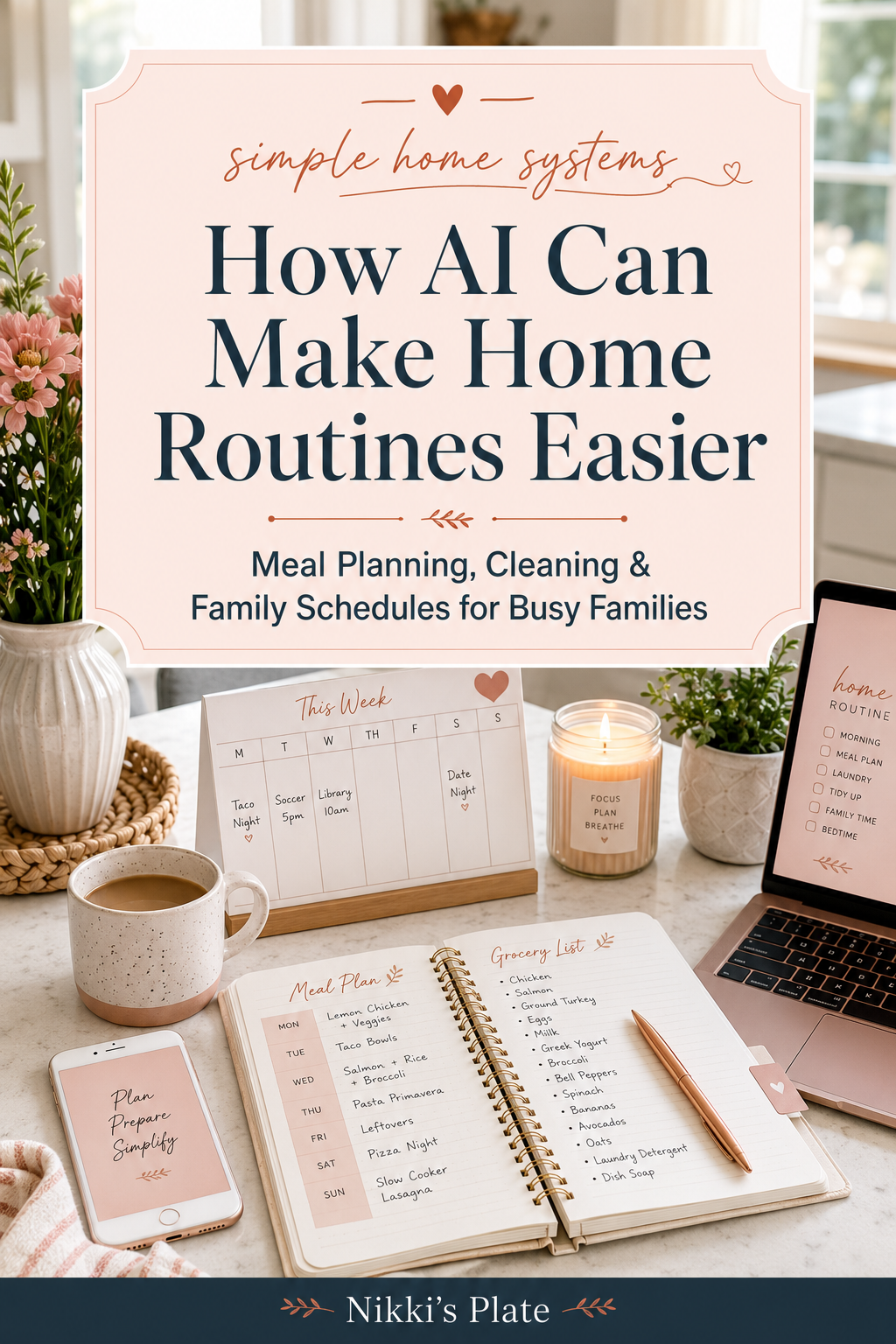
Most families are not overwhelmed by major life events. They are overwhelmed by 200 tiny decisions repeated every week. What should we eat tonight? Did we buy enough snacks? Who has practice on Thursday? When was the last time the bedding was washed? Is there anything easy we can make with what is already in the fridge? These questions are small on their own, but together they create the background noise of home life.
That is why home routines can feel harder than they look. The work is not only doing the laundry, cooking dinner, cleaning the kitchen, or keeping track of appointments. The harder part is remembering, deciding, adjusting, and starting again when the week changes.
Artificial intelligence is beginning to help with this quieter side of home life. Not in a futuristic or complicated way, but in a practical one. Instead of using AI only for work, research, or productivity, more people are starting to use personal AI tools to manage the everyday routines that keep a household running.
A tool like Macaron fits into this shift because it is designed less like a rigid planner and more like a personal AI companion that can help turn repeated needs into small, usable systems. For a family, that might mean a grocery list that reflects real eating habits, a dinner plan that adjusts around busy evenings, or a lightweight meal planning app that makes weekly food decisions feel less scattered. It can also help shape cleaning routines, family reminders, and small household plans that do not fall apart the moment someone gets sick or work runs late.
The point is not to make home life perfectly optimized. Most families do not need another system that makes them feel behind. They need support that makes the next decision easier.
Why Home Routines Feel So Hard to Maintain
Most people do not struggle with routines because they are careless or disorganized. They struggle because home life changes constantly.
A child wakes up tired. A meeting runs late. Someone forgets to buy eggs. Guests are coming on Saturday. The laundry pile grows faster than expected. The dinner that sounded good on Sunday no longer makes sense by Wednesday.
Traditional planning tools can help, but they often assume life will follow the plan. A printed chore chart, calendar, or meal plan works well until something shifts. Then the family has to rebuild the plan manually, or quietly abandon it.
This is where AI can be useful. A flexible assistant can help a household adjust instead of starting over. If a planned dinner no longer works, it can suggest a simpler option. If there are only 20 minutes before guests arrive, it can prioritize the tasks that make the home feel calmer fastest. If a family knows Thursdays are always busy, it can help plan around that pattern.
Macaron is useful in this kind of situation because it can support routines as living systems rather than fixed checklists. A family can come back to the same rhythm again and again, but still adapt it when real life interrupts.
That flexibility matters because home routines are emotional as well as practical. A messy kitchen, forgotten appointment, or unplanned dinner can make people feel behind before the day is even over. AI cannot remove every responsibility, but it can reduce the pressure of deciding everything from scratch.
Meal Planning Without the Weekly Blank Page
Meal planning is one of the clearest examples of how AI can support home routines. Many families want to eat well, spend less, and avoid last-minute takeout, but deciding what to cook every week takes more energy than people expect.
The hardest part is often the blank page. A family may know they need five dinners, two quick meals, one easy breakfast option, and a grocery list, but turning that into a plan still takes time.
AI can make this easier by working with real constraints. It can suggest meals based on dietary preferences, ingredients already available, cooking time, budget, and the number of people eating. It can also help reuse leftovers, simplify grocery lists, or suggest lower-effort meals for the busiest nights.
For example, instead of asking, "What should we eat this week?" a family can start with a more realistic prompt: "We need four dinners. Tuesday and Thursday have to be quick. We already have rice, chicken, eggs, spinach, and pasta. One person does not like spicy food."
That gives the AI something practical to work with.
Macaron can make this feel more personal over time because the planning does not have to begin from zero every week. It can reflect the meals a household tends to repeat, the ingredients people avoid, the nights that are usually rushed, and the kinds of routines that actually last. That makes it feel less like a generic meal planner and more like support for the way a family already lives.
The goal is not to create a perfect menu. It is to make dinner less stressful at the moment when everyone is tired and hungry.
Making Cleaning Routines More Realistic
Cleaning routines often fail because they are too ambitious. A long weekend cleaning list may look responsible, but after a busy week it can feel impossible.
A better approach is to make cleaning smaller and more flexible. AI can help divide tasks into daily, weekly, and occasional routines. It can suggest quick resets for weekdays and deeper tasks for days with more time. It can also help prioritize what matters most when the family cannot do everything.
A realistic weekly rhythm might include a quick kitchen reset on Monday, laundry and bedding midweek, floors before the weekend, and one deeper task when time allows. If the week changes, the routine can shift instead of collapsing.
This is where AI is more helpful than a static checklist. A checklist tells people what they failed to complete. A flexible routine helps them decide what still matters today.
If guests are arriving in an hour, AI can suggest the few tasks that create the most visible difference. If there are only ten minutes, it can recommend clearing the entryway, wiping counters, and resetting the living room instead of trying to clean the whole house.
A home does not need to be perfect to feel peaceful. It needs routines that work with real life.
Reducing the Mental Load of Family Schedules
Family routines are not only about meals and cleaning. They also include appointments, school events, birthdays, bills, errands, medications, pet care, seasonal tasks, and the small reminders that keep everything moving.
The difficult part is not always doing these things. It is remembering them at the right time.
A reminder app can help if someone already knows exactly what to enter. But many family schedules are more connected than that. If soccer practice runs late on Thursday, dinner needs to be easier. If there is a school event in the morning, bags should be packed the night before. If weekends tend to disappear into errands, the family may need to protect one slower block of time.
This is where a personal AI assistant can feel different from a basic reminder tool. It can help connect small details across the week.
Macaron, for example, can help a family think through routines as connected patterns: a busy evening, a school deadline, a grocery need, a cleaning task, and a meal plan do not have to sit in separate mental piles. They can be organized into a more manageable rhythm.
That kind of support can reduce the invisible planning work that often falls on one person in the household. It does not make family life effortless, but it can make the load easier to see and share.
Helping Children Participate in Routines
AI can also help families create routines children can understand and follow. A chore list written for adults may not work for kids. Children often need smaller steps, simple language, and clear expectations.
Instead of saying "clean your room," a parent can use AI to break the task into something more teachable:
Put dirty clothes in the basket.
Put toys in their bins.
Place books on the shelf.
Throw away trash.
Make the bed.
That kind of structure helps children participate without needing repeated instructions every day. It also turns routines into learning moments rather than daily arguments.
AI can help with morning checklists, bedtime routines, homework blocks, reading time, pet care, and age-appropriate chores. For families with complex school or after-school schedules, it can help create a rhythm that is easier for children to follow.
The goal is not to control every minute of the day. It is to make expectations clear enough that children can build confidence and independence.
Creating More Intentional Home Habits
A home routine should not only be about finishing tasks. It should also support the kind of life people want inside their home.
For one family, that may mean eating together more often. For another, it may mean calmer evenings, less clutter, slower Sundays, fewer rushed mornings, or more time outside. These goals are simple, but they are easy to lose inside daily logistics.
AI can help turn broad intentions into smaller actions. If someone says, "I want our evenings to feel calmer," AI can suggest a realistic evening reset. If the goal is less screen time, it can offer simple alternatives. If the family wants to cook at home more often, it can start with two easy meals instead of a full weekly overhaul.
Macaron fits naturally here because it can help translate a vague wish into a small routine. A family does not need to say, "Create a perfect household system." They can start with something more human: "Help us make weekday evenings feel less rushed," or "Help us plan a Sunday reset that does not feel like work."
That kind of support matters because the best routines are not copied from someone else's life. They are shaped around the people who actually have to live with them.
Avoiding Over-Optimization
There is one important caution: home should not become another place where people feel pressured to optimize every second.
AI should make home life feel lighter, not more controlled. A weekly meal plan should still allow takeout. A cleaning routine should still allow skipped days. A family schedule should still leave room for rest, surprise, and doing nothing.
The most helpful AI tools do not turn family life into a productivity contest. They help people remember what matters, simplify repeated decisions, and create breathing room.
That means the best home routines should stay flexible. If a plan creates more guilt than relief, it is probably too rigid. If a tool makes every small task feel like a performance metric, it is not serving the household well.
AI is most useful when it supports human judgment instead of replacing it.
Simple Ways to Start Using AI at Home
Families do not need to rebuild their entire household system at once. In fact, it is usually better to start with the one routine that creates the most stress.
If dinner is the hardest part of the day, start with meal planning. If mornings are chaotic, create a simple morning checklist. If weekends disappear into errands, use AI to plan a more balanced Saturday. If cleaning feels overwhelming, ask for a 15-minute daily reset instead of a full-house plan.
Small improvements often make the biggest difference because they reduce repeated stress.
A good first step is to choose one recurring question and let AI help answer it before the week gets busy. That question might be "What are we eating?" or "What has to happen tomorrow?" or "What can we do in 20 minutes to make the house feel better?"
Macaron can be helpful because it allows families to approach these needs conversationally. They do not need to build a complicated system first. They can begin with one routine, adjust it, and let it become more useful over time.
A More Helpful Kind of Home Technology
Smart home technology has often focused on devices: speakers, lights, thermostats, cameras, and appliances. These tools can be useful, but they do not always solve the deeper challenge of managing daily life.
Personal AI adds a different layer. It helps with planning, remembering, adjusting, and organizing. It supports the invisible work that keeps a home running, which is often where families feel the most pressure.
When used well, AI does not make a home less personal. It can make space for more personal moments by reducing the repetitive planning that gets in the way. Less time wondering what to cook can mean more time sitting down together. Less mental clutter can mean more patience. Better routines can mean fewer last-minute scrambles.
Home routines do not have to be perfect to be effective. They just have to be clear enough, flexible enough, and kind enough to support real life.
Tools like Macaron can help with that - not by taking over the home, but by making the everyday parts of home life a little easier to hold.


As Seen on TikTok
Come behind the scenes of our farmhouse build, decor projects, and cozy everyday life. Tap a video to watch, then follow @nikkisplate on TikTok for more.
Watch this video on TikTok
Watch this video on TikTok
Watch this video on TikTok





Leave a Reply