
Rain-smart exterior fixes can help keep your home drier through every season. Learn how gutters, rooflines, landscaping, sealed trim, porches, and walkways all work together to protect your home from moisture while still keeping your exterior beautiful and welcoming.

A home exterior has a lot to handle in a four-season climate. In Ontario, that can mean snowmelt, spring rain, humid summers, fallen leaves, and freezing temperatures. In Central Pennsylvania towns like Hershey, homes face a similar mix of summer storms, damp autumn weather, winter freeze-thaw cycles, and rooflines that collect debris after windy days.
Rain problems often start small. A damp patch near the foundation, an overflowing gutter, peeling trim paint, or a worn roof edge can all point to moisture moving where it should not. Over time, those details can lead to damage inside and outside the home.
A rain-smart exterior can still look warm, polished, and welcoming. Tidy gutters, healthy landscaping, sealed trim, clean siding, and practical entryways all support curb appeal while helping water move away from the house.
Here are seven exterior fixes that can help keep a home drier through rain, snowmelt, and seasonal storms.
1. Start With the Path Water Takes
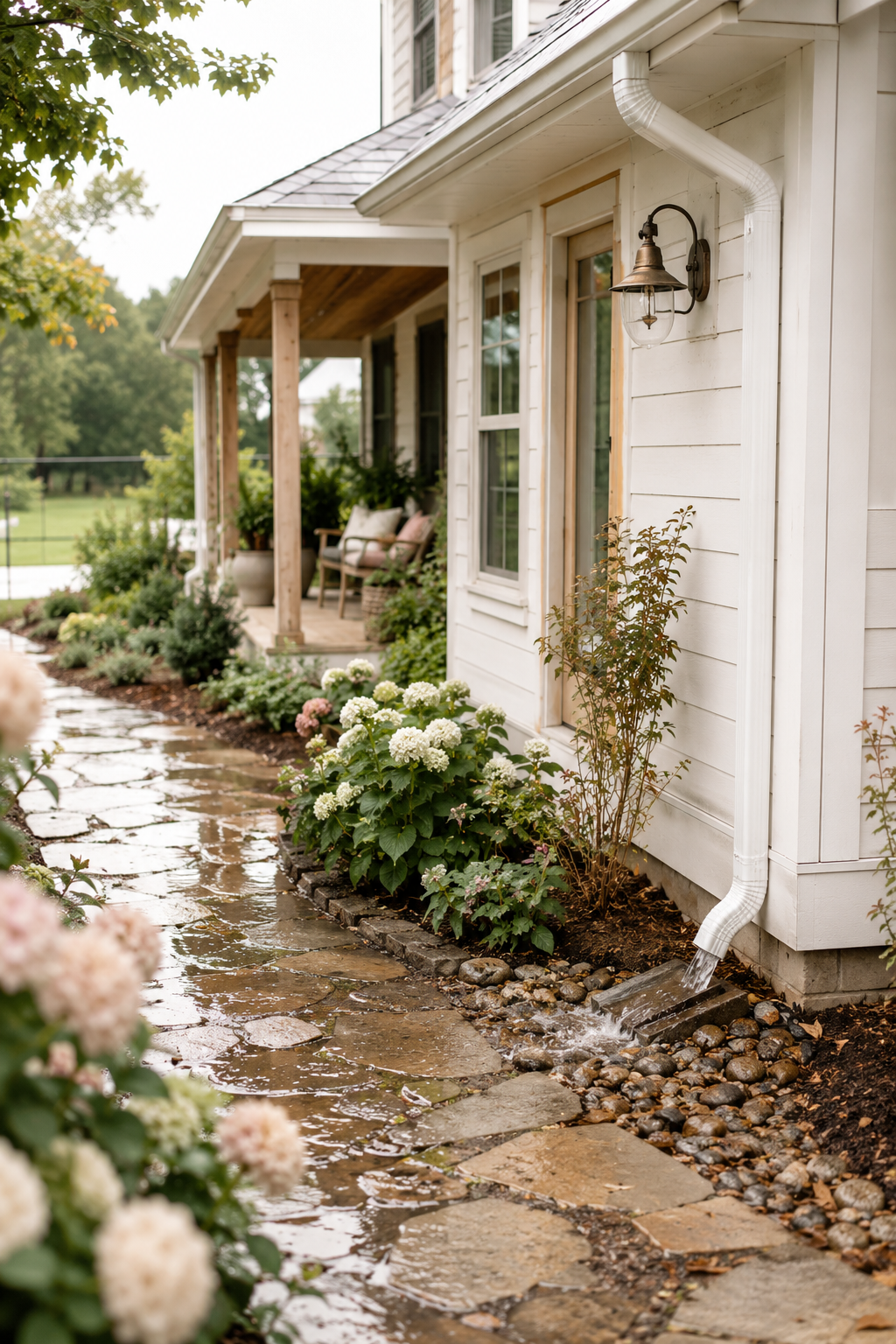
Before changing anything outside, watch where water travels during steady rain. It usually starts at the roof, runs into gutters, moves through downspouts, then lands near the foundation, walkway, garden bed, driveway, or lawn. If that path is interrupted, moisture can collect in places that should stay dry.
Walk around the home after rainfall and look for puddles, muddy patches, dripping corners, or mulch that has washed out of place. A downspout that empties too close to the wall can send water directly into the soil beside the foundation. A sagging gutter can spill rain over the edge and soak siding, windows, or porch steps.
This applies to both Canadian and Pennsylvania homes. A house in Ontario may see heavy spring runoff as snow melts, while a home in Hershey may deal with stormwater after humid summer thunderstorms. The climate details differ, but the goal is the same: move water away from vulnerable areas as smoothly as possible.
2. Check the Roofline Before Small Leaks Travel

The roofline is one of the first places to inspect when thinking about moisture protection. Shingles, flashing, valleys, vents, and roof edges work together to guide rain away from the interior. If one part is loose, cracked, clogged, or aging, water can find a path under the surface.
Look for lifted shingles, missing granules, dark streaks, damaged flashing, or areas where leaves and branches collect. Check the places where roof sections meet, since valleys often handle more runoff during storms. Around chimneys, skylights, and vent pipes, flashing should sit securely with no obvious gaps.
This step matters in regions with changing temperatures. In Ontario, snow and ice can sit along roof edges before melting. In Central Pennsylvania, including Hershey, roofs may handle summer storms, fall leaves, wet winter weather, and freeze-thaw movement. When recurring leaks, storm damage, or visible roofline wear go beyond a basic visual check, contacting a roofing contractor in Hershey PA can make sense for a more detailed inspection.
Roof problems are sometimes hard to trace from the ground. A ceiling stain may appear in one room even though the entry point is several feet away. Early attention helps the rest of the exterior work as intended.
3. Make Gutters and Downspouts Work as a System

Gutters are easy to overlook because they sit above eye level, but they play a major role in keeping the exterior dry. When clean, properly sloped, and securely attached, they collect roof runoff and guide it toward downspouts. When clogged or damaged, water can spill over the sides and soak the areas below.
Leaves, pine needles, seed pods, and roof grit can build up quickly, especially in wooded neighborhoods or during fall. If water pours over one section during rain, the gutter may be full, the slope may be off, or the downspout may be blocked.
Downspouts should carry water far enough from the home that it does not pool near the foundation. Extensions, splash blocks, and proper grading can help direct rainwater away from the home, reducing the chance of damp soil sitting against exterior walls.
Seasonal checks make gutter care easier. A spring inspection can catch winter damage, while a late fall cleaning removes leaves before freezing temperatures arrive. After a heavy storm, a quick look can reveal loose brackets, overflowing corners, or areas where water is not moving as planned.
4. Use Landscaping to Guide Water, Not Trap It

Landscaping can make a home feel polished and inviting, but it should also help water move in the right direction. Garden beds, mulch, shrubs, and lawn grading all influence how moisture behaves around the house.
Start with the slope of the soil. Ideally, the ground should angle away from the foundation so rainwater naturally moves outward. If soil has settled near the house, water may collect close to the wall. This is common around older homes, newly renovated areas, or spots where garden beds have changed over time.
Mulch also needs careful placement. A thick layer can help retain moisture for plants, but too much against siding or trim can keep those materials damp. Leave space near wood trim, basement windows, porch posts, and exterior walls.
Plants should be spaced with airflow in mind. Dense shrubs pressed against siding can trap moisture after rain, leading to mildew, staining, or faster wear on exterior finishes. Choose plantings that allow the wall to breathe and make maintenance easier.
In climates with snow and rain, landscaping needs to work through multiple seasons. Ontario homes may need to manage snow piles and spring melt, while Hershey-area homes may need to handle storm runoff and leaf buildup.
5. Seal the Small Gaps Around Windows, Doors, and Trim

Water often enters through small openings rather than obvious damage. Gaps around windows, doors, trim boards, vents, and exterior fixtures can let moisture seep behind surfaces. Once water gets behind siding or trim, it may not dry quickly.
Check caulking around window frames and door trim. Cracked, shrunken, or missing caulk should be removed and replaced with an exterior-grade sealant suited to the material. Pay special attention to upper trim pieces, since rain can sit along horizontal ledges and work into small cracks.
Paint condition also matters. Peeling or bubbling paint may signal moisture in the surface. Wood trim should stay sealed so it does not absorb water during storms. If a section feels soft, looks swollen, or flakes easily, it may need more than a touch-up.
Entry doors deserve extra attention because they handle frequent use. Thresholds, weatherstripping, and lower trim can wear down over time. If rain blows toward the entry during storms, those small gaps can let water creep inside.
6. Choose Pretty Exterior Updates That Also Protect

Some exterior improvements combine style with function. A covered entry, refreshed siding, new trim, updated lighting, or better porch materials can improve curb appeal while helping the home stand up to wet weather.
When planning exterior upgrades, think about how each change will perform during rain, snow, and temperature swings. A charming front porch should drain well. A new walkway should avoid sending water toward the foundation. Fresh siding should be maintained so it sheds water properly. Decorative shutters, window boxes, and trim details should not create places where moisture sits for long periods.
Materials matter too. Wood can look warm and classic, but it needs sealing and inspection. Vinyl and fiber cement can be easier to maintain, though joints, seams, and edges still need attention. Metal accents can be durable when installed so water does not collect behind them.
The best rain-smart design choices feel intentional. A deeper porch overhang can help protect the entry. A better path layout can reduce puddling near steps. Updated trim can replace worn areas that were starting to absorb moisture.
7. Keep Walkways, Porches, and Entryways Drain-Friendly

The areas people use every day are often where water causes frustration. Walkways, porches, steps, and entryways can collect puddles if they are uneven, poorly sloped, or blocked by debris. In colder regions, standing water can also turn into slippery ice.
After rain, check whether water sits near the front door, garage entry, patio steps, or porch corners. A small puddle may seem harmless, but repeated moisture can stain concrete, wear down wood, loosen pavers, or create slick surfaces. If water sits near a threshold, it can also increase the chance of moisture entering the home.
Porch boards and steps should allow water to drain. Outdoor rugs and mats should dry quickly and should not stay soaked against wood or painted surfaces. Planters near doors need proper drainage so they do not overflow onto trim, siding, or porch flooring.
Walkways should also guide water safely. If a path slopes toward the house, water may travel back to the foundation. Uneven pavers can create small basins where rain collects. A simple adjustment, repair, or drainage improvement can make the entry safer and cleaner.
This matters in both Ontario winters and Central Pennsylvania cold snaps. Melted snow can refreeze on steps, and rain can turn shaded walkways slick. A dry entry is more comfortable for guests and better for the home's exterior materials.
Final Thoughts on Rain-Smart Exterior Fixes
Rain-smart exterior care starts with noticing how a home handles water through every season. Gutters, rooflines, siding, landscaping, windows, porches, and walkways all play a role, and one weak spot can affect nearby areas.
For homeowners in four-season places, from Ontario communities to Central Pennsylvania towns like Hershey, moisture protection should be part of exterior planning. A home may face snowmelt in spring, thunderstorms in summer, leaves in fall, and freezing conditions in winter. Each season leaves clues about where water moves well and where it needs better direction.
The most effective fixes are often simple. Clear the gutters, watch for puddles, keep trim sealed, give shrubs room to breathe, check the roofline after storms, and choose exterior updates that perform well in wet weather.
A drier home can still feel warm, stylish, and welcoming. With the right rain-smart habits, curb appeal and protection can work together all year.

As Seen on TikTok
Come behind the scenes of our farmhouse build, decor projects, and cozy everyday life. Tap a video to watch, then follow @nikkisplate on TikTok for more.
Watch this video on TikTok
Watch this video on TikTok
Watch this video on TikTok




Leave a Reply