
Looking for Maileg mouse decor ideas? Style these charming little mice on cozy shelves, seasonal tablescapes, entryway baskets, and Christmas displays.
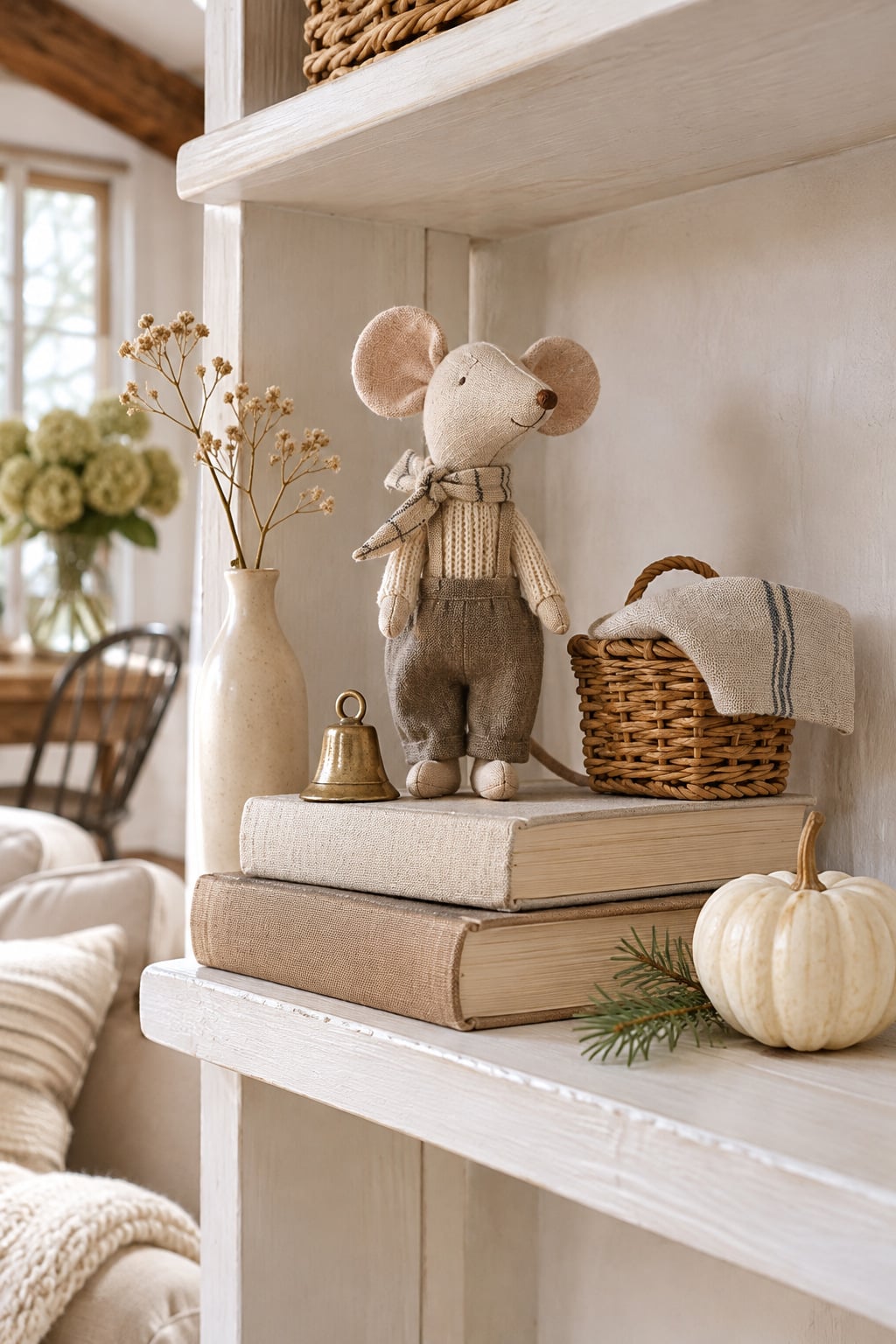
That little linen mouse has been sitting on your kid's dresser for a month, and you keep catching yourself smiling at it. Here's the thing: you don't have to hide it when guests come over. A Maileg mouse can live on a shelf in your living room and look completely intentional, the kind of small detail people lean in to notice.
I've been arranging these tiny characters around my own house for a few seasons now, and I've landed on a simple method. It's not about buying more. It's about giving the mouse a spot that makes sense with what's already on your mantel, your kitchen counter, or that empty corner in the entryway. Once you see them as decor pieces first and toys second, the whole thing clicks.
Below is the way I place them, season by season, plus a few mistakes I made early on so you can skip them.
Why do these little mice work so well as decor?
Scale. A Maileg mouse is small enough to sit inside a mason jar, on a stack of books, or tucked into a basket of pinecones, and that size lets it disappear into a vignette instead of dominating it. Big stuffed animals fight for attention. These don't. They reward the person who looks closer.
There's also a long tradition of tiny figures used as decorative objects. Miniature sculptures have been displayed in homes for centuries, often to add a single point of interest to a room. The Metropolitan Museum of Art keeps entire collections of small decorative objects that were made to be placed, not played with, and the instinct behind them is the same one you're following when you tuck a mouse on a shelf.
My opinion, since you asked: the fabric body matters more than the outfit. The linen and cotton ones read as calm and old-fashioned, which is exactly what a farmhouse shelf wants. The heavily accessorized ones are fun, but they're louder, so give them their own little scene.
The shelf method: one mouse, three objects, one height line
This is my house rule and it solves almost every styling problem. Pick a shelf, then arrange your mouse with two or three supporting objects and keep the tops of them roughly level. That's it. The height line is what makes it look styled rather than dumped.
Here's how it plays out on a real living room shelf. You set a chunky wool throw folded flat on one end. Beside it, a small stack of two books, laid horizontally. The mouse stands on top of the books, facing slightly toward the room. A single dried stem in a narrow vase closes the arrangement on the far side. Nobody walks in and thinks "toys." They think "that's charming," and they usually pick the mouse up to look at it.
Swap the supporting objects with the season and the mouse stays exactly where it is. In October, the books become a small cast-iron acorn and a rust-colored fabric pumpkin. In December, a tiny brass bell replaces the vase. You're not redecorating. You're changing two props around a fixed centerpiece.
What to avoid on a shelf
Don't crowd it. Three props is plenty, and four is the ceiling. Also skip the temptation to line up five mice in a row, because a row of identical shapes reads as merchandise, not home decor. One character with a story beats a lineup every time.
Seasonal table styling you can copy
Tablescapes are where these pieces shine brightest, because the whole point of a table arrangement is a small focal surprise. For a fall table, lay a runner down the center, set two candle holders, and place the mouse sitting on the runner between them, holding a tiny felt leaf. For spring, put it inside a shallow bowl of speckled eggs near the center of the table.
For a holiday spread, the coffee table works better than the dining table. Build a tray with a cluster of unlit pillar candles, a sprig of evergreen, and one mouse tucked at the front edge. Guests sit down across from it and notice it mid-conversation, which is the best possible moment for a decor detail to land.
One warning about tables: these are small, soft, and irresistible to toddlers. If you've got a one-year-old with a grabby hand, keep the table arrangements above shoulder height or skip them this year. I lost a tiny felt hat to a teething baby and I'm still not over it.
The entryway basket trick
The mudroom or entryway is the most underrated spot in the house for this. Get a shallow woven basket, fill the bottom with a folded linen napkin or a small piece of burlap, and nestle two mice side by side. Set the basket on the console table next to your keys bowl.
It does two jobs at once. It's the first thing people see when they walk in, and it hands you an instant conversation opener with the neighbor who stops by for coffee. This is the one place I'd break my own "no rows" rule, because a pair reads as company for each other rather than inventory.
Rotate the pair with the calendar. Two mice in autumn scarves in October, a pair holding a tiny sprig of pine in December, two in light cotton prints in April. The basket never moves, which means you never have to think about where it goes.
Five places to try this weekend
If you want somewhere to start, walk through the house with this list and pick two spots:
- Kitchen windowsill: one mouse seated on a small cutting board next to a jar of utensils.
- Guest room nightstand: a mouse standing beside a lamp, facing the pillow.
- Halloween bookshelf: tucked behind a small ceramic pumpkin so it peeks out.
- Christmas tree base: sitting in the tree skirt near the trunk, where kids find it.
- Bathroom shelf: one on a rolled stack of hand towels, holding a tiny bar of decorative soap.
Two is the right number to start with. Four scattered mice around a house start reading as clutter, and I've learned that the hard way in a season of overbuying.
Handling the "is it a toy or decor?" question
This is the part people ask me most, and it's worth a clear answer. Household decorative figures have a long documented history. Small carved and dressed figures were used in domestic settings across many cultures, and the United Nations Educational, Scientific and Cultural Organization tracks intangible cultural heritage that includes traditional figure-making and textile crafts in many regions. In plain terms: decorating with small crafted figures is an old habit, not a new trend.
So let the kids play with them and put them back up when the play is done. My practical rule is that anything on a table or shelf is "looking only," and anything in the toy bin is fair game. The mice spend most of their lives on the shelf and get pulled down for an afternoon tea party maybe twice a month. Nobody has been harmed but several tiny hats have gone missing.
If you're the type who needs the tidy version, buy two: one for display and one for play. It costs more and it saves a lot of "please don't touch that" conversations.
Where to find the good ones
The collecting side of this gets deep fast, and there's a good reason. Small collectible figures have long been displayed in museums and studied as examples of design and craft. The Museum of Modern Art holds collections of miniature design objects and small-scale craft work, which tells you that adults have always found small figures worth looking at.
Start with the fabric prints and the classic mice, then branch into the seasonal sets once you know which silhouettes fit your shelf. Buy one at a time and place it before you buy the next. That habit alone will keep your house looking styled instead of stocked.
The point isn't a perfect vignette. It's a small, hand-sized thing on a shelf that makes you smile when you walk past it, and makes your kid want to tell you a story about it. Pick one spot this week, give your mouse a home there, and see how it feels. Which room in your house is getting the first one?


As Seen on TikTok
Come behind the scenes of our farmhouse build, decor projects, and cozy everyday life. Tap a video to watch, then follow @nikkisplate on TikTok for more.
Watch this video on TikTok
Watch this video on TikTok
Watch this video on TikTok


Leave a Reply