
Planning a deck? Learn the key decisions to make before building-size, layout, materials, stone vs. composite, budget, permits, and long-term durability.
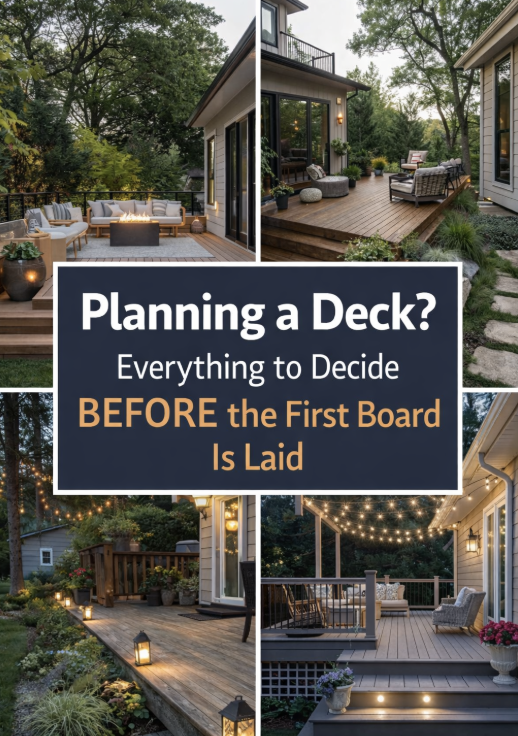
A finished deck looks effortless. Clean lines. Solid footing. A place where everything just works. What you don't see are the dozens of decisions made long before the first board was ever laid-and how often skipping those decisions leads to problems that are expensive, frustrating, and permanent.
Most deck issues don't come from bad craftsmanship. They come from rushed planning. Once construction starts, your flexibility disappears quickly. Changing size, layout, materials, or drainage after the fact almost always means higher costs and compromises. The smartest deck builds aren't rushed-they're intentional from the very beginning.
This guide walks through the decisions that actually matter, in the order you should make them. From defining how you'll use the space to choosing between stone and composite, planning the structure, and budgeting realistically, these are the choices that determine whether your deck becomes a long-term asset-or a regret you wish you'd planned better.
Define the Purpose of Your Deck
Start here. Not with materials. Not with color. What will you use the deck for?
A deck meant for weekend dinners needs space for a table, circulation room, and lighting. A deck built for quiet mornings needs privacy and shade. A functional deck for kids or pets needs to be durable and safe above all else.
Be honest about how you live now-and how that might change. Will you host more as time goes on? Do you plan to sell in a few years? Design choices should support real behavior, not an idealized version.
Purpose determines size, layout, materials, and budget. Skip this step, and every other decision becomes guesswork.
Choose the Right Location
Where your deck sits matters as much as how it looks. Sun exposure can turn a beautiful deck into an unusable one. Full sun is great in spring and miserable in August. Shade from trees or structures may be welcome-or problematic if moisture becomes an issue.
Think about privacy. Look at neighboring windows. Consider wind patterns. And pay attention to how the deck connects to the house. A deck that's visually close but functionally awkward won't get used.
Good placement feels natural. Bad placement feels like an afterthought.

Decide on Deck Size and Layout
Bigger is not always better. Oversized decks often feel empty and expensive. Undersized decks feel cramped and limit furniture options. The right size supports how you plan to move, sit, and gather.
Single-level decks are simpler and cheaper. Multi-level decks can solve slope issues and define zones-but they add cost and complexity.
Layout decisions also include stairs, built-in seating, and transitions to the yard. These are structural choices. They're difficult to change later, so commit early.

Stone Deck vs. Composite Deck: Which One Makes Sense for You?
Material choice is where opinions get loud. Strip away the hype and focus on performance.
Stone Decking: Strength and Permanence
Stone decks are built with materials like pavers, natural stone, or concrete systems. They feel solid because they are.
Stone holds up exceptionally well over time. It doesn't fade. It doesn't warp. Maintenance is minimal, mostly cleaning and occasional joint work. It also handles heat well, which matters in warmer climates.
The downsides are cost and installation. Stone requires proper base preparation and drainage. Mistakes show up fast. Visually, stone leans formal and architectural. That's a benefit for some homes and a mismatch for others.
Stone works best when permanence, durability, and a refined look matter more than upfront cost.
Composite Decking: Low Maintenance, High Flexibility
Composite decking blends wood fibers and plastic. It's designed to look like wood without the constant upkeep.
It resists rot and insects. It doesn't need staining or sealing. Installation is faster than stone, and the material is lighter, which can reduce structural demands.
However, a composite can heat up in direct sunlight. It may scratch. And while it's durable, it isn't indestructible. Visually, quality varies by brand. Some look convincing. Others don't.
Composite makes sense for homeowners who want a clean look with minimal maintenance and predictable costs.
Making the Decision
Stone is long-term and structural. Composite is practical and flexible.
In the stone deck vs. composite debate, it really comes down to how you plan to use the space and how much effort you want to put into it over time.
Choose stone if you want permanence and can invest upfront. Choose composite if you value ease, speed, and lower maintenance without sacrificing appearance.
There's no universal winner. There's only what fits your priorities.

Select Materials Beyond the Surface
Deck boards get all the attention. The structure underneath does the real work.
Framing materials affect longevity. Pressure-treated lumber is standard, but steel framing offers superior durability in certain climates. Hardware choices matter too. Cheap fasteners corrode and fail.
Railings are both safety features and design elements. Code requirements vary, and changing railing systems later is costly.
What you don't see determines how long the deck lasts.
Budget Planning (and Hidden Costs)
Deck budgets fail when they ignore reality.
Beyond materials and labor, factor in permits, inspections, site preparation, and potential drainage work. Add lighting, electrical outlets, or custom features, and costs climb quickly.
Maintenance is part of the budget, too. Stone is low-maintenance. Composite is low-maintenance. Neither is maintenance-free.
Build a buffer. If you're stretching to afford the build, you'll resent it later.
Local Codes, Permits, and HOA Rules
This step is boring. It's also non-negotiable. Permits may dictate height, setbacks, railing height, and footing depth. HOAs can restrict materials, colors, and visibility.
Ignoring rules doesn't save time. It delays projects and increases costs. Check requirements before finalizing design. Not after.
Drainage, Ground Prep, and Foundation
A deck fails from the ground up. Poor drainage leads to shifting, settling, and moisture damage. Soil type, slope, and water flow all affect foundation design.
Stone decks demand exact prep. Composite decks rely on stable framing. Either way, shortcuts here shorten the deck's lifespan.
This is not where to cut costs.
Design Details You Should Decide Early
Lighting, outlets, and future upgrades should be planned now, not patched in later.
Even if you don't install everything immediately, rough-ins save money and frustration. Decide where the lights will go. Think about access to power. Consider privacy screens or pergolas down the line.
Good decks feel intentional because they are.
DIY or Hire a Professional?
Small, simple decks can be DIY-friendly if you're skilled and patient.
Complex decks-multi-level, stone-based, or code-heavy-benefit from professional expertise. Mistakes are expensive and visible.
If you hire a contractor, ask about experience, materials, and process. A good builder explains decisions. A bad one avoids them.

Final Checklist Before the First Board Is Laid
Before construction starts, pause. You should know how you'll use the deck, where it sits, what it's made of, how it's built, and what it will cost in the long term. Permits should be approved. The foundation plan should be clear.
Once boards go down, flexibility disappears. Plan carefully. Build once. Enjoy it for years.


As Seen on TikTok
Come behind the scenes of our farmhouse build, decor projects, and cozy everyday life. Tap a video to watch, then follow @nikkisplate on TikTok for more.
Watch this video on TikTok
Watch this video on TikTok
Watch this video on TikTok



Leave a Reply