
Wondering why your pool still looks dull? Learn the signs your pool needs replastering-not just better maintenance or chemicals.
Disclaimer: this post may contain affiliate links, and every purchase made through these links will give me a small commission (at absolutely no extra cost for you!) AS AN AMAZON ASSOCIATE AND REWARDSTYLE MEMBER, I EARN FROM QUALIFYING PURCHASES. See Privacy Policy for additional info.
You test the water. You balance the chemicals. You skim, vacuum, and run the filter exactly as you should. And yet, something still feels off. The water doesn't have that same crystal-clear sparkle, and the pool floor feels rough under your feet. It's frustrating-especially when you're doing everything right. What many homeowners don't realize is that not every pool issue starts with the water itself.
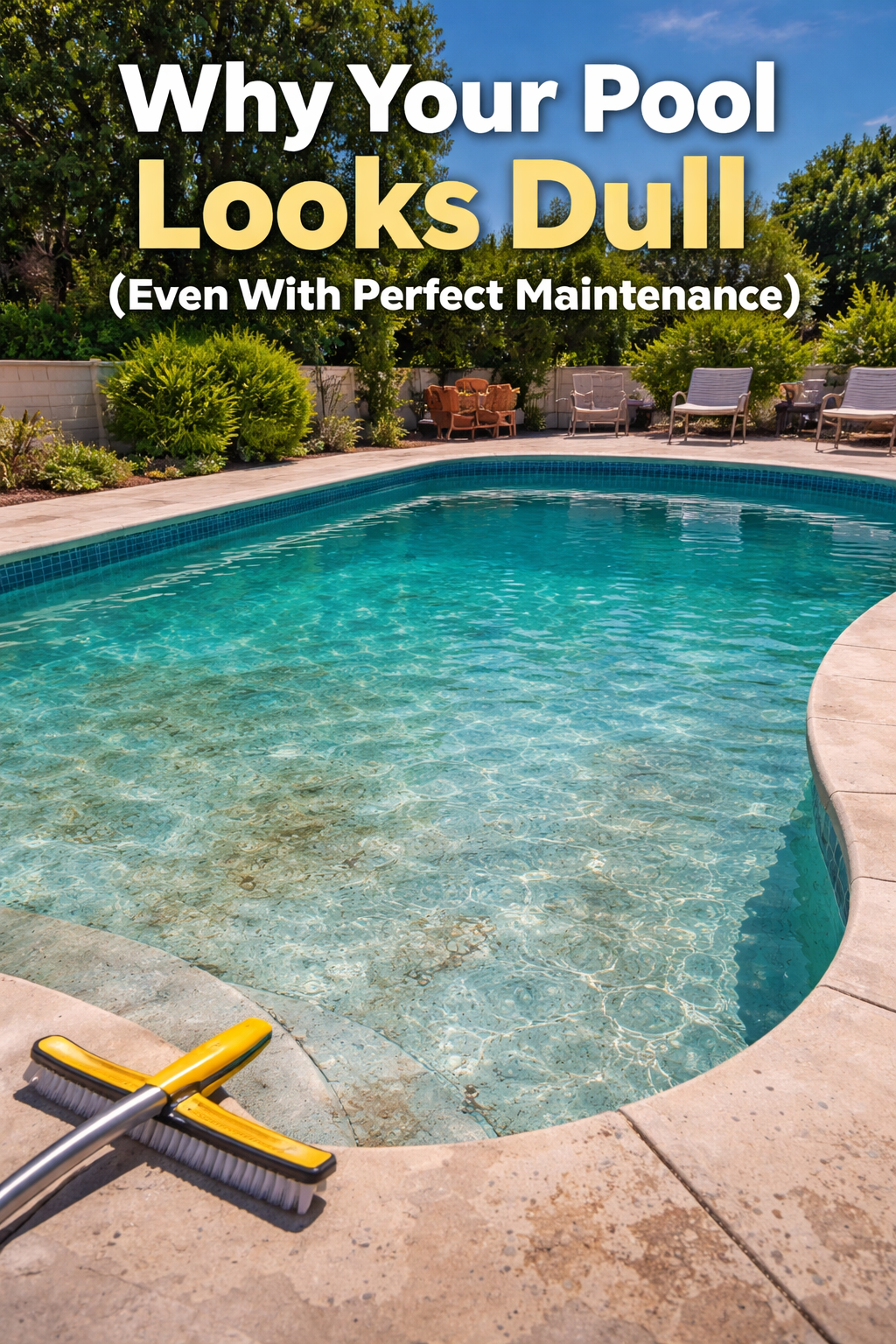
Over time, even the most well-maintained pools begin to show signs of wear that routine care simply can't fix. The surface of your pool-often made of plaster or a plaster blend-naturally breaks down after years of exposure to chemicals, temperature changes, and daily use. As it ages, it can become etched, stained, and uneven, creating a dull appearance and a gritty texture that no amount of brushing or balancing can fully restore.
If your pool still looks tired despite consistent upkeep, the issue may be hiding just beneath the surface. Understanding the difference between a water chemistry problem and a material issue is key to knowing what your pool actually needs. In many cases, what seems like a maintenance problem is really a sign that your pool is ready for a refresh-and possibly a full replaster.
What's actually happening to the pool surface?
Most residential pools are finished with plaster or a plaster-based blend. That surface is designed to be smooth, durable, and watertight. However, years of chemical exposure, temperature shifts, and normal wear gradually break it down. Microscopic etching occurs. Tiny pits form. Stains settle deeper into the material.
When this process advances, brushing and chemical adjustments no longer restore the original look. The surface may appear mottled or faded. In some cases, small flakes chip away near steps or drains. What feels like a water quality issue is often a material issue.
Homeowners researching solutions frequently come across resources such as Allied Solutions while trying to understand whether their pool needs repair or a more comprehensive update. Education is a useful first step. Understanding that plaster has a lifespan helps shift expectations from endless maintenance to periodic renewal.
Texture is a key indicator. If the pool feels abrasive underfoot or snags swimsuits, the finish may be thinning. Roughness also makes it easier for algae to cling to the surface, which can make cleaning more frustrating even when chemical levels are correct.
When does replastering become the right move?
At a certain point, surface deterioration goes beyond cosmetic concerns. That is when replastering swimming pools enters the conversation. Replastering involves draining the pool, removing the weakened finish, and applying a new layer designed to restore both smoothness and visual clarity.
Timing matters. Waiting until plaster is severely compromised can expose the underlying shell to moisture intrusion. Addressing the issue earlier often simplifies the project and limits secondary repairs.
Material choice during replastering also influences long-term results. Traditional white plaster offers a bright, classic appearance. Quartz-enhanced finishes provide additional strength and subtle color variation. Pebble blends create a textured, natural look that many homeowners prefer for a more contemporary feel. Each option affects how light reflects in the water and how the pool feels during use.
Replastering can also be an opportunity to refresh details that frame the water. Updating the tile band at the waterline or replacing dated coping can shift the overall look without altering the pool's shape. These changes often make the backyard feel renewed rather than merely repaired.
How do you know it's not just a chemical imbalance?
Water chemistry issues usually present quickly and respond to adjustments. Cloudiness clears after filtration. Minor scaling can be brushed away with proper treatment. If problems persist despite balanced chemical levels, the finish itself may be at fault.
A professional inspection can help differentiate between surface etching and structural cracking. Fine spiderweb cracks in plaster are common as it ages. Wider, shifting cracks may signal deeper structural movement that requires further evaluation.
When It's Time to Look Beneath the Surface
At some point, every pool reaches a stage where maintenance alone isn't enough to restore its original beauty. If you've been balancing chemicals, cleaning regularly, and still noticing dull water, rough texture, or persistent staining, it's likely not something you're doing wrong-it's simply the natural aging of the pool's surface. Recognizing this shift can save you time, frustration, and unnecessary trial-and-error with treatments that won't address the root cause.
Replastering isn't just about aesthetics-it's about restoring the integrity, comfort, and longevity of your pool. A fresh surface can dramatically improve how your pool looks, feels, and functions, making it easier to maintain and more enjoyable to use. Whether you choose a classic plaster finish or upgrade to a more durable, modern option, investing in your pool's surface is often the reset it truly needs.
By understanding what's happening beneath the waterline, you can make more informed decisions and keep your pool looking its best for years to come. Sometimes, the clearest water starts with a brand-new surface.

As Seen on TikTok
Come behind the scenes of our farmhouse build, decor projects, and cozy everyday life. Tap a video to watch, then follow @nikkisplate on TikTok for more.
Watch this video on TikTok
Watch this video on TikTok
Watch this video on TikTok




Leave a Reply