
Learn how to choose a statement chandelier that suits your room's scale, style, materials, sightlines, and mood for a cohesive, collected home.
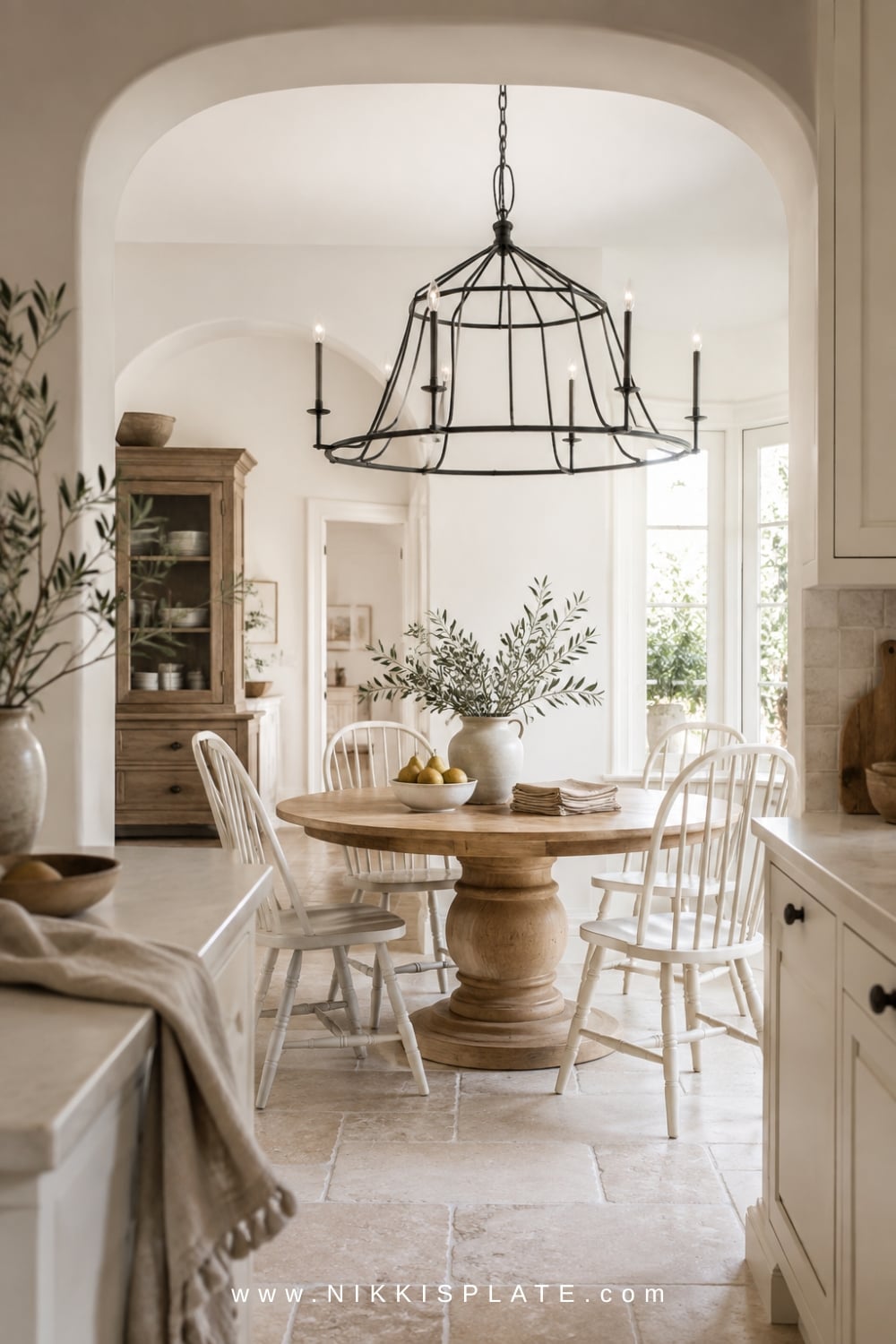
A statement chandelier can change the way an entire room feels. It draws the eye upward, adds shape and texture, and can give a familiar space a fresh focal point without requiring a full redesign.
Exploring modern chandelier lighting can open up plenty of possibilities, even in homes with traditional, farmhouse, transitional, or collected décor. The key is choosing a fixture that relates to the room around it rather than treating it as a separate design decision.
Begin With the Room, Not the Fixture
It is easy to fall in love with a chandelier on its own, but the room determines whether that fixture will feel at home. Look at the space before focusing on individual designs. Ceiling height, furniture size, natural light, and the amount of open space all affect how much visual presence the chandelier can carry.
Consider what already draws attention in the room as well. A large fireplace, bold artwork, patterned rug, or dramatic dining table may already provide a strong focal point. The chandelier can support that feature rather than compete with it. In a simpler room, the fixture may have more freedom to become the main visual statement.
Let Scale Create Balance
A chandelier needs enough presence to feel intentional, but size is about more than making a dramatic impression. A fixture that is too small can disappear above a large dining table or in a spacious entry. One that feels too large can make a modest room seem crowded.
Look at the chandelier in relation to the furniture below it and the open space around it. A broad table can usually support a fixture with more visual weight, while a smaller setting may suit a lighter form. Ceiling height matters too. A tall room offers more vertical space for an expressive fixture, while lower ceilings call for a design that keeps the room feeling open and comfortable.
Mix Styles With a Common Thread
A modern chandelier does not need a fully modern room. In fact, combining styles can make a home feel more personal and less like it was decorated all at once. A clean-lined fixture can bring fresh energy to a traditional dining room, while a sculptural chandelier can add contrast to rustic wood furniture.
Look for a common thread that connects the fixture to the space. It might be a metal finish that appears elsewhere, a curved shape echoed in the furniture, or a warm material that relates to the room's color palette. These small connections allow different styles to sit comfortably together without requiring every detail to match.
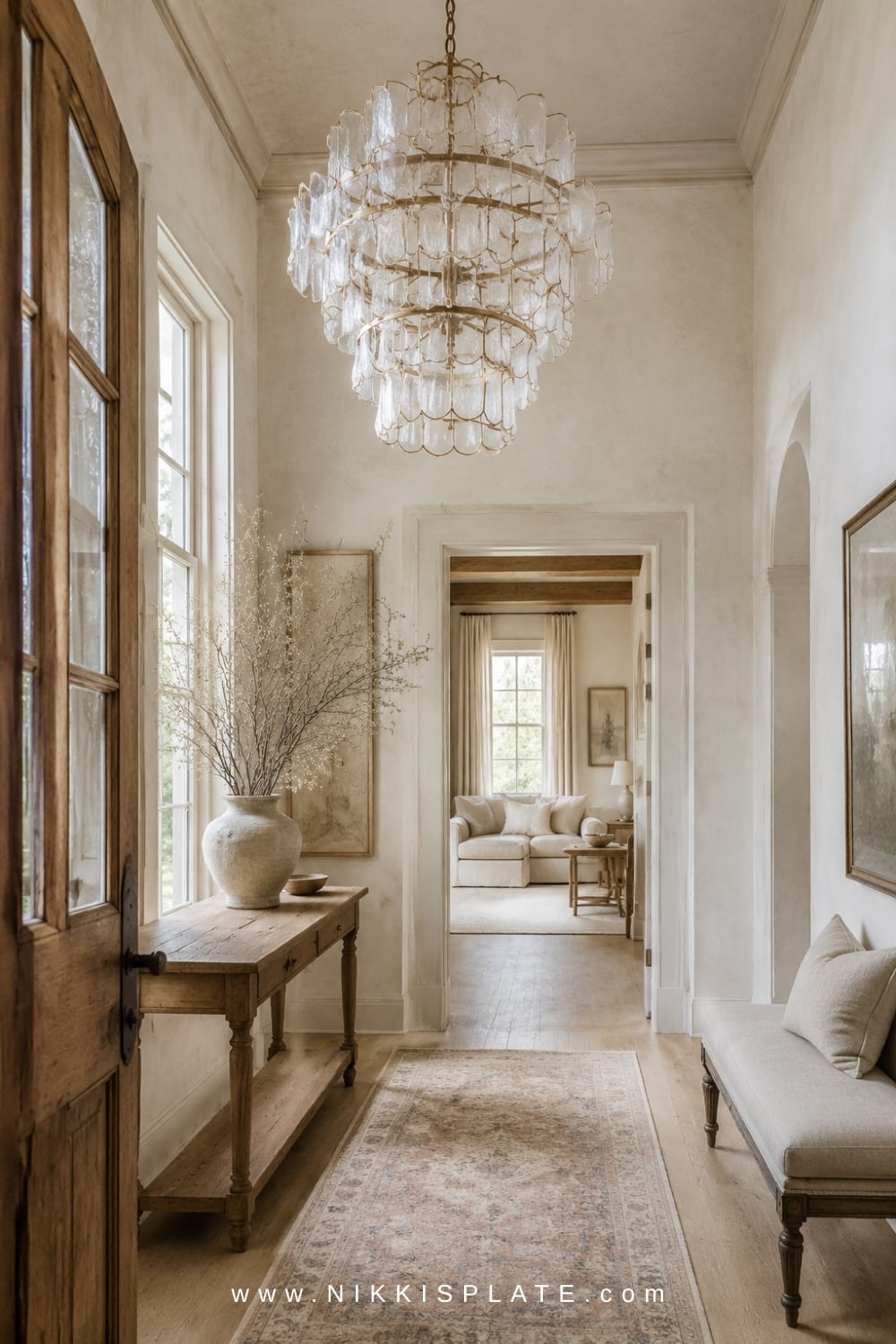
Consider the View From Across the Room
Lighting fixtures often become part of several sightlines, especially in open layouts. A dining room chandelier may be visible from the kitchen or living room. An entry fixture may be seen from an upstairs landing or through nearby doorways.
Take a few steps back and think about those wider views. The chandelier should make sense with nearby rooms even if each space has its own character. Repeating a material, finish, or general shape can create a subtle connection. This helps the home feel cohesive without turning every room into a copy of the next.
Use Materials to Add Character
The material of a chandelier can shape its personality as much as its form. Metal can feel crisp or sculptural, glass can bring lightness, and natural textures can add warmth. Some fixtures combine several materials, which can make them easier to connect with a layered interior.
Think about what the room already has and what may be missing. A space filled with soft upholstery and wood may benefit from a fixture with a sharper metal detail. A room with many hard surfaces might feel warmer with softer forms or textured materials. The chandelier can introduce contrast while still belonging to the overall palette.
Give the Fixture Room to Stand Out
A statement chandelier needs some visual breathing room. If every surface nearby has a bold pattern, strong color, or decorative object, the fixture may become one more element competing for attention.
You do not need to strip the room back to make a chandelier work. Instead, decide where you want the strongest visual moments to happen. A distinctive fixture above a dining table might pair well with simpler wall décor nearby. In an entry, an expressive chandelier can take center stage while furniture and accessories provide quieter support.
Think About the Mood After Dark
A chandelier has two identities. During the day, it works as a decorative object. At night, the light it gives off becomes part of the room's atmosphere. Both deserve attention.
Consider whether the room needs bright general light or a softer glow for dining and relaxing. The chandelier may work alongside lamps, sconces, or other sources rather than carrying the full lighting plan alone. Where appropriate, adjustable light levels can also help the same fixture suit different occasions. A room used for family meals may need one mood on a weekday morning and another during an evening gathering.
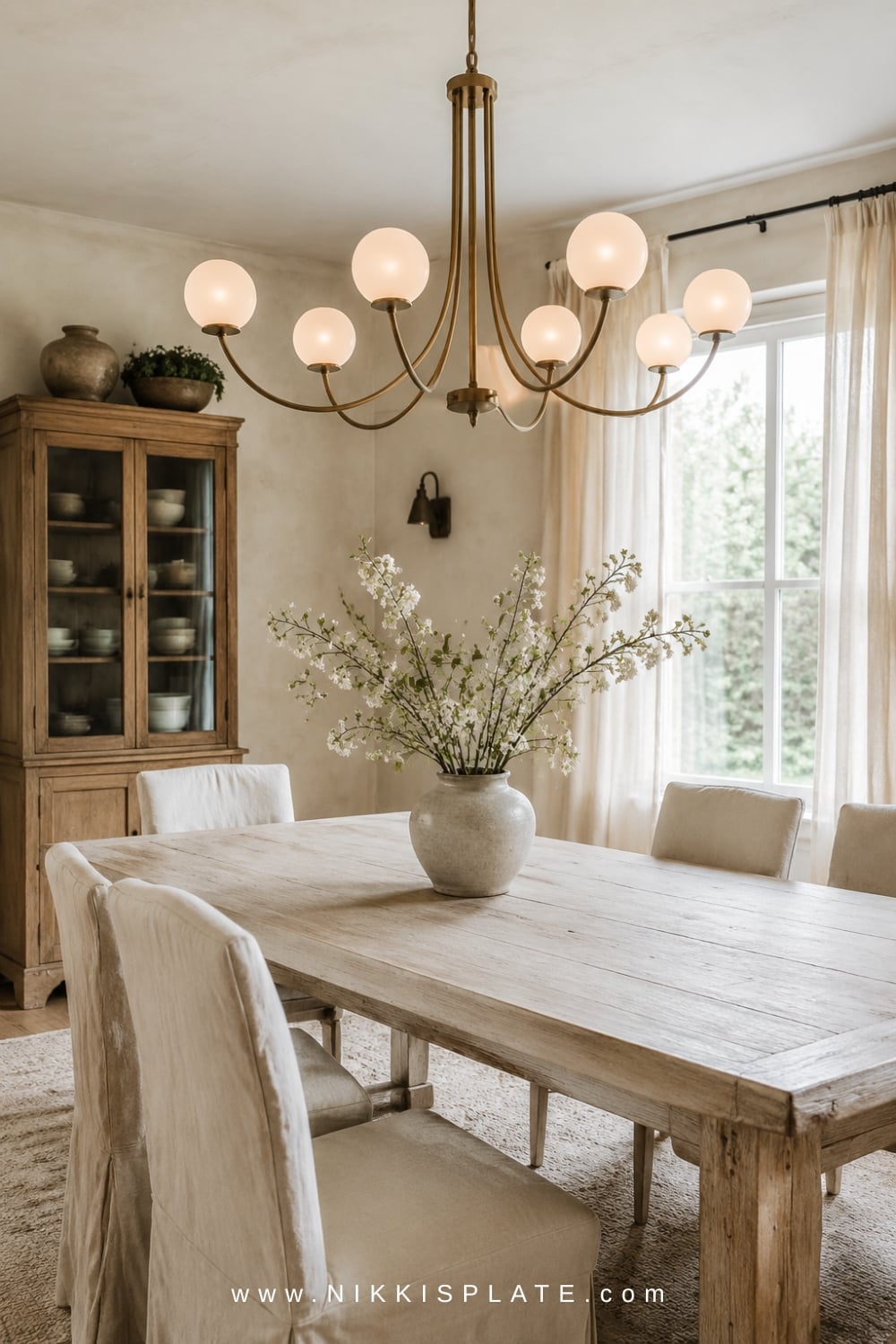
Allow Your Home to Feel Collected
The most inviting rooms often develop over time. Furniture comes from different periods, artwork carries personal meaning, and decorative pieces reflect changing tastes. A chandelier can become part of that story without forcing the rest of the room into one design category.
Choose a fixture that works with the scale of the space, relates to a few existing details, and brings something the room does not already have. It can be modern in a traditional setting or sculptural in a relaxed one. When the connection feels thoughtful, the contrast adds personality. The result is a room that feels considered, comfortable, and collected rather than built around a single trend.


As Seen on TikTok
Come behind the scenes of our farmhouse build, decor projects, and cozy everyday life. Tap a video to watch, then follow @nikkisplate on TikTok for more.
Watch this video on TikTok
Watch this video on TikTok
Watch this video on TikTok




Leave a Reply