
Learn how to choose the right backyard storage shed for your home, including tips for size, materials, doors, site prep, and organization.
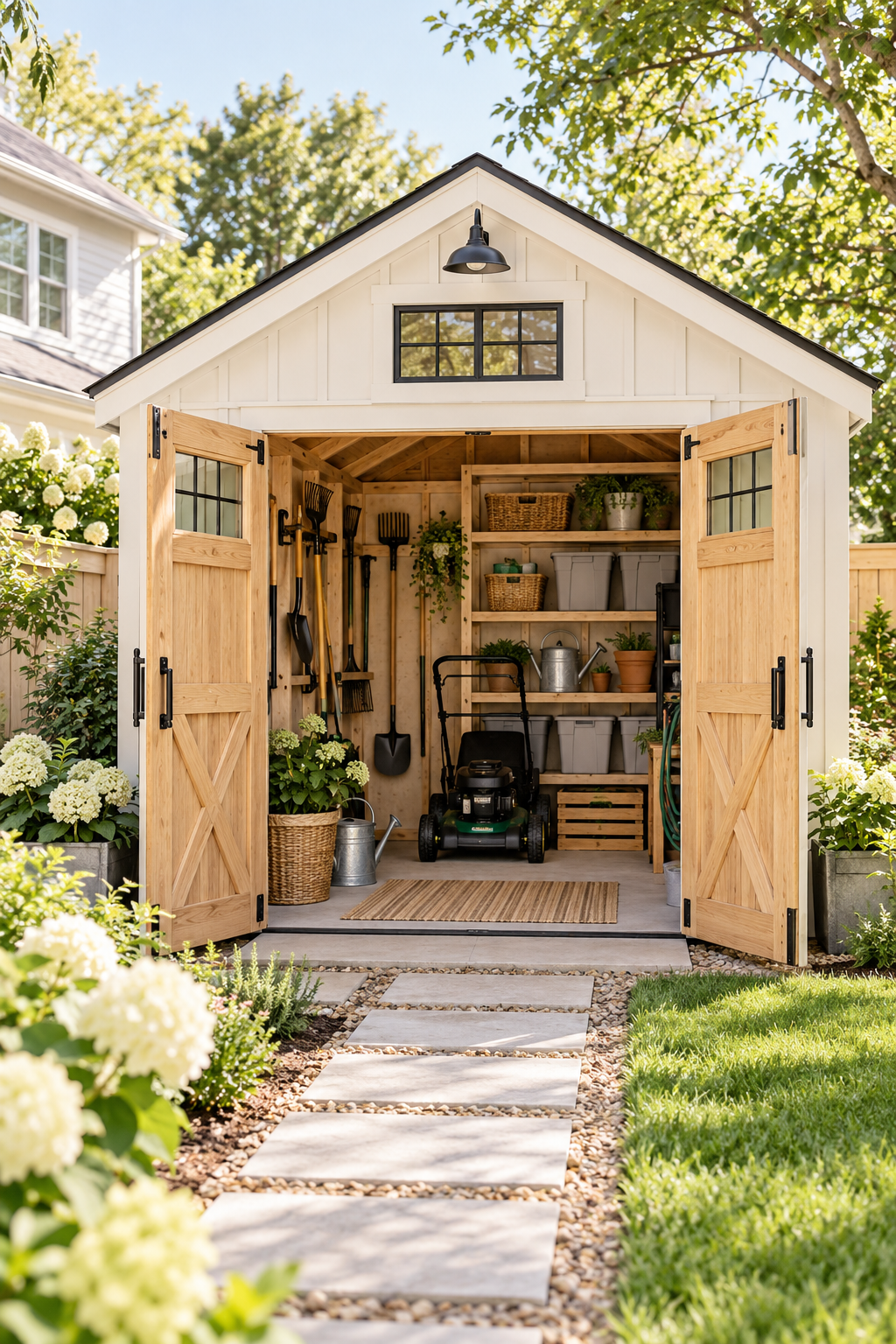
A backyard storage shed can free up garage space, protect outdoor tools, and give bulky equipment a dedicated place. Choosing the right one requires more than picking a size and style.
Door placement, exterior materials, roofing, site conditions, and interior organization all affect how practical the shed will be over time.
A shed that looks suitable on paper can become inconvenient if large items are difficult to move through the entrance, the interior becomes overcrowded, or the site is poorly prepared. The best choice starts with understanding how the space will actually be used.
Start With What You Actually Need to Store
Begin with an inventory of the items you plan to keep in the shed. Include lawn tools, bicycles, garden supplies, outdoor furniture, seasonal decorations, power equipment, and recreational gear.
Pay particular attention to large or heavy items. A push mower may fit easily through a standard door, while a riding mower, ATV, or wide piece of equipment may require double doors, ramp access, and additional floor space.
Looking at purpose-built storage options from companies such as Weaver Barns can help homeowners compare shed sizes, roof styles, exterior materials, and layouts in the context of real storage needs.
Leave some capacity for future purchases as well. A shed that is completely full from the beginning can quickly become difficult to use as new equipment or seasonal items are added.
Choose a Size That Works Now and Later
Exterior dimensions do not always reflect how much usable space a shed provides. Shelving, equipment, work surfaces, and walkways all reduce the available floor area.
Measure the largest items first, then account for the clearance needed to move around them. If you plan to add shelving along a wall or a workbench at the back, include those features in your calculations before choosing the final size.
A functional shed should allow you to reach commonly used items without moving several objects out of the way. Slightly more space than you currently need can make the shed easier to organize and give you flexibility as your storage needs change.
Match the Shed Style to Your Home
Because a shed is a visible part of the property, its design should work with the surrounding home and yard.
Consider the roofline, siding, trim, doors, and windows. A simple profile may complement a modern home, while a more traditional roof shape can suit classic residential architecture.
The shed does not need to match the house exactly. Coordinating a few elements, such as siding color, trim, roofing, or door finishes, can create a more cohesive appearance.
Windows can also contribute to the design while bringing natural light into the interior. Their placement should be planned carefully so they do not interfere with shelves, hooks, or other wall-mounted storage.
Compare Exterior Materials and Roofing
Exterior materials affect maintenance, appearance, and weather resistance. Wood-based siding and vinyl are common options, but they suit different priorities.
Wood siding offers a traditional look and can provide more flexibility for paint and exterior customization. It may require periodic upkeep to maintain its finish. Vinyl generally requires less routine maintenance and can be practical for homeowners who prefer a lower-maintenance exterior.
Roofing also deserves careful consideration. Asphalt shingles often blend easily with residential architecture, while metal roofing creates a different appearance and can be a durable option.
Climate, maintenance preferences, and the design of the main house should all influence the final choice. Selecting materials based only on appearance can overlook important long-term considerations.
Check Local Rules Before Finalizing the Location
Before choosing an exact location, review the regulations that apply to accessory structures in your area. Requirements may differ by municipality, county, neighborhood, or homeowners association.
Rules can address setbacks, maximum height, building dimensions, proximity to utilities, and permitting. Reviewing typical accessory structure permit requirements can help illustrate the types of restrictions local authorities may impose, but homeowners should confirm the rules that apply to their own property.
Location should also make sense for everyday use. A shed placed near the driveway, garden, or main work area may be more convenient than one positioned far from the places where its contents are needed.
Drainage matters as well. Avoid low areas where water frequently collects, since persistent moisture around the base can create maintenance problems.
Pay Attention to Doors, Windows, and Everyday Access
Door configuration has a direct effect on how easy the shed is to use. A single door may work well for hand tools and compact equipment, while larger items may require a wider opening or double doors.
Measure the width of mowers, carts, bicycles, and other bulky equipment before deciding on the entrance. Adequate clearance makes it easier to move items in and out without damaging the doorway or rearranging the interior.
A ramp can improve access for wheeled equipment and reduce the effort required to move heavy items over the threshold.
Windows should be positioned with the interior layout in mind. Natural light can be useful, but too many windows, or poorly placed ones, can reduce the amount of wall space available for storage.
Prepare a Stable Site Before Delivery
The quality of the site has a major influence on how well the shed performs over time. The ground should be level, stable, and able to support the structure properly.
The appropriate base depends on the shed, soil conditions, local rules, and manufacturer recommendations. In many cases, a properly prepared gravel base or another suitable foundation system can provide an even surface and help with drainage.
Site preparation should be completed before delivery. Correcting grading, drainage, or access problems is much easier while the area is still open.
Delivery access also needs to be considered. Gates, fences, trees, overhead wires, steep slopes, and narrow passages may affect whether a prefabricated structure can reach the planned location.
Plan the Interior Before Filling the Shed
An organized layout can make a modest shed far more useful.
Place the largest floor-standing items first, then assign storage according to how often each item is used. Frequently used equipment should remain close to the entrance, while seasonal belongings can be stored farther back or higher up.
Make use of vertical space where appropriate. Shelves, hooks, pegboards, and wall-mounted racks can keep tools off the floor and reduce clutter. Long-handled garden tools can often be stored upright, while labeled bins can help organize smaller or seasonal items.
Maintain a clear path through the shed so that stored items remain accessible. A layout that requires moving several objects to reach one item will quickly become inconvenient.
Make the Shed Look Intentional in the Backyard
Once the structure is functional, a few exterior details can help it fit more naturally into the yard.
Coordinated paint, contrasting trim, simple planters, or a defined walkway can improve the appearance without requiring a major landscaping project. The entrance should remain clear so that mud, overgrown plants, or decorative elements do not interfere with access.
A backyard shed makeover can provide ideas for updating paint, roofing, trim, and other exterior details.
Landscaping around the shed should remain practical. Plants should not block doors, vents, windows, or areas that may need maintenance. Allowing some open space around the structure can make cleaning and upkeep easier.
Think About Long-Term Flexibility
Storage needs can change over time. A shed used primarily for lawn equipment today may later need to accommodate gardening supplies, seasonal decor, hobby materials, or a small work area.
Flexible features make those changes easier to manage. Adjustable shelving, open wall space, and a layout that does not dedicate every section to a single purpose provide more options as needs evolve.
Leaving some unused capacity can also prevent overcrowding. A little extra room for additional shelving, a future workbench, or larger equipment can extend the usefulness of the shed without requiring a major reorganization.
Final Thoughts
Choosing the right backyard storage shed begins with understanding what will be stored and how often those items will be used. Size, materials, access, location, site preparation, and interior layout should all support that purpose.
Measure large equipment before selecting dimensions, verify local requirements, and plan the interior before moving anything inside. A well-chosen shed should be easy to access, simple to maintain, and large enough to remain useful as storage needs change.
With careful planning, a backyard shed can provide organized, dependable storage while fitting naturally into the overall property.


As Seen on TikTok
Come behind the scenes of our farmhouse build, decor projects, and cozy everyday life. Tap a video to watch, then follow @nikkisplate on TikTok for more.
Watch this video on TikTok
Watch this video on TikTok
Watch this video on TikTok

Leave a Reply