
Whether you're a university student trying to stay ahead of a heavy semester, a parent finishing a college degree you paused years ago, or someone learning on the side while the rest of life carries on around you, the hardest part of studying is rarely the material itself.
It's fitting it into a week that already has work, meals, laundry, and a hundred small interruptions, and that is exactly where a weekly study plan helps.
A good plan doesn't need to be color-coded or perfect; it only needs to tell you what you're working on, when, and with which tools, so you're not deciding all of that from scratch every time you sit down. Here is a way to build one that fits real life, using the online resources that are already at your fingertips.
Start with your week, not your syllabus
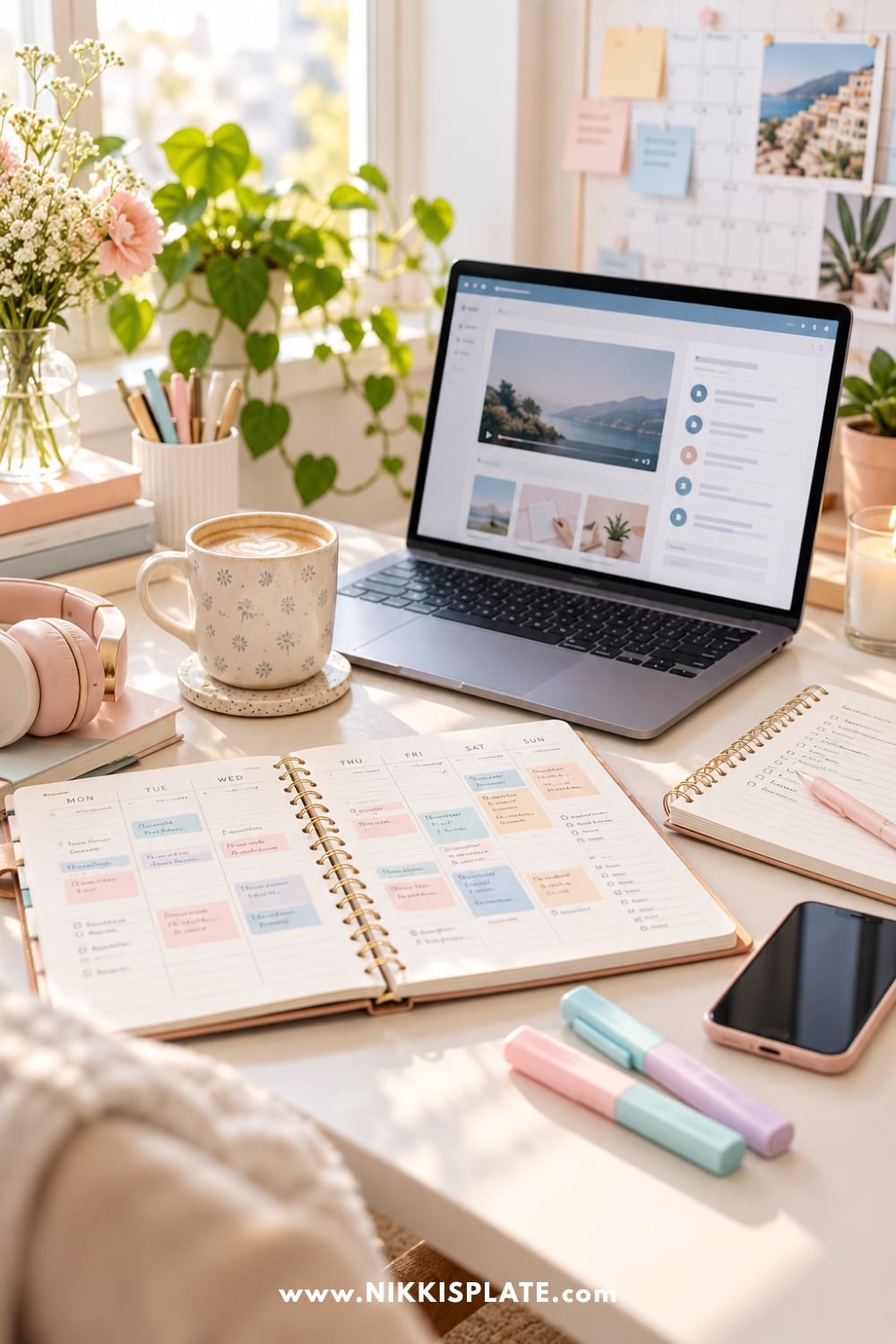
Before you think about what to study, look at when you actually can. Write down the parts of your week that don't move, like work shifts, school pickups, appointments, and dinner, then look at the pockets that are left. Most people find two or three realistic blocks, maybe an hour after the kids are in bed, a quiet stretch on Saturday morning, or a lunch break, and it's far better to protect those few than to promise yourself two-hour sessions every day that you'll abandon by Wednesday. Put the blocks in a planner, a phone calendar, or a simple printable page on the fridge or your desk, wherever you'll really see it.
This matters even more when your schedule has fixed hours built in, such as for someone in a teacher licensure program who is fitting coursework around classroom observation time, because the study blocks have to be planned around those hours instead of hoping gaps will appear on their own. If you have a spot at home for studying, even a corner of the kitchen table with a lamp and a mug, keep your materials there so that sitting down takes no setup at all.
Give each block one job and one online resource
The trick that keeps a study block from turning into an hour of scrolling is deciding in advance what the block is for, since new material, practice, and review all call for different tools. Video lectures, open online courses, and recorded class sessions work well for learning something for the first time, especially in bachelor's degrees, where early coursework often leans on lectures and readings you can pause and replay as many times as you need. Flashcard apps and practice quizzes suit the recall stage, because pulling an answer out of your memory teaches you more than rereading your notes.
Library databases and research repositories are for deeper reading, which becomes a much bigger part of the week if you're heading toward something like an online PhD in psychology, where reading academic articles and taking useful notes on them is a skill you'll use constantly. Discussion boards, study groups, and chat threads fill the accountability gap, since explaining an idea to another person quickly shows you what you don't understand yet. Try to keep each block to one purpose and one resource, and take a short break between blocks so your focus has a chance to reset.
Adjust the plan to what you're studying
Not every subject fits the same weekly rhythm, so it's worth tweaking the plan around what you're working toward. Science-heavy programs usually reward shorter review sessions spread across several days, so that anatomy terms or theories are reinforced well before an exam instead of crammed the night before. Someone preparing to earn a master's in occupational therapy, for example, would likely balance that kind of content-heavy study with the hands-on side of the field, since programs like this typically include labs and supervised fieldwork, which means online resources work best as support for what you learn in person rather than a replacement for it. Writing-heavy subjects call for the opposite approach, with longer, uninterrupted blocks, because drafting a paper is difficult to do in fifteen-minute pieces. Whatever your goal is, look at your syllabus or program requirements and give each type of task its own kind of block.
A simple week to borrow, and a check-in to keep it honest
If you want a starting point, try Monday for new material, Tuesday for practice questions or flashcards on what you learned, Wednesday for a lighter session such as reading or tidying up your notes, Thursday for another round of new material, and Friday or Saturday for a longer review that ties the week together, leaving Sunday mostly free apart from a ten-minute check-in. In that check-in, look at what actually got done, move anything unfinished into the next week without guilt, and notice which blocks were easy to keep and which kept slipping, because that tells you where the plan needs adjusting. Some weeks will fall apart anyway, with sick kids, a busy stretch at work, or plain exhaustion, and having a minimum version of the plan, say one block and one small task, keeps the habit alive until things settle down.
A study plan is really a way of being kind to your future self, since it takes the daily negotiation out of studying and leaves you with a routine you can trust. Start small, use the online tools that suit each kind of work, and let the plan change as your courses and your life do.


As Seen on TikTok
Come behind the scenes of our farmhouse build, decor projects, and cozy everyday life. Tap a video to watch, then follow @nikkisplate on TikTok for more.
Watch this video on TikTok
Watch this video on TikTok
Watch this video on TikTok





Leave a Reply