
Planning to open a dental office? Discover 7 major startup costs, including construction, equipment, staffing, insurance, and working capital.
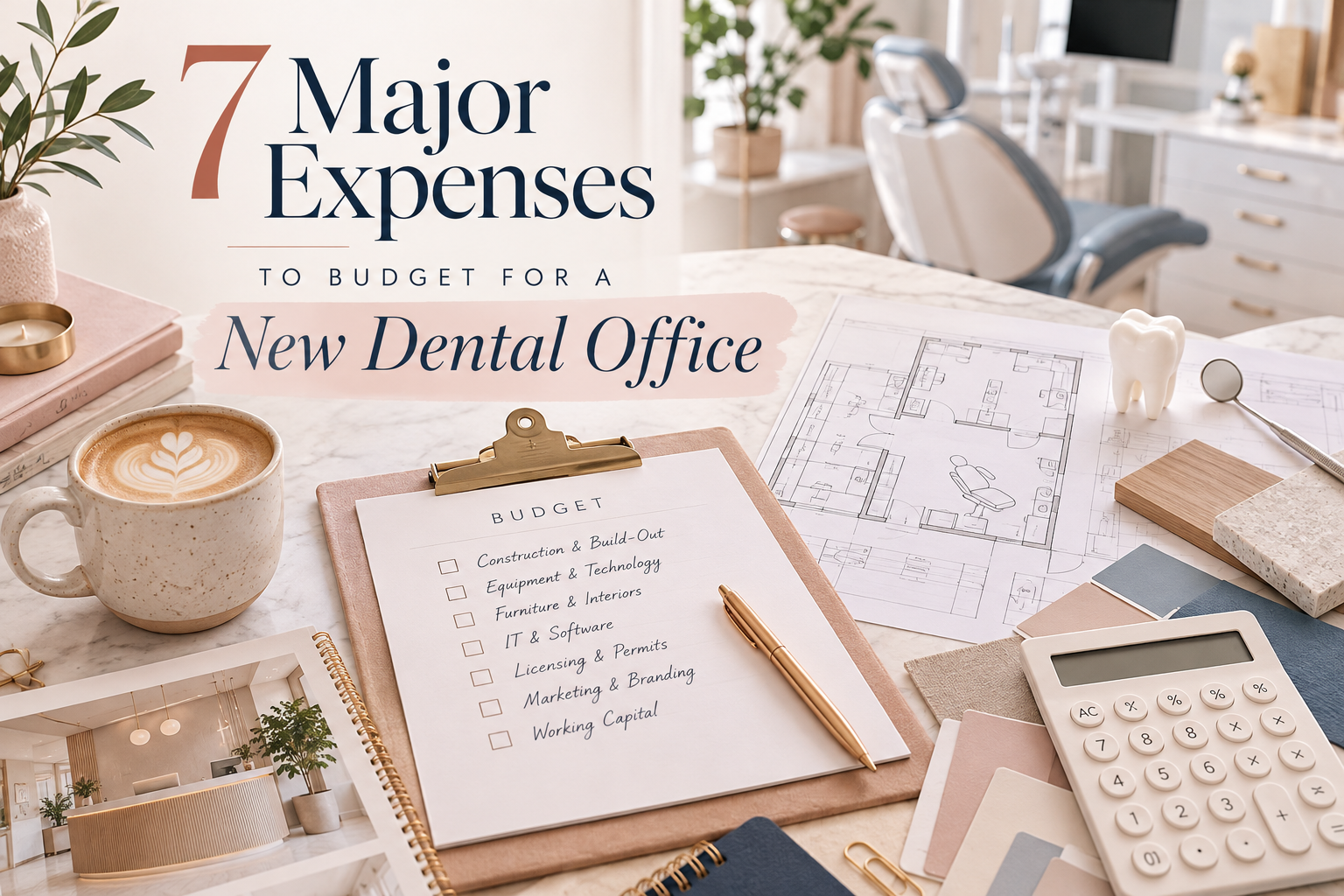
Opening your own dental office is an exciting milestone, but it also comes with some significant financial decisions. Understanding dental office startup costs before you get started can help you plan your budget, avoid unexpected expenses, and set your new practice up for success.
The tricky part? Most of your expenses come before you ever welcome your first patient. Between leasing a space, completing renovations, purchasing dental equipment, and hiring staff, the costs can add up quickly.
Starting a dental practice can cost anywhere from $500,000 to well over $750,000, depending on your location, office size, and equipment needs. Below, we're breaking down seven major expenses to budget for when opening a new dental office, along with practical tips to help you manage costs and plan with confidence.
| Expense | Typical Cost Range |
| Lease and space | Security deposit plus rent during construction |
| Build-out and construction | About $150 to $350 per sq ft |
| Equipment and imaging | About $100,000 to $200,000+ |
| Technology and IT | Upfront hardware plus monthly software fees |
| Staff and payroll | About $40,000 to $120,000 per employee per year |
| Insurance, licensing, and legal | $5,000 to $15,000 for legal and accounting setup, plus annual premiums |
| Marketing and working capital | Marketing from $5,000 to $50,000+; reserves of $50,000 to $150,000 |
1. Lease and Space Costs
Your lease is usually the first major commitment you make, and it shapes almost every cost that follows.
Expect to pay a security deposit and, in many cases, rent during construction. You'll also want an attorney to review the lease before you sign, since dental leases often include terms around plumbing, signage, and build-out responsibilities.
A former dental office, often called second-generation space, can save you a lot on construction if the existing layout fits your plan. If it doesn't, the plumbing is already in the wrong spots, and correcting it can cost more than starting from an empty shell.
This is also the best time to negotiate. Ask for a tenant improvement (TI) allowance and a rent-free period while the space is being built. In competitive markets where landlords want dental tenants, TI allowances of $50 to $100 or more per square foot are achievable, and that money comes straight off your construction bill.
2. Build-Out and Construction
Construction is often the single largest line in your budget. Leasehold improvements for a dental office commonly run $150 to $350 per square foot, which is noticeably higher than a standard office build-out.
The difference comes down to plumbing and utilities. Every operatory needs its own water, drain, compressed air, vacuum, power, and data connections. When those lines have to run under the floor, your contractor has to cut, trench, and repour the concrete slab. That's why the number of operatories affects your budget more than the overall square footage does.
A few other spaces add to the bill as well:
- A mechanical room for the air compressor and vacuum pump, with proper ventilation and soundproofing
- A sterilization area with dedicated plumbing, power, and casework
- Imaging rooms with lead-lined walls designed from a physicist's shielding report
Timing matters as much as price. Your equipment vendor's rough-in drawings determine where every pipe and outlet goes, so finalize them before the floor gets opened. A change after the slab is cut turns into concrete work instead of a quick drawing revision.
Hiring a contractor who regularly builds dental spaces makes this phase much easier to budget and manage. LNB Construction, for example, prices dental build-outs with a line-item cost per operatory, so you can see exactly how adding or removing a chair changes your total. They also bill on AIA G702 and G703 forms, which is the format most SBA and practice lenders expect before they release each construction draw.
3. Equipment and Imaging
Dental equipment typically runs $100,000 to $200,000 or more. That covers chairs, delivery units, operatory lights, sterilization equipment, and imaging.
Imaging is where your budget can swing the most. A setup built around intraoral sensors costs far less than adding a panoramic unit or a cone beam CT (CBCT) scanner, and larger imaging systems also need shielded walls and sometimes extra structural support.
You do have room to adjust here. Choosing quality used or refurbished equipment over new premium gear can save $50,000 to $100,000 on a typical startup. Many owners mix and match, buying new chairs and imaging while sourcing cabinetry or sterilization equipment refurbished.
Place your orders early. Lead times can stretch for weeks, and you want installation to line up with the end of construction instead of delaying your opening.
4. Technology and IT
Modern dental offices run on software, so plan for both upfront hardware and ongoing subscription fees.
You'll need practice management software for scheduling, billing, and charting, plus imaging software that connects to your sensors and X-ray units. Most offices also put a computer at each chair so you can pull up records and images during treatment.
Then there's the network itself: data cabling, Wi-Fi, phones, secure backups, and HIPAA-compliant protection for patient records.
The easiest way to save money is to plan IT during construction. Running data cables while the walls are open costs far less than adding them after the drywall goes up.
5. Staff and Payroll
Payroll is likely to be your largest ongoing expense, and it starts before you open.
As a general range, front desk staff often earn $40,000 to $60,000 a year, dental assistants $45,000 to $65,000, and hygienists $75,000 to $120,000, depending on your area and their experience.
Your team needs time to learn your software, set up the office, and complete OSHA and HIPAA training. That means paying people for at least a few weeks with no patient revenue coming in.
Insurance reimbursements also take time to arrive once you start seeing patients. Begin credentialing with insurance carriers several months before opening so you can bill patients' plans from day one.
6. Insurance, Licensing, and Legal
Each piece of this category looks small on its own, which is why it's easy to underestimate.
On the insurance side, you'll need professional liability (malpractice) coverage, general liability, and property insurance. Many owners also carry business interruption and disability coverage. Malpractice premiums commonly run several thousand dollars a year and can climb past $15,000 depending on your specialty and location.
Legal and accounting setup typically costs $5,000 to $15,000. That covers business formation, lease review, employment documents, and setting up your books. Permits and your state dental board's facility requirements also come into play during construction, so build those into your timeline.
7. Marketing and Working Capital
A new practice opens with an empty schedule, so you'll need a website, a Google Business Profile, signage, and some local advertising before opening day. A basic launch might start around $5,000, while practices in competitive markets often budget $50,000 or more for the first year.
Working capital is the cash cushion that covers rent, payroll, supplies, and loan payments while your patient base grows. Most advisors recommend reserves covering three to six months of operating expenses, which often works out to $50,000 to $150,000.
This is the expense new owners underfund most often. Running short on cash a few months in can force tough decisions, even when the practice is growing steadily.
Tips for Keeping Your Budget on Track
Get Itemized Quotes
Ask contractors and equipment vendors for line-item pricing instead of a single lump sum. It's easier to compare bids and spot where you can trim.
Set Aside a Contingency
Many owners reserve 10 to 15 percent of the construction budget for surprises like inspection delays or problems hidden behind walls.
Line Up Financing With Your Timeline
SBA and practice lenders release funds in stages during construction. Make sure your contractor's billing format matches what your lender requires so payments don't stall.
Frequently Asked Questions
Opening a dental office involves a lot of moving pieces, and the total cost can vary depending on your location, practice size, construction needs, and equipment choices. These common questions can help you get a clearer picture of what to expect before you finalize your startup budget.
How much does it cost to open a new dental office?
Total startup costs commonly range from around $500,000 to well over $750,000. Your final number depends on location, practice size, equipment, and how much working capital you set aside.
What is the most expensive part of starting a dental practice?
Construction and equipment are usually the two biggest upfront costs. Build-outs often run $150 to $350 per square foot, and equipment can add $100,000 to $200,000 or more.
How long does a dental office build-out take?
Many commercial build-outs take roughly 10 to 20 weeks from permit to opening. Dental offices often fall on the longer end because of plumbing, shielding inspections, and equipment installation.
How much working capital does a new dental practice need?
Plan for enough to cover three to six months of operating expenses. For many practices, that's somewhere between $50,000 and $150,000.
The Bottom Line
Opening a dental office takes a lot more than buying chairs and signing a lease. Construction, equipment, payroll, and working capital all need room in your budget long before patients start booking appointments.
Start with a lease that includes a solid TI allowance, lock in your equipment layout before construction begins, and keep a healthy cash reserve for the first few months.
From there, gather a few detailed quotes and compare them line by line. A clear budget now makes opening day far less stressful.


As Seen on TikTok
Come behind the scenes of our farmhouse build, decor projects, and cozy everyday life. Tap a video to watch, then follow @nikkisplate on TikTok for more.
Watch this video on TikTok
Watch this video on TikTok
Watch this video on TikTok


Leave a Reply