
Keep your starter feedings, baking schedule, and loaf notes together with this free six-page sourdough journal.
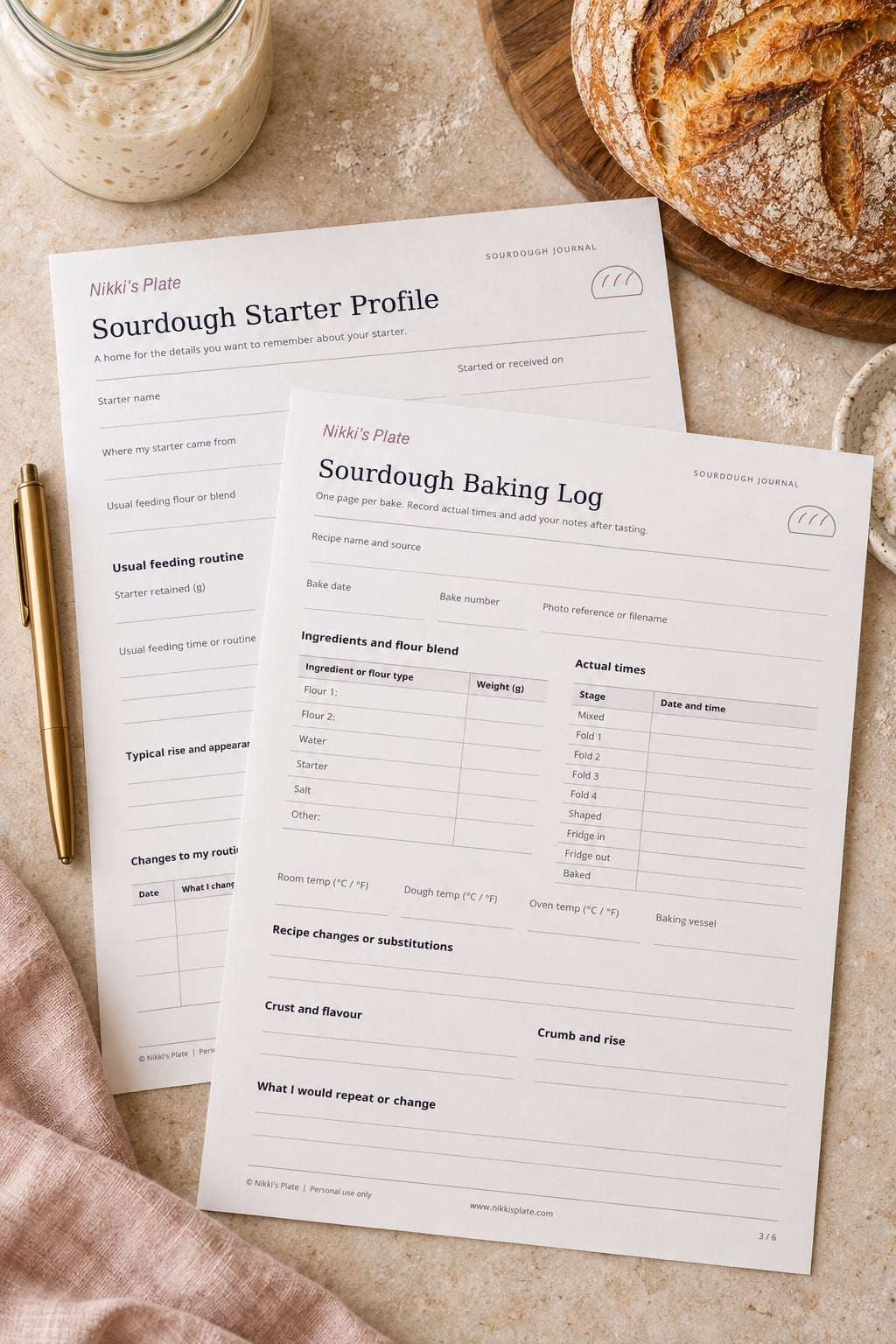
Hi beauties! If you have ever baked a loaf you loved and then wondered exactly how to make it again, this free printable sourdough journal is for you. It gives you a place to record the little details that are surprisingly easy to forget, like when you fed your starter, how long your dough rested, and what you changed from the recipe.
I love the homemade bread part of sourdough baking. Fitting the timing around everything else happening in a busy household takes a little more planning! Having your notes together can make it easier to see where a bake fits into your day and remember what happened along the way.
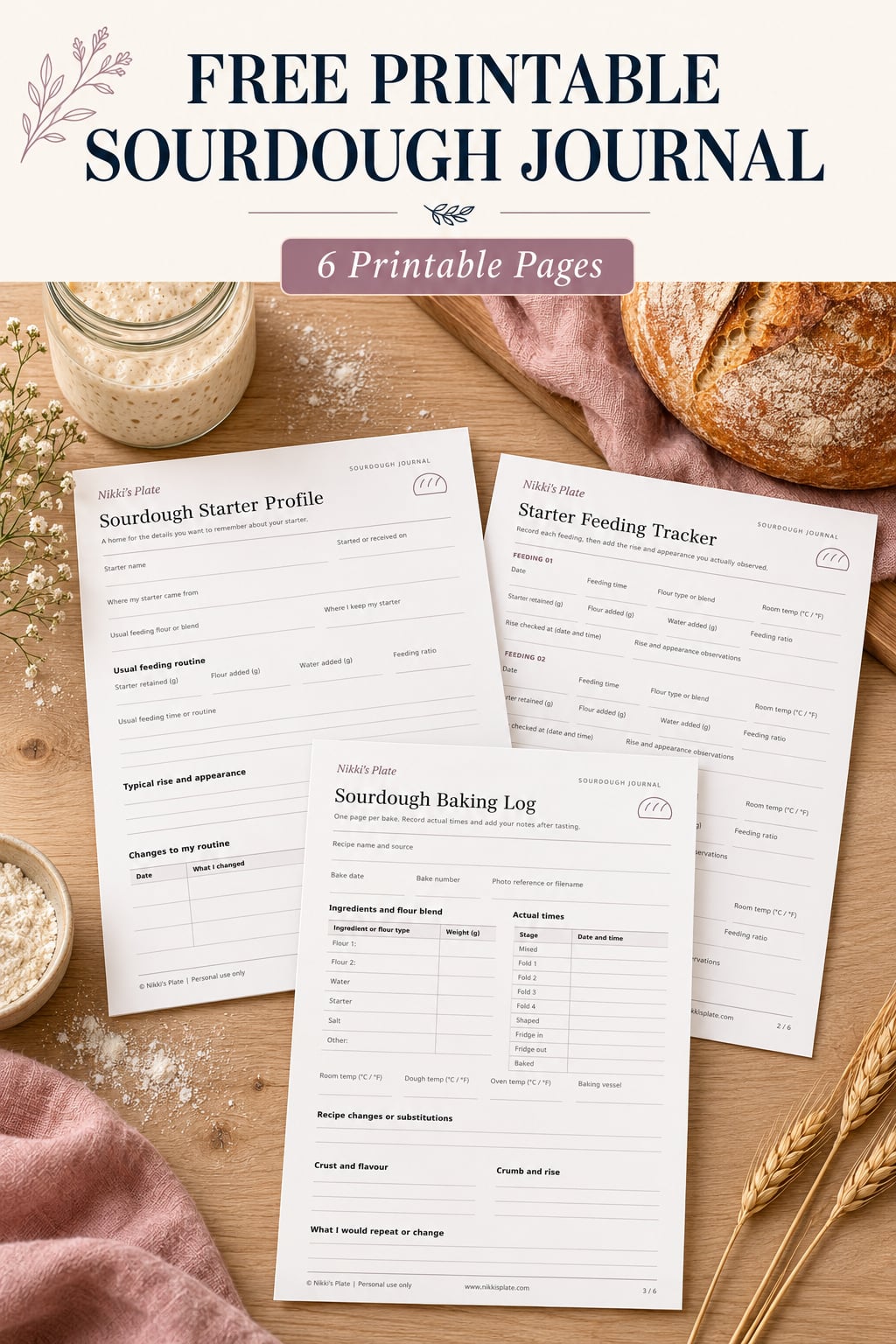
This set includes six pages you can print as needed, from a simple starter feeding tracker to a baking log and a place to save favourite recipes. Start with the page that feels most useful for your next bake.
Why Keep a Sourdough Journal
A sourdough journal is a record of what you did and what you noticed. It can help you compare two bakes, remember a recipe adjustment, or repeat a loaf that turned out particularly well.
Temperature is one useful detail to track because it affects fermentation. A dough made in a cool kitchen may follow a different timeline from the same recipe on a warmer day. King Arthur Baking explains the connection between dough temperature and consistency in fermentation. Recording the conditions alongside your times gives those numbers more context.
Your notes can be brief. An entry such as "used a different flour" or "dough still felt tight when I shaped it" gives you something concrete to look back on. Over a few bakes, you will have a record of your own kitchen and routine.
What Is Included in the Printable
Sourdough Starter Profile
Use this page for your starter's name, when you started it or received it, the flour you usually feed it, and where you keep it. Add your usual feeding routine and any helpful observations. If you change that routine later, date the change so your older notes still make sense.
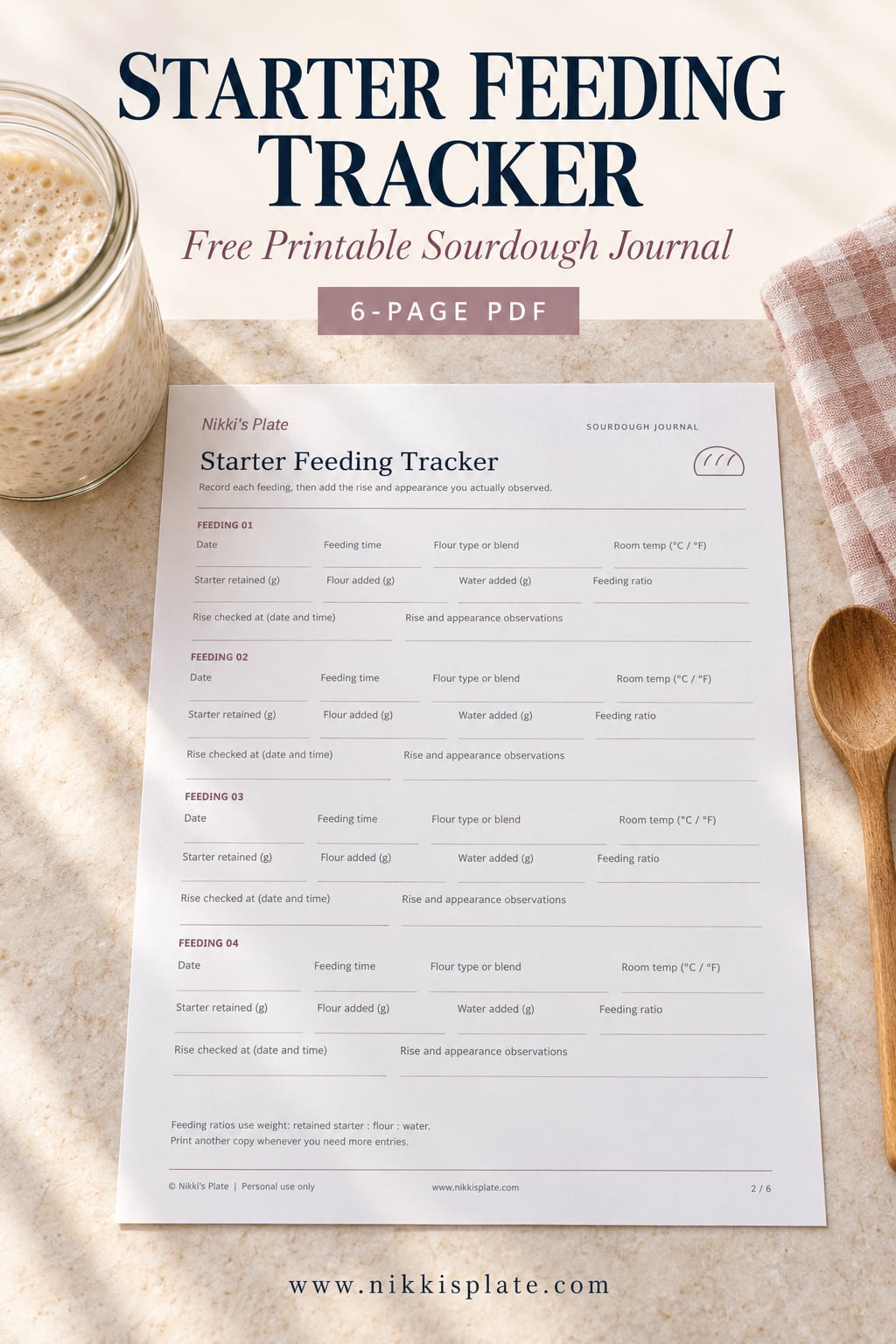
Starter Feeding Tracker
Record the date and time of each feeding, the amount of starter retained, and the flour and water added. There is also space for temperature and observations about rise and appearance. These details are especially useful when you are learning how your starter behaves under different conditions.
Feeding ratios describe proportions by weight. For example, 1:2:2 means one part starter, two parts flour, and two parts water. A feeding with 20 grams of starter, 40 grams of flour, and 40 grams of water follows that ratio. For a fuller explanation, see King Arthur's guide to sourdough feeding ratios. Use the tracker alongside the starter care method you follow.
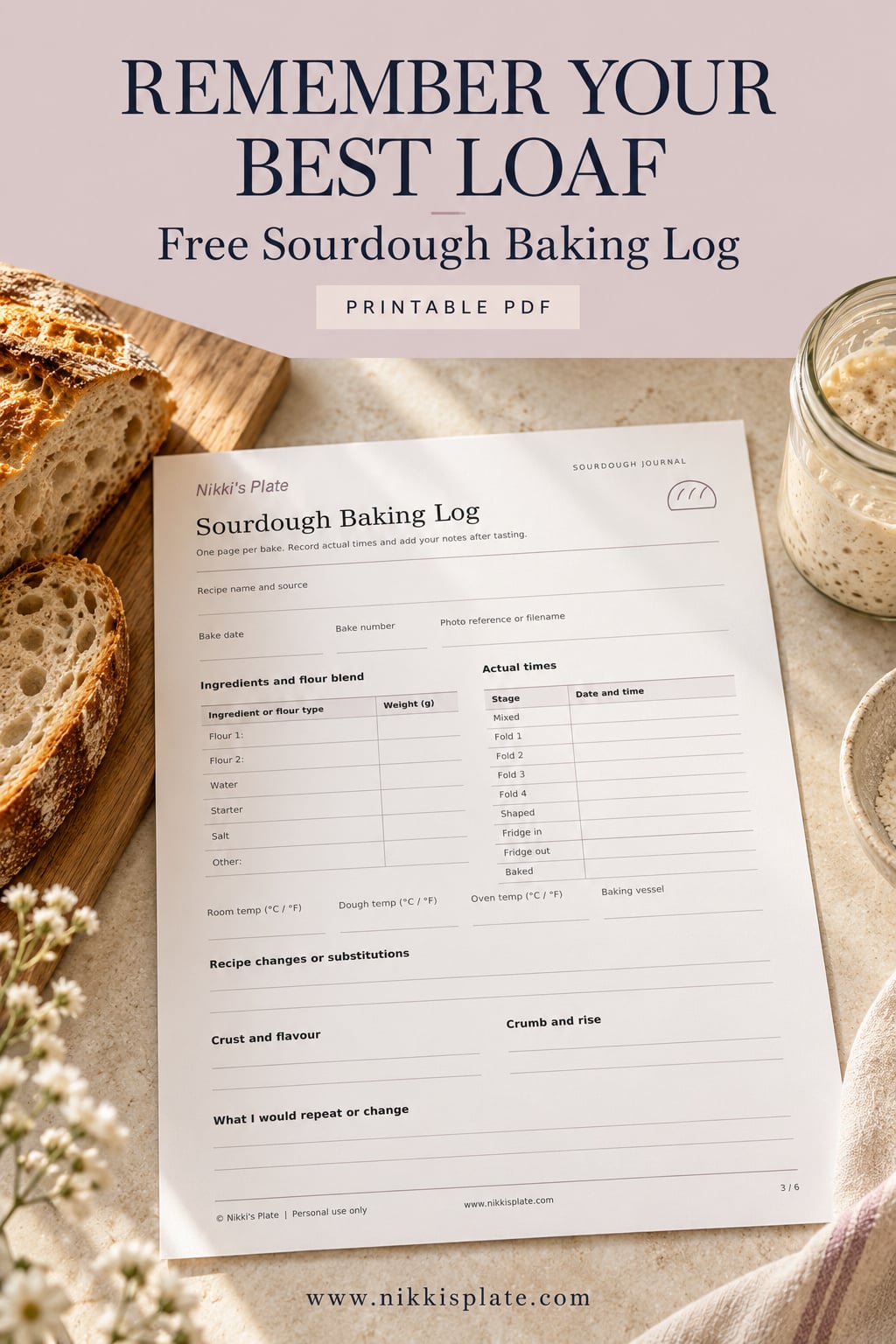
Sourdough Baking Log
Give each bake its own record. Write down the recipe source, ingredient weights, flour blend, starter amount, and any substitutions. Record when you mixed, folded, shaped, refrigerated, and baked the dough, along with the temperatures and observations you have available.
After the loaf has cooled and you have sliced it, add notes about the crust, interior texture, and flavour. Be specific about what you liked and what you would change. "Bottom crust darker than I wanted" is easier to act on than "bad loaf."
Baking Schedule
Use this page to plan your bake around your day. Write down your intended feeding, mixing, folding, shaping, and baking times using the recipe you are following. Then record the actual times as you go. If the dough needed longer than expected, that is useful information for your next plan.
Favourite Recipe Record
Keep your most-used recipes easy to find. Record the recipe name, author or website, ingredient amounts, and your personal adjustments. This page works for a favourite loaf as well as discard recipes you want to make again. For ideas, browse my sourdough scone recipes and sourdough cookie recipes. Follow each recipe's instructions for the type of starter or discard it requires.
Notes for the Next Bake
Use the final page for questions, observations, or one adjustment you want to try. You can also note a photo filename so you can match a picture of your loaf with its baking record. Looking back at a photo and your notes together can make a comparison much easier.
How to Use Your Sourdough Journal
Choose a Recipe to Record
Start with the recipe you are already making. Write down its name and source, then note any changes you make. Keeping a clear reference helps when you return to the page weeks later.
Write Things Down as You Go
Keep the journal and a pen somewhere dry and within reach. Add the feeding time when you feed the starter and the mixing time when you mix the dough. A few quick notes during the process are easier to remember accurately than a full timeline reconstructed the next morning.
Record What the Dough Is Doing
Pair your times with observations. You might note that the dough had visible bubbles, felt easier to stretch after a rest, or spread when you turned it out. Follow your recipe's guidance for readiness and use the journal to record what you saw at each stage.
Finish the Entry After Tasting
Once you have tried the bread, write down what you would like to repeat. Include flavour and how you enjoyed using the loaf, whether that was toast, sandwiches, or a slice with dinner. Those preferences matter when deciding which recipes to keep in your regular rotation.
Choose One Adjustment for Next Time
When you are experimenting, try changing one thing at a time where practical. For example, you might keep the recipe the same while trying a different baking vessel. Record the change and compare your results. It is easier to learn from the comparison when you know what you altered.
A Simple Example of a Starter Entry
Here is an example of how a completed entry might look. The observation time is illustrative; your own starter may behave differently.
| Field | Example entry |
| Feeding time | 8:00 a.m. |
| Starter retained | 20 g |
| Flour added | 40 g bread flour |
| Water added | 40 g |
| Feeding ratio | 1:2:2 by weight |
| Kitchen temperature | 22°C |
| Observation | First noticed it had doubled at 2:00 p.m. |
Notice that the entry says when the rise was first observed. If you did not check the jar between breakfast and lunch, you will not know precisely when it doubled. Recording what you actually saw keeps the log useful.
Printing and Organising Your Pages
Use regular printer paper so the pages are easy to write on and inexpensive to replace. The journal is designed for US Letter paper, 8.5 × 11 inches. Print a test page at actual size and check the margins before printing extra copies. If you use A4 paper, choose the setting that fits the page within your printer's printable area.
A binder or folder works well for keeping everything together. Put the starter profile at the front, followed by feeding records and baking logs in date order. Keep favourite recipes in their own section so you can find them quickly.
You can use a clear sleeve to protect a reference page from flour or water. Keep pages you need to write on accessible, and print more copies of whichever tracker you use most.
Download Your Free Printable Sourdough Journal
The six-page PDF includes a starter profile, feeding tracker, baking log, baking schedule, favourite recipe record, and notes page. Print the whole set for a baking binder, or keep a few copies of the baking log near your recipe book.
The printable is for personal use. If a friend would enjoy it too, please share this post so they can download their own copy.
Frequently Asked Questions
Yes! The six-page PDF is free to download for personal use. You can print extra copies of the trackers whenever you need them.
Use whichever pages help you. A baking log may be enough when you are repeating a familiar recipe. The feeding tracker can be helpful when you are paying closer attention to your starter's routine.
The printable contains blank tracking and planning pages. Use it alongside a bread recipe you trust. The favourite recipe page gives you somewhere to record that recipe's source and your own adjustments.
Yes. Use the favourite recipe record and notes page for discard bakes too. Record the amount of discard, the recipe source, any ingredient changes, and whether you would make it again.
Start With Your Next Loaf
Print a baking log before you mix your next dough and add a few notes as you go. By the time you sit down with a slice, you will have a record to return to when you bake again.
I would love to hear which page you find most useful and what you would add to a longer journal. Would you use a printed version with space for more bakes? Leave a comment and let me know.
For more useful pages to keep at home, browse my free printables. Save this post to Pinterest so you can find the journal whenever you need another copy.
Until next time,



As Seen on TikTok
Come behind the scenes of our farmhouse build, decor projects, and cozy everyday life. Tap a video to watch, then follow @nikkisplate on TikTok for more.
Watch this video on TikTok
Watch this video on TikTok
Watch this video on TikTok




Leave a Reply