
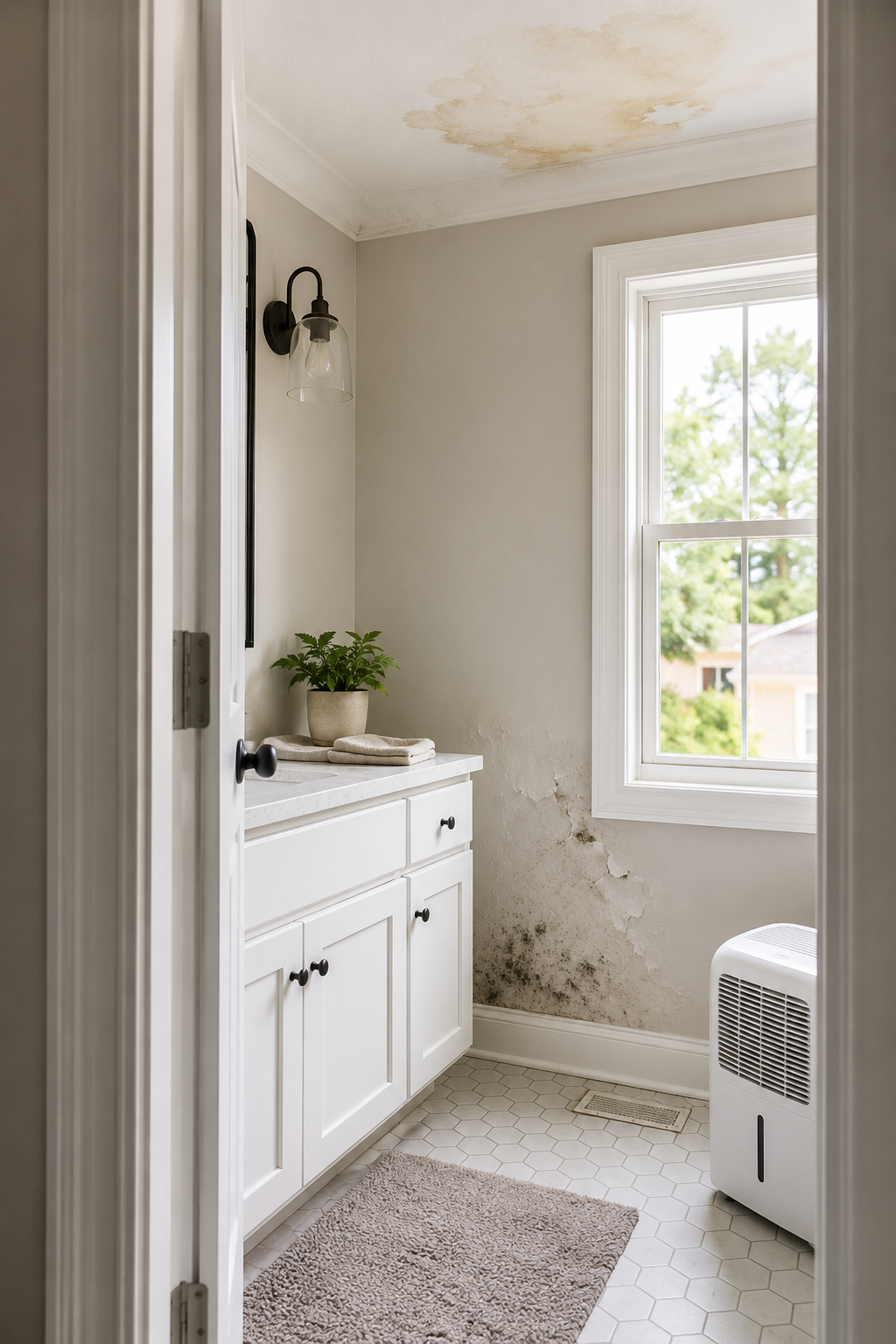
Raleigh's warm, humid climate creates the perfect conditions for mold to grow-especially in hidden areas like crawl spaces, behind walls, under flooring, and around HVAC systems. The tricky part is that hidden mold in Raleigh homes often goes unnoticed until it starts causing musty odors, visible moisture damage, or unexplained health symptoms.
Knowing the early warning signs can help you catch a mold problem before it spreads and becomes more difficult and expensive to address. Even if you can't actually see mold, subtle changes in your home can point to excess moisture and hidden growth.
Below, I'm sharing three of the most common signs of hidden mold in Raleigh homes, where these problems tend to show up, and what you should do if you notice them.
1. A Persistent Musty Smell That Won't Go Away
A musty odor that sticks around no matter how much you clean is one of the most common early signals that mold is hiding somewhere. Mold colonies produce microbial volatile organic compounds (MVOCs) as a byproduct of their metabolic activity, and these compounds carry a distinct earthy, damp smell that air freshener won't fully cover.
Where the odor concentrates
- You'll notice the odor tends to concentrate in rooms with limited circulation: basements, closets, bathrooms with weak exhaust fans.
- In Raleigh homes specifically, crawl spaces are frequent culprits because moisture migrates upward from the soil into the living space above.
- If the smell is noticeably stronger in one room than everywhere else, treat that localized concentration as a clue rather than a coincidence.
Moisture meters and infrared cameras are commonly used to trace odor sources inside walls, under flooring, and in unconditioned spaces where a visual check alone won't find anything useful. It's a method that comes up often with a full range of mold remediation services in Raleigh, NC, since odor alone rarely tells the whole story. The smell isn't proof by itself, but it's a strong enough signal to warrant a proper investigation, not just a surface cleaning.
What To Do About It
And don't just crack the windows and wait it out. Arrange a professional inspection that includes air quality sampling, not merely a visual walkthrough. Air sampling measures the concentration of mold spores in your indoor air and compares that reading against an outdoor baseline; a significantly elevated indoor count confirms active growth somewhere in the building, even when no mold is actually visible.
In the meantime:
- Run a dehumidifier to bring indoor humidity down, and make sure bathroom and kitchen exhaust fans vent to the exterior.
- Don't seal over the source with paint or caulk. Covering mold slows things down temporarily, but it doesn't stop growth, and it makes the problem harder to locate and more expensive to fix when it eventually resurfaces.
Real remediation starts with finding where the moisture is coming from first, then treating the colony.
2. Unexplained Health Symptoms That Improve Away from Home
Pay attention to the pattern, not just the symptoms themselves. Mold-related health effects behave in a fairly specific way: worse at home, better the moment you leave for a few days.
Common reactions and who's most at risk:
- Nasal congestion, chronic coughing, eye irritation, headaches, and skin rashes are all common reactions.
- People with asthma or existing respiratory conditions are more sensitive and can start reacting at relatively low spore concentrations.
- Children and older adults face higher risk as well.
The connection to your home gets harder to ignore when symptoms that seemed like seasonal allergies vanish completely during a vacation, then come back within a day or two of returning.
That pattern doesn't confirm mold on its own; dust mites and VOCs from building materials can produce similar reactions, but combined with other warning signs, it's a meaningful data point. The trick is not to reach for a long-term antihistamine prescription when the real answer might be in your walls.
The Right Response: Two Steps
The right response here actually involves two steps.
- First, talk to a doctor and describe the pattern clearly, including when you feel better and where you are when it happens. A physician can order tests that identify mold sensitization.
- Second, get an indoor air quality test done at the house. A professional assessment measures spore types and concentrations room by room, which helps pinpoint where active mold growth is most likely hiding.
Raleigh's year-round humidity means even well-maintained homes can develop problems inside HVAC ductwork, behind bathroom tile, or in the attic after roof damage. So don't self-diagnose based on symptoms alone, but don't brush off the symptom-location pattern either. If your body consistently feels better away from the house, something in that house deserves a closer look.
3. Water Stains, Warped Surfaces, or Bubbling Paint Without a Clear Leak
Physical damage to walls, ceilings, or floors is a strong indicator that moisture has been trapped inside building materials long enough for mold to get established.
What to look for:
- Yellowish or brownish stains on drywall or ceiling tiles suggest water intrusion that's either ongoing or happened at some point in the past.
- Paint that bubbles, peels, or separates from the surface means moisture is sitting behind it.
- Floorboards that feel soft underfoot, buckle slightly, or have a springy quality in isolated spots point to moisture pooling beneath the finished surface.
In Raleigh, these signs show up often in bathrooms with grout failures, around windows with deteriorated seals, and near rooflines where wind-driven rain has forced water into attic or wall cavities.
The damage itself doesn't always mean active mold is present right now, but statistically, building materials that've been wet for more than 24 to 48 hours carry a high probability of mold colonization. Even surface staining that has dried out may contain dormant spores ready to reactivate the next time moisture shows up.
What To Do Next Depends on the Scale
What you do next depends on the scale of the damage.
- Small, isolated stains on non-porous surfaces sometimes respond to cleaning with an EPA-registered antimicrobial solution.
- But water stains on drywall, softwood framing, or subfloor materials typically need those materials removed and replaced; surface treatment isn't enough.
A professional assessment determines how far moisture has traveled through wall and floor assemblies, because mold frequently extends well beyond the visible stain. Before any repair work starts, the moisture source has to be found and fixed. Patching drywall over a slow pipe leak or a failing window flashing doesn't solve anything; it just restarts the clock on the next mold cycle. Ask for post-remediation clearance testing after the work is complete to confirm spore levels have returned to normal before the space gets closed back up.
Conclusion
The top 3 signs of hidden mold in Raleigh homes and how to deal with them fall into three categories: an odor you can't explain away, a health pattern tied directly to your location, and physical damage left behind by trapped moisture. None of these signs should be written off as normal wear, seasonal allergies, or just old-house quirks.
Raleigh's climate creates favorable conditions for mold growth throughout the year; early detection costs a fraction of what full remediation runs after a colony has spread across multiple building assemblies. If any of these warning signs sound familiar, a professional inspection is the right next step, not a wait-and-see approach.


As Seen on TikTok
Come behind the scenes of our farmhouse build, decor projects, and cozy everyday life. Tap a video to watch, then follow @nikkisplate on TikTok for more.
Watch this video on TikTok
Watch this video on TikTok
Watch this video on TikTok




Leave a Reply