
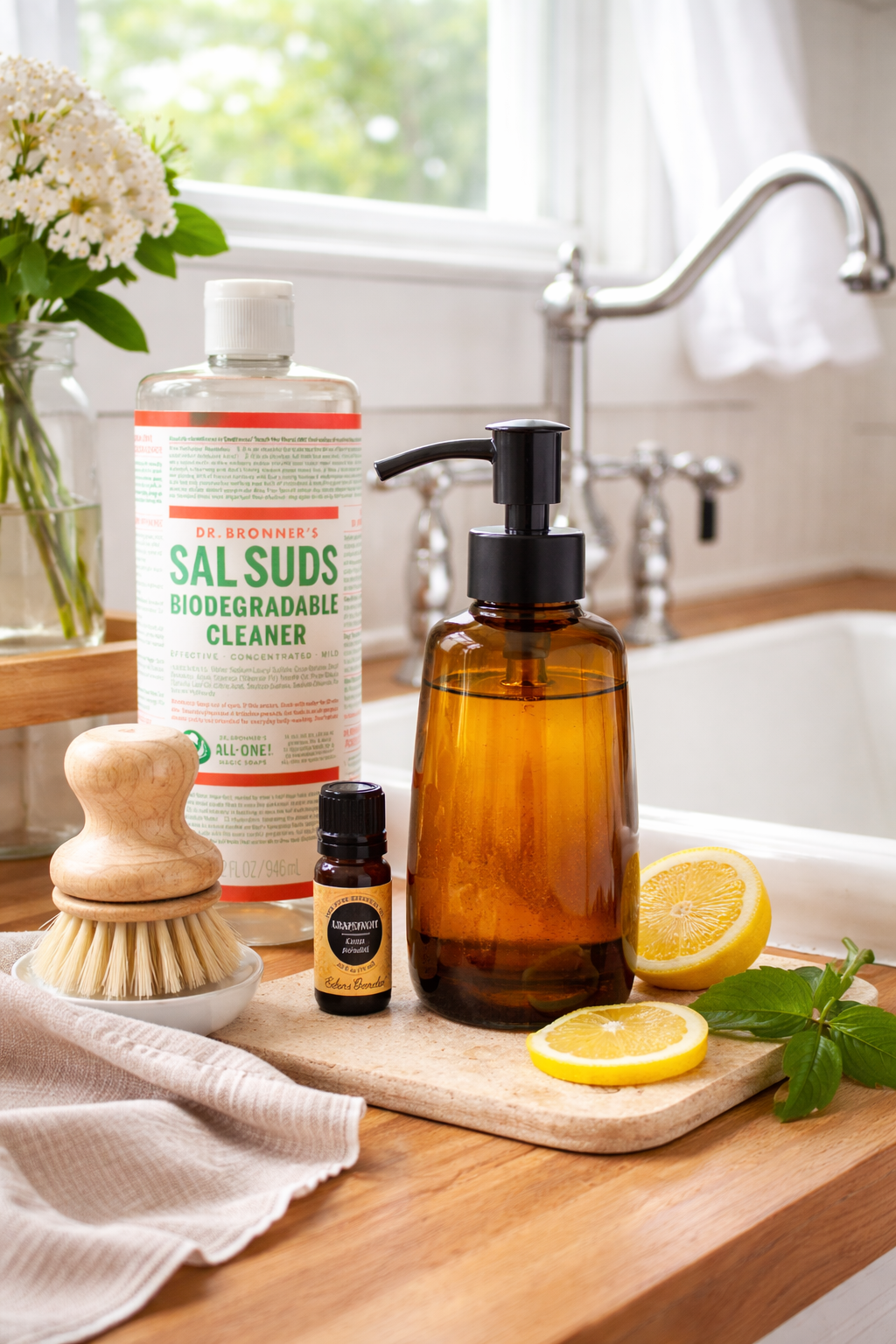
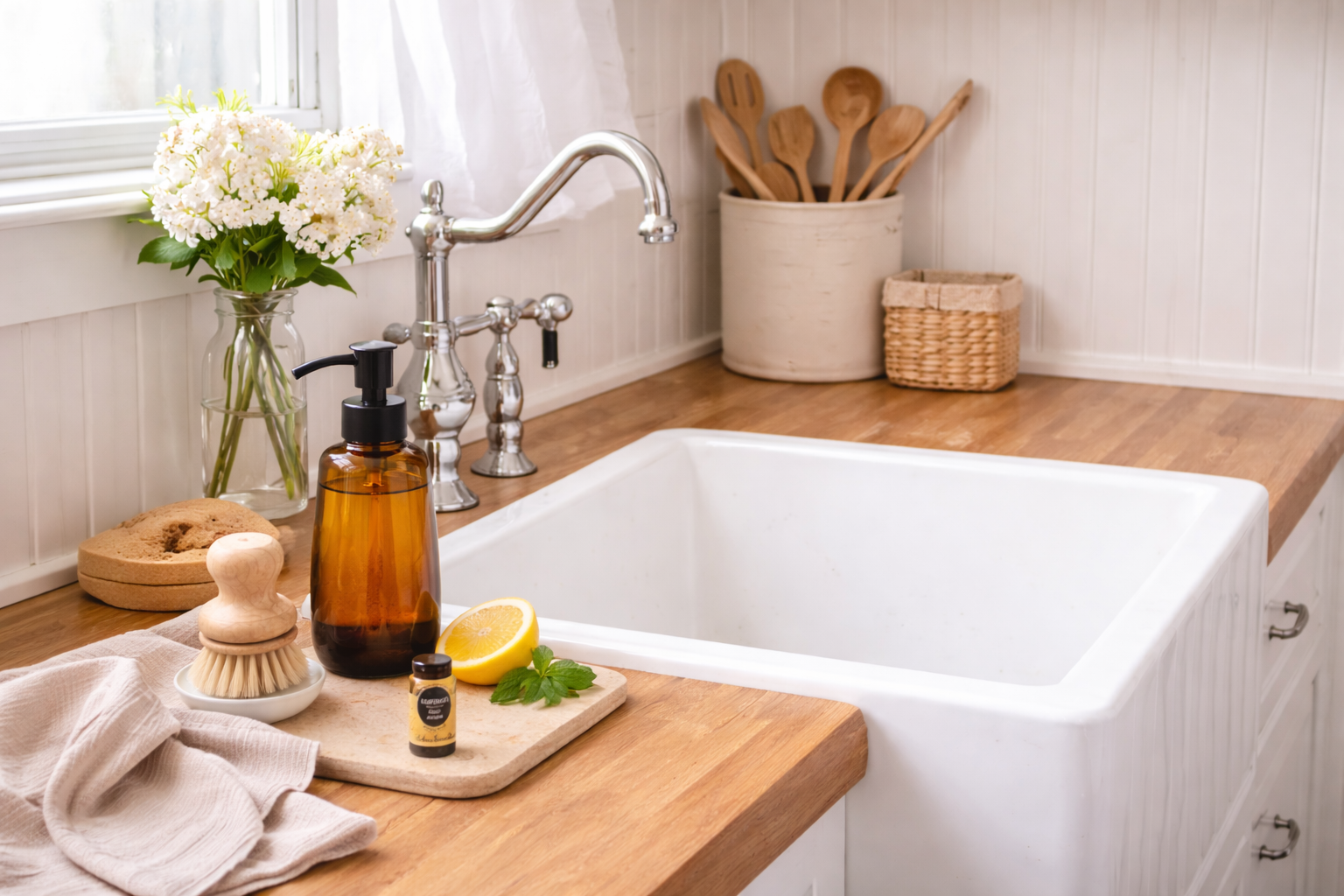
Make Your Own Homemade Lemon Dish Soap with simple, natural ingredients. This easy DIY liquid dish soap cuts grease, smells fresh, and is gentle on hands.
Disclaimer: this post may contain affiliate links, and every purchase made through these links will give me a small commission (at absolutely no extra cost for you!) AS AN AMAZON ASSOCIATE AND REWARDSTYLE MEMBER, I EARN FROM QUALIFYING PURCHASES. See Privacy Policy for additional info.
Hi beauties! If you're looking for a simple swap to make your kitchen routine a little more natural, this homemade lemon dish soap is a great place to start. It's made with easy-to-find ingredients and has that fresh, clean lemon scent that makes washing dishes feel a bit more enjoyable. Plus, it's a gentle option if you're trying to cut back on harsh chemicals around your home.
One of the best parts about making your own dish soap is knowing exactly what's in it. This DIY lemon dish soap is designed to cut through everyday grease while still being kind to your hands. Whether you're washing a sink full of dinner dishes or just a few quick items, it gets the job done without the overpowering fragrances or additives found in many store-bought versions.
If you're new to homemade cleaners, don't worry - this recipe is beginner-friendly and comes together in just a few simple steps. Once you make a batch, you'll have a fresh-smelling, natural dish soap ready to use right at your sink. It's an easy, practical way to bring a little more DIY into your everyday routine.
Why You Need This Homemade Lemon Dish Soap
This homemade lemon dish soap is an easy swap that helps you create a more natural kitchen routine without sacrificing cleaning power. Made with simple, plant-based ingredients, it cuts through grease while being gentler on your hands than many store-bought options. The addition of nourishing oils helps prevent dryness, and the fresh lemon scent leaves your sink area smelling clean and bright without artificial fragrances. It's a small change that makes everyday dishwashing feel a little healthier and more enjoyable.
How to Make Homemade Lemon Liquid Dish Soap Recipe:
Ingredients
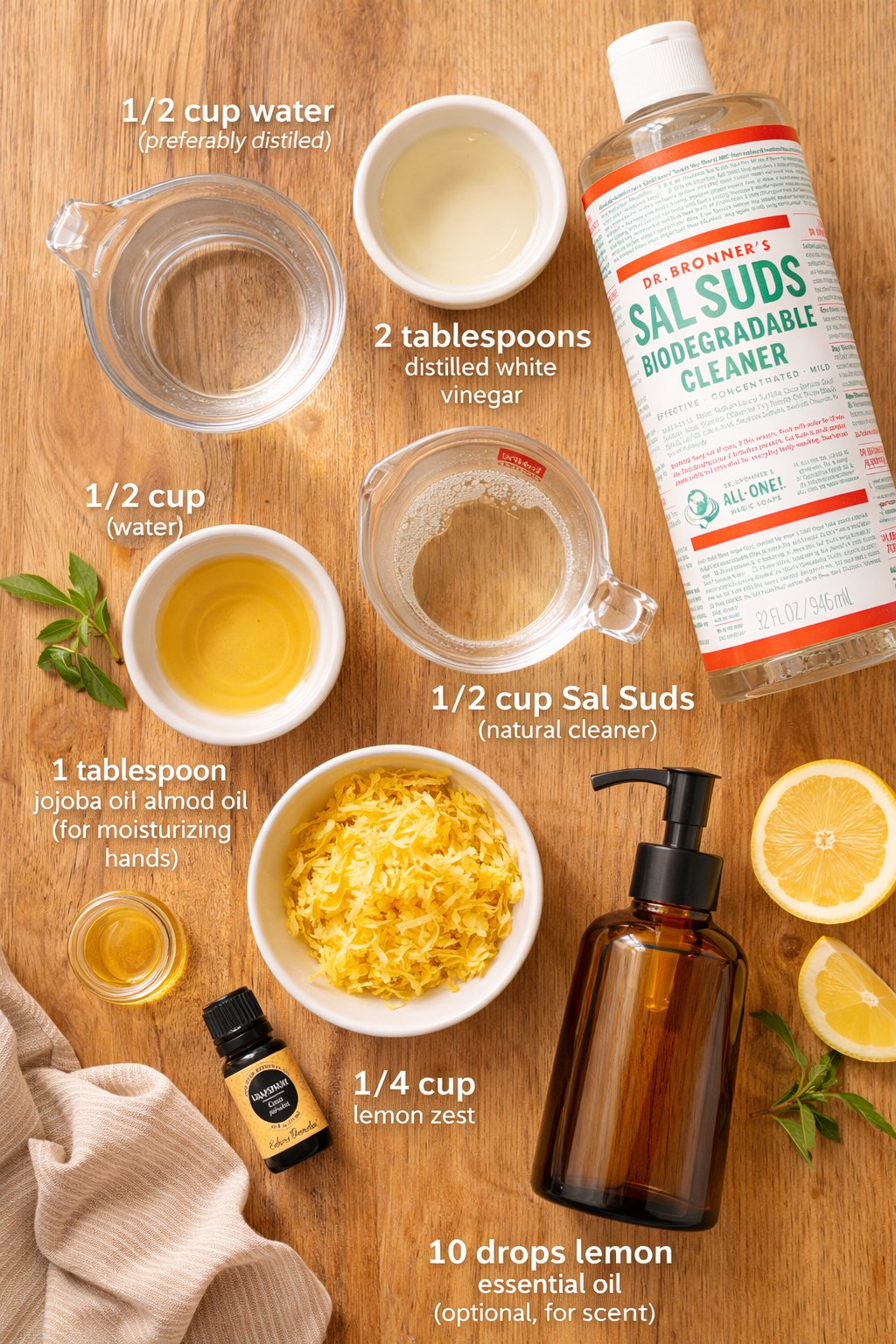
- ½ cup water (preferably distilled)
- 2 tablespoons distilled white vinegar
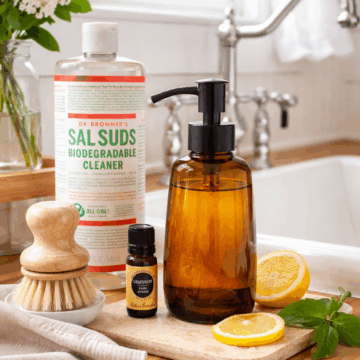
- ½ cup sal suds (natural cleaner)
- 1 tablespoon jojoba or almond oil (for moisturizing hands)
- ¼ cup lemon zest
- 1 tablespoon vitamin E oil (optional, natural preservative))
- 10 drops lemon essential oil (optional, for scent)
Directions
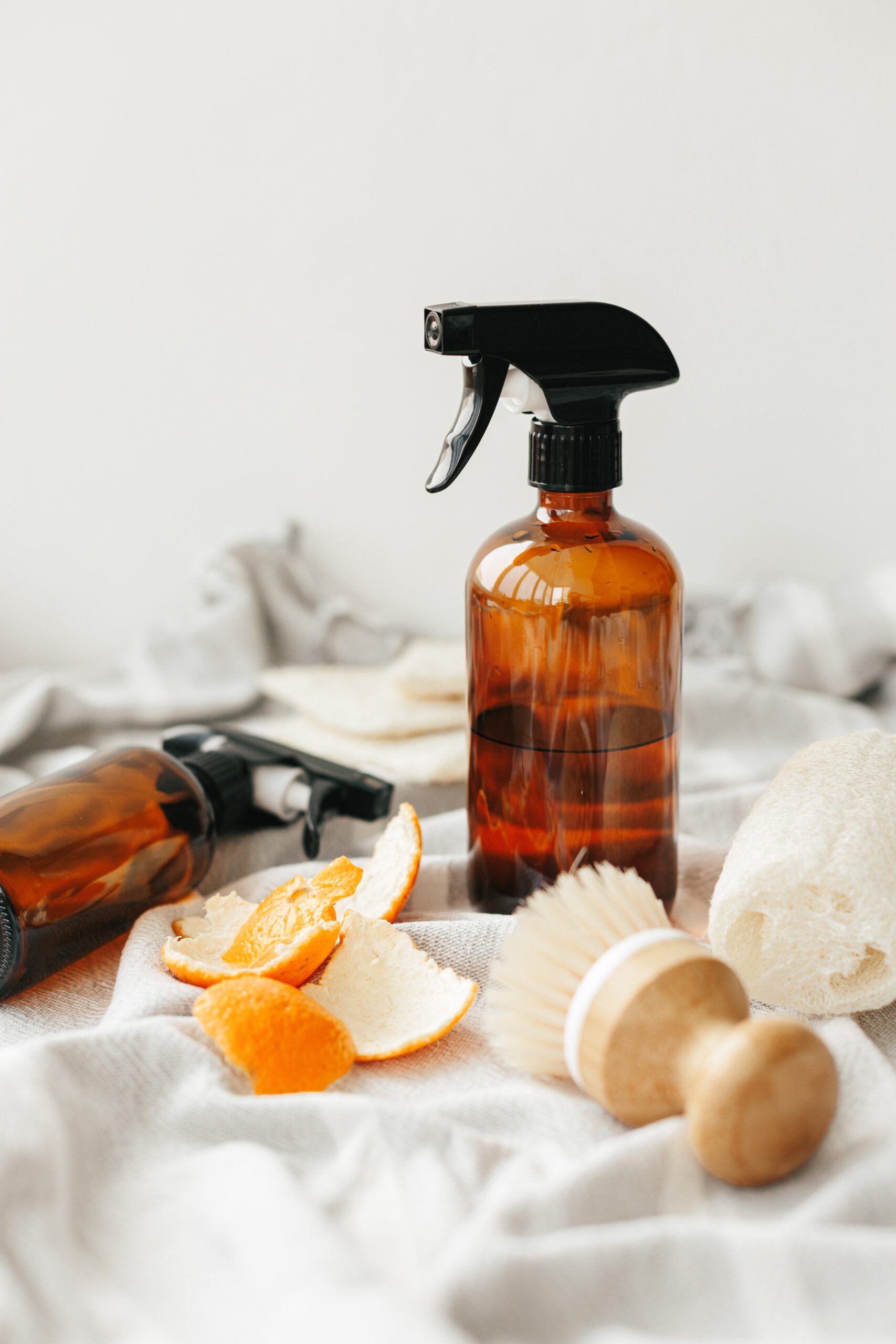
Using a small funnel, pour the water, lemon zest, and distilled white vinegar into a soap dispenser. You can use an old dish soap container, repurposed, or a new glass soap dispenser. Cap and shake well.
Add the Sal Suds, jojoba or almond oil, vitamin E oil, and lemon essential oil (if using). Cap and gently shake again to combine.
Why These Ingredients Work
Each ingredient in this homemade lemon dish soap has a purpose. Together, they create a natural, effective cleaner that's tough on grease but gentle on your hands.
- Water - Distilled water helps dilute the soap to the perfect consistency while keeping the mixture fresh longer by reducing mineral buildup.
- Distilled White Vinegar - Vinegar helps cut through grease and removes lingering food residue, making it a natural degreasing booster.
- Sal Suds - Sal Suds is a plant-based cleaner known for its powerful grease-cutting ability. It creates the bubbles and cleaning action you expect from dish soap without harsh synthetic ingredients.
- Jojoba or Almond Oil - These lightweight oils help counteract the drying effects of soap, keeping your hands soft even with frequent washing.
- Lemon Zest - Fresh lemon zest adds a light citrus scent and contains natural oils that help break down grease.
- Vitamin E Oil (Optional) - Vitamin E oil can help extend shelf life slightly and adds extra skin-conditioning benefits.
- Lemon Essential Oil (Optional) - Lemon essential oil boosts the fresh citrus scent and adds extra natural degreasing power.
This combination gives you a homemade lemon dish soap that smells fresh, cleans effectively, and feels gentle on your skin.
How to Use This Dish Soap Recipe
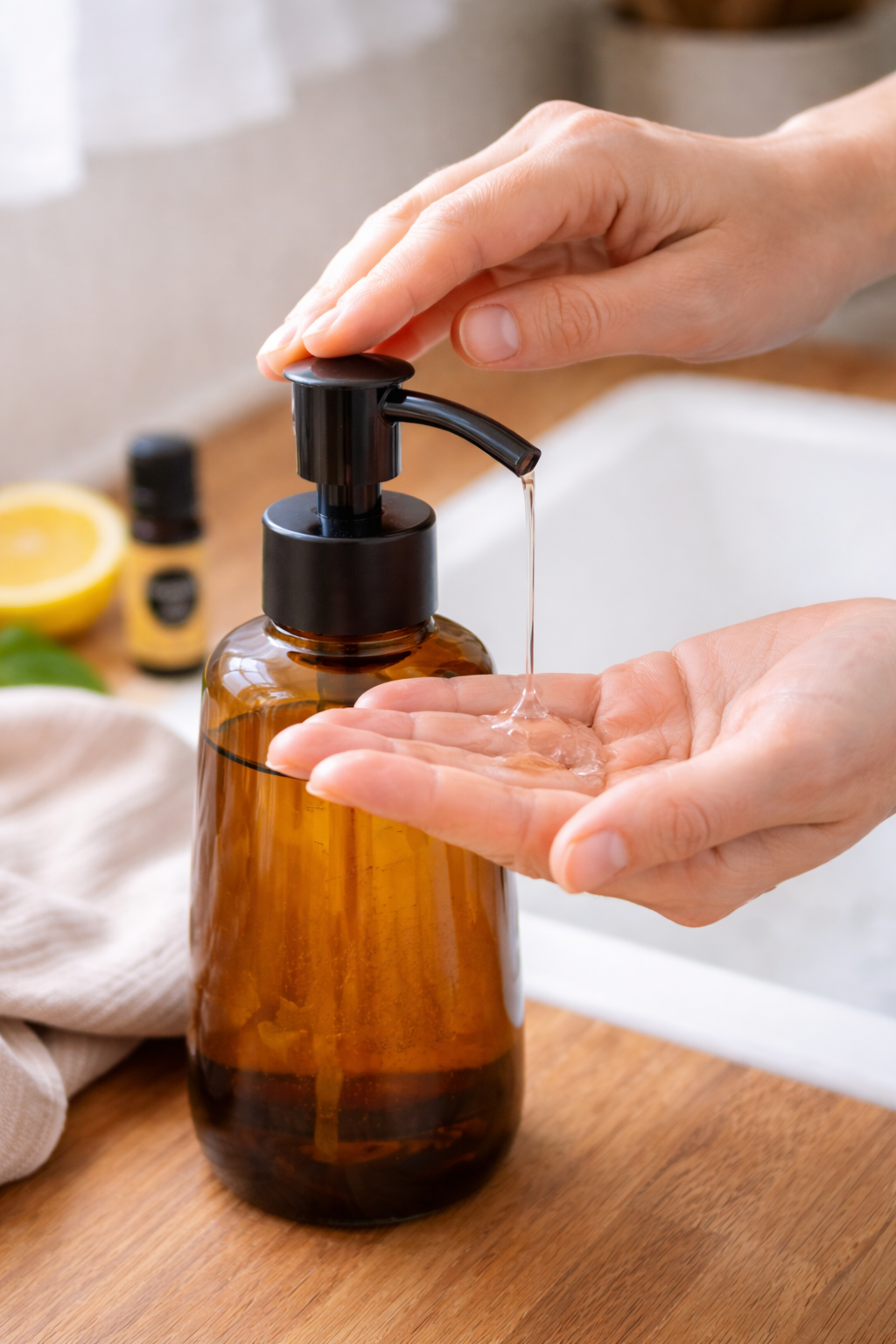
Tip the bottle upside down and right side up a few times before using to mix in the oils with the other ingredients. This will ensure even distribution without breaking up the components of the homemade dish soap
How to Store Homemade Dish Soap
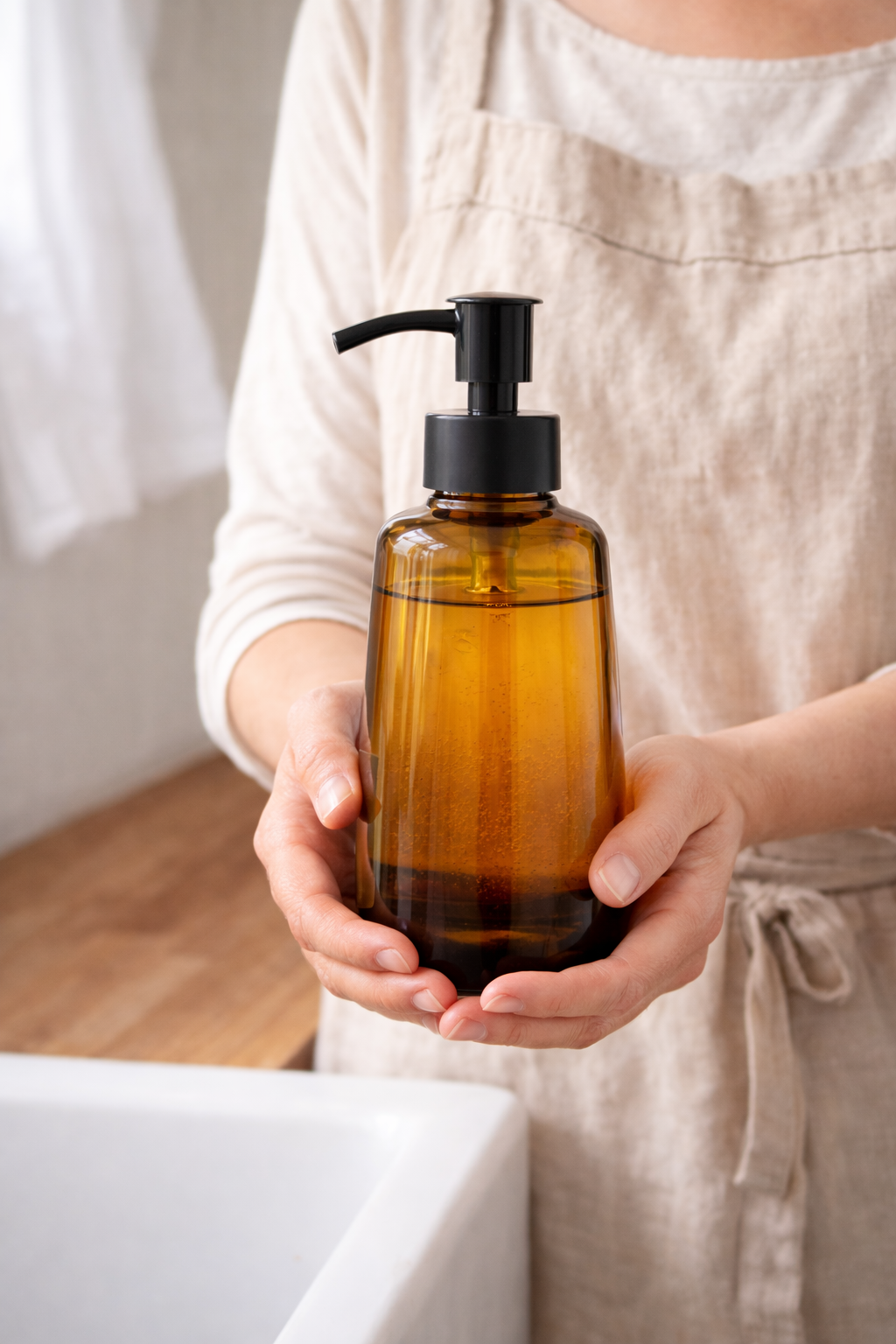
Storing your homemade lemon dish soap properly helps it last longer and keeps the texture just right. Since natural DIY cleaners don't contain the same preservatives as store-bought products, a few simple storage habits make a big difference.
- Use a sealed container - Pour your dish soap into a clean, airtight pump bottle or glass dispenser. This keeps out moisture and bacteria while making it easy to use at the sink.
- Keep it in a cool, dry spot - Store the bottle at room temperature, away from direct sunlight or heat. Too much warmth can weaken the scent of the lemon essential oil and slightly change the consistency.
- Shake gently before use - Natural ingredients can separate over time - that's totally normal. Just give the bottle a gentle shake to remix everything before each use.
- Watch for changes - If the smell, color, or texture changes significantly, it's best to make a fresh batch. Most homemade dish soaps stay fresh for several weeks when stored properly.
These small steps help your DIY dish soap stay effective, fresh-smelling, and ready to tackle greasy dishes.
How Long Does Homemade Dish Soap Last?
Homemade lemon dish soap typically lasts several weeks when stored properly in a clean, sealed container at room temperature. Because it doesn't contain strong preservatives like store-bought versions, freshness depends on using distilled water, sanitized tools, and keeping the bottle away from heat and direct sunlight. If you notice any changes in smell, color, or texture, it's best to discard the mixture and make a fresh batch.
Common Problems & Fixes
- Soap is separating - This is normal with natural ingredients. Simply give the bottle a gentle shake before each use to remix everything.
- Soap seems too watery - Try adding a small amount of Sal Suds to boost cleaning power, or reduce the amount of added water in your next batch.
- Soap is too thick - Add a little distilled water, a tablespoon at a time, and shake gently until you reach your desired consistency.
- Not enough suds - Homemade soaps don't foam like conventional dish soaps. However, adding a bit more Sal Suds can increase bubbles and cleaning strength.
- Scent faded over time - Essential oils naturally lose strength. Add a few more drops of lemon essential oil and shake gently to refresh the scent.
- Hands feel dry after washing - Increase the amount of jojoba or almond oil slightly in your next batch to add more moisturizing properties.
- Soap smells "off" or looks cloudy - This can mean bacteria has formed. Discard the mixture, wash the container thoroughly, and make a fresh batch using distilled water and clean tools.
Frequently Asked Questions About Homemade Dish Soap
Does homemade dish soap actually work?
Yes! A well-made homemade dish soap can cut grease and clean everyday dishes effectively. The key is using a strong, plant-based cleanser (like Sal Suds) and mixing it properly so it stays well-combined.
How long does homemade dish soap last?
Most homemade dish soap lasts several weeks when stored in a clean, sealed container and kept at room temperature. Using distilled water and clean tools helps it stay fresh longer.
Why did my homemade dish soap separate?
Separation is normal with DIY recipes, especially when oils are included. Just give the bottle a gentle shake before each use to remix everything. If you prefer a more consistent texture, reduce the added oil slightly.
Can I use tap water instead of distilled water?
You can, but distilled water is recommended because it reduces mineral buildup and can help extend freshness. If you use tap water, try to use filtered water and store the soap in a cool place.
Can I skip the essential oils?
Absolutely. Essential oils are optional and mainly add scent (and a little extra degreasing boost). The recipe will still clean well without them.
Is this homemade dish soap safe for sensitive skin?
It can be gentler than some store-bought formulas, but everyone's skin is different. If you have sensitive skin, consider skipping essential oils, using less vinegar, and choosing a mild carrier oil like jojoba.
What container should I store homemade dish soap in?
A clean, sealed pump bottle or reusable dish soap container works best. Glass is a great option, but any sturdy bottle that can be tightly capped is fine-just make sure it's washed and fully dried before filling.
More Homemade Cleaning Product Recipes:
Final Thoughts on Homemade Lemon Dish Soap
Making your own homemade lemon dish soap is a simple way to bring more natural, eco-friendly products into your home. With just a few ingredients, you can create a cleaner that cuts grease, smells fresh, and feels gentler on your hands than many store-bought options. Plus, DIY recipes like this give you full control over what goes into your cleaning routine.
Once you try this homemade lemon dish soap, you may find it becomes a staple at your kitchen sink. It's easy to customize, budget-friendly, and a great step toward a more natural lifestyle. Keep this recipe on hand, and enjoy the satisfaction of cleaning your dishes with something you made yourself.
Until next time,

Homemade Lemon Liquid Dish Soap Recipe
Ingredients
- ½ cup water (preferably distilled)
- 2 tablespoon distilled white vinegar
- ¼ cup lemon zest
- ½ cup sal suds
- 1 tablespoon jojoba or almond oil
- 1 tablespoon vitamin E oil (optional)
- 10 drops lemon essential oil (optional)
Instructions
- Using a small funnel, pour the water, lemon zest and the distilled white vinegar into a soap dispenser. You can use an old dish soap container repurposed or a new glass soap dispenser. Cap and shake well.
- Add in the Sal Suds, Jojoba oil and vitamin E + lemon oil if using. Cap and shake lightly again.
Homemade Lemon Liquid Dish Soap Recipe; easy homemade dish soap recipe with lemon essential oil, vinegar and sal suds!

As Seen on TikTok
Come behind the scenes of our farmhouse build, decor projects, and cozy everyday life. Tap a video to watch, then follow @nikkisplate on TikTok for more.
Watch this video on TikTok
Watch this video on TikTok
Watch this video on TikTok

Leave a Reply