
Make this easy homemade natural bug spray recipe with witch hazel and essential oils. A fresh-smelling DIY bug spray for summer days, patios, and outdoor adventures.
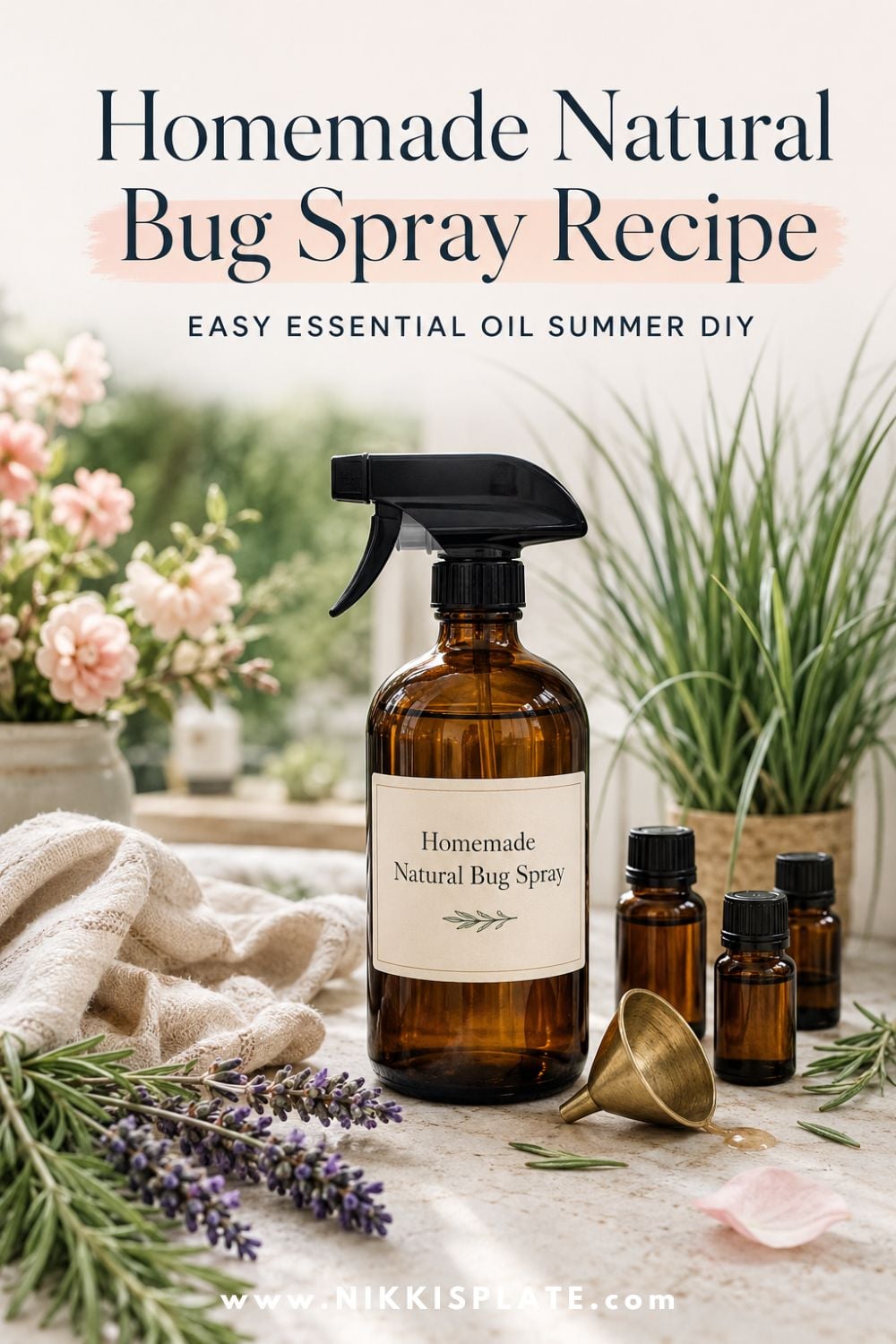
Summer is all about backyard dinners, camping trips, gardening, and long evenings outside. The only downside is dealing with mosquitoes and other annoying bugs while I am trying to enjoy the fresh air.
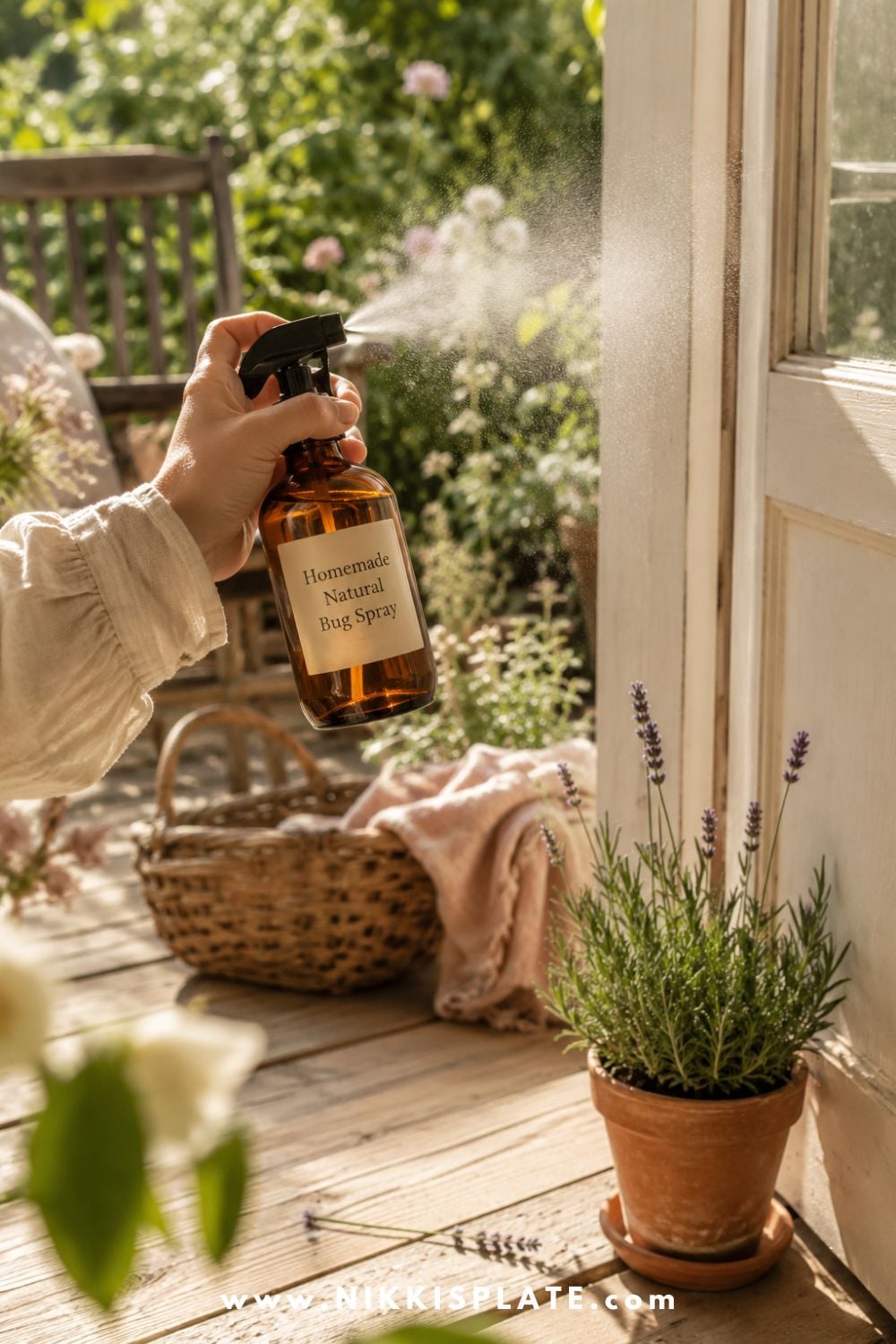
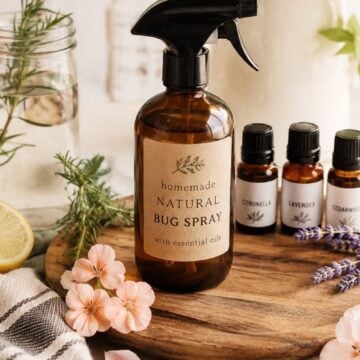
This homemade natural bug spray recipe is one of my favourite easy summer DIYs. It comes together in just a few minutes using witch hazel, water, and a blend of essential oils with fresh, woodsy, and floral scents.
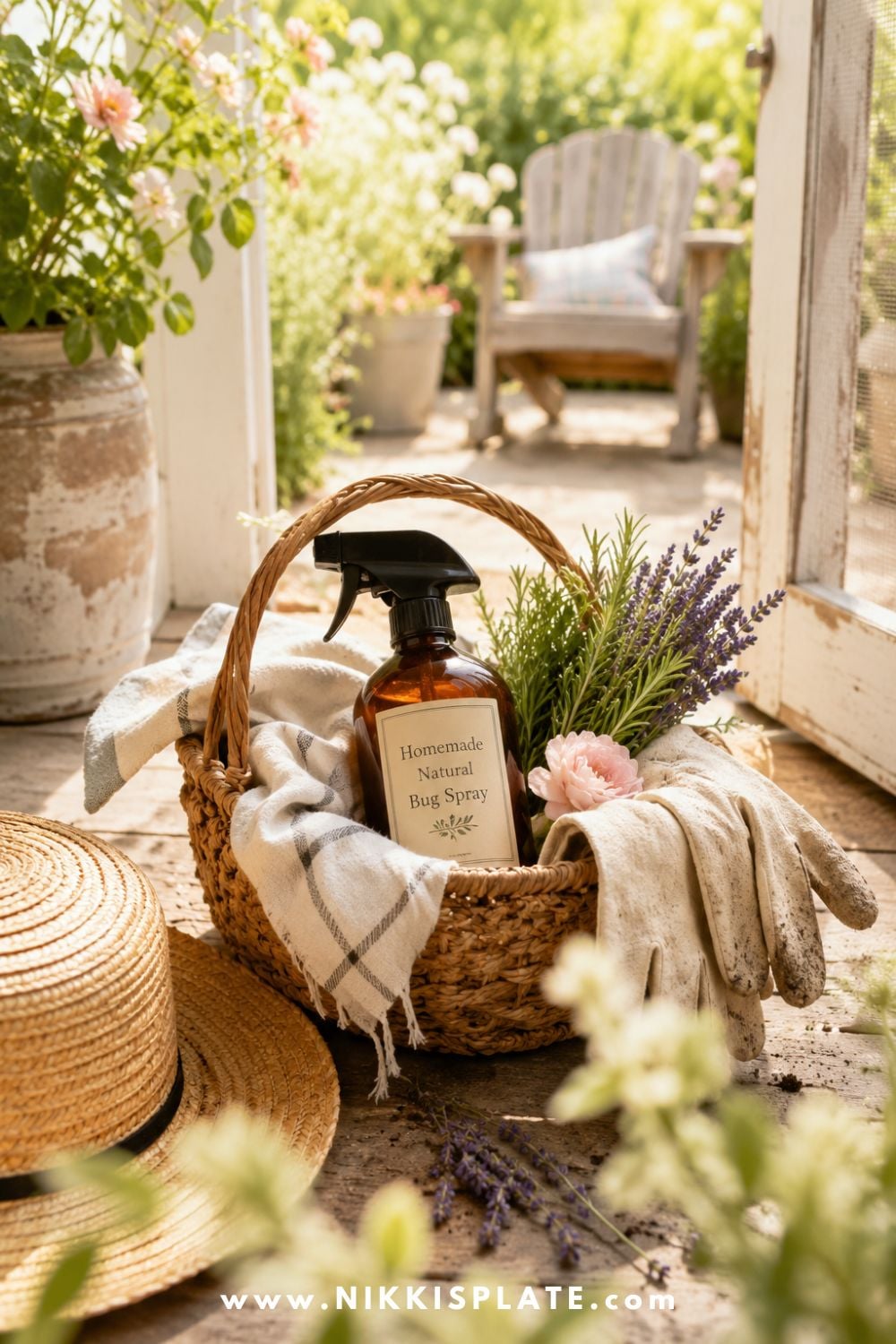
I love keeping a bottle of this DIY bug spray near the back door so it is easy to grab before heading outside. It is simple to make, easy to customize, and smells so much nicer than many traditional bug sprays.
Why You'll Love This Homemade Bug Spray
This simple recipe is perfect for keeping on hand throughout the warmer months.
- It only takes a few minutes to make.
- The ingredients are easy to find.
- You can adjust the essential oil blend.
- It has a fresh, summery scent.
- It is easy to store in a small spray bottle.
- One batch is perfect for patios, cottages, camping trips, and backyard evenings.
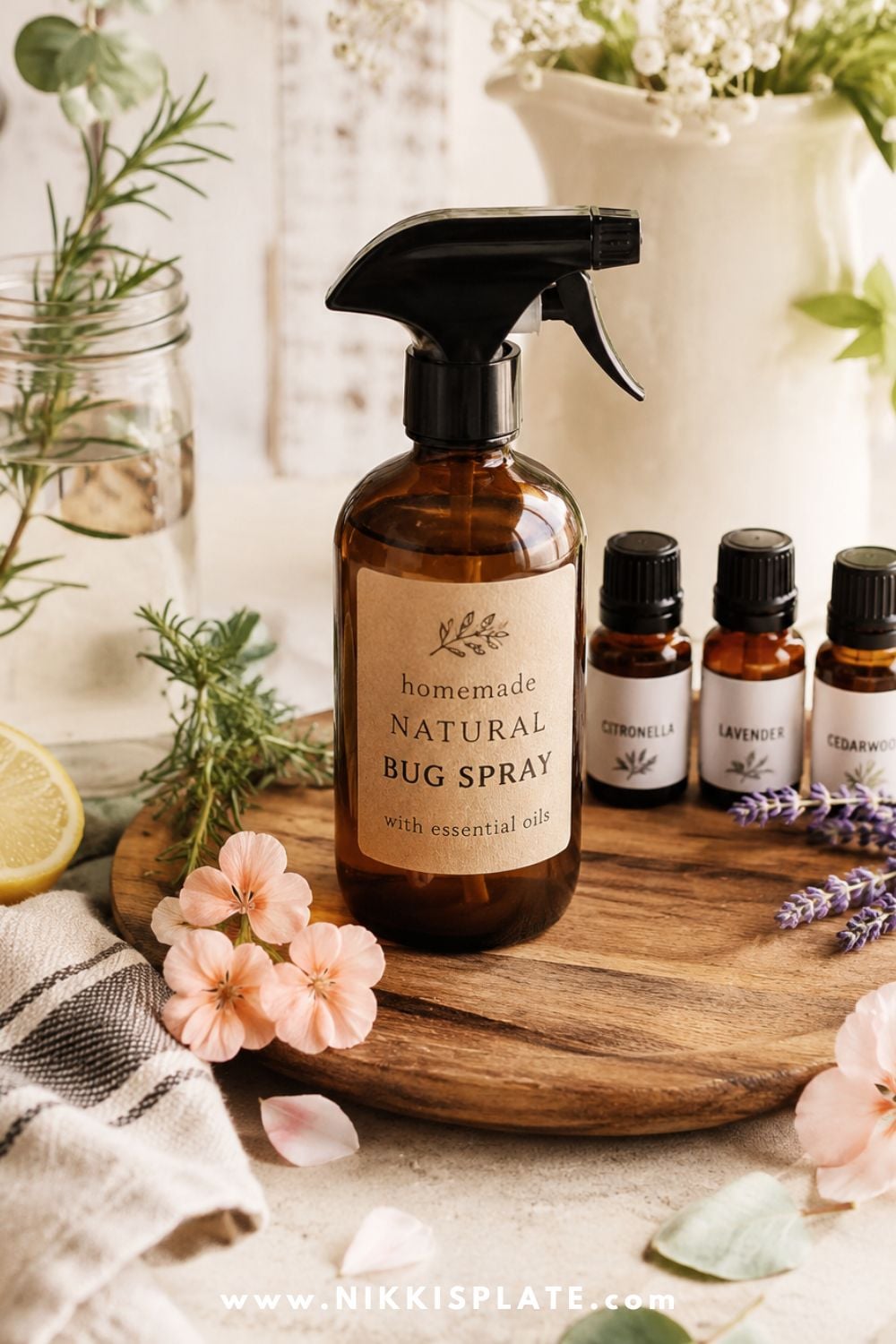
Homemade Natural Bug Spray Ingredients
You only need a few simple ingredients to make this homemade essential oil bug spray.
Witch Hazel
Witch hazel creates the base of the spray and helps disperse the essential oils throughout the mixture. I prefer using unscented witch hazel so it does not compete with the essential oil blend.
Distilled Water
Distilled water helps dilute the mixture and gives the spray a lighter consistency. Using distilled water may also help the spray stay fresh longer than regular tap water.
Citronella Essential Oil
Citronella has the classic fresh and lemony scent often associated with outdoor candles and sprays.
Cedarwood Essential Oil
Cedarwood gives the spray a warm, earthy scent that pairs beautifully with the lighter floral and citrus notes.
Geranium Essential Oil
Geranium has a fresh, slightly rosy scent that makes this homemade bug spray smell a little softer and more feminine.
Rosemary Essential Oil
Rosemary adds a crisp herbal note to the blend. A little goes a long way, so I only use a few drops.
Lavender Essential Oil
Lavender adds a soft floral scent and helps balance the stronger citronella and cedarwood oils.
Homemade Natural Bug Spray Recipe
Ingredients
- ¼ cup witch hazel
- ¼ cup distilled water
- 10 drops citronella essential oil
- 8 drops lavender essential oil
- 6 drops cedarwood essential oil
- 4 drops geranium essential oil
- 2 drops rosemary essential oil
- 1 small glass spray bottle
- Small funnel, optional
Instructions
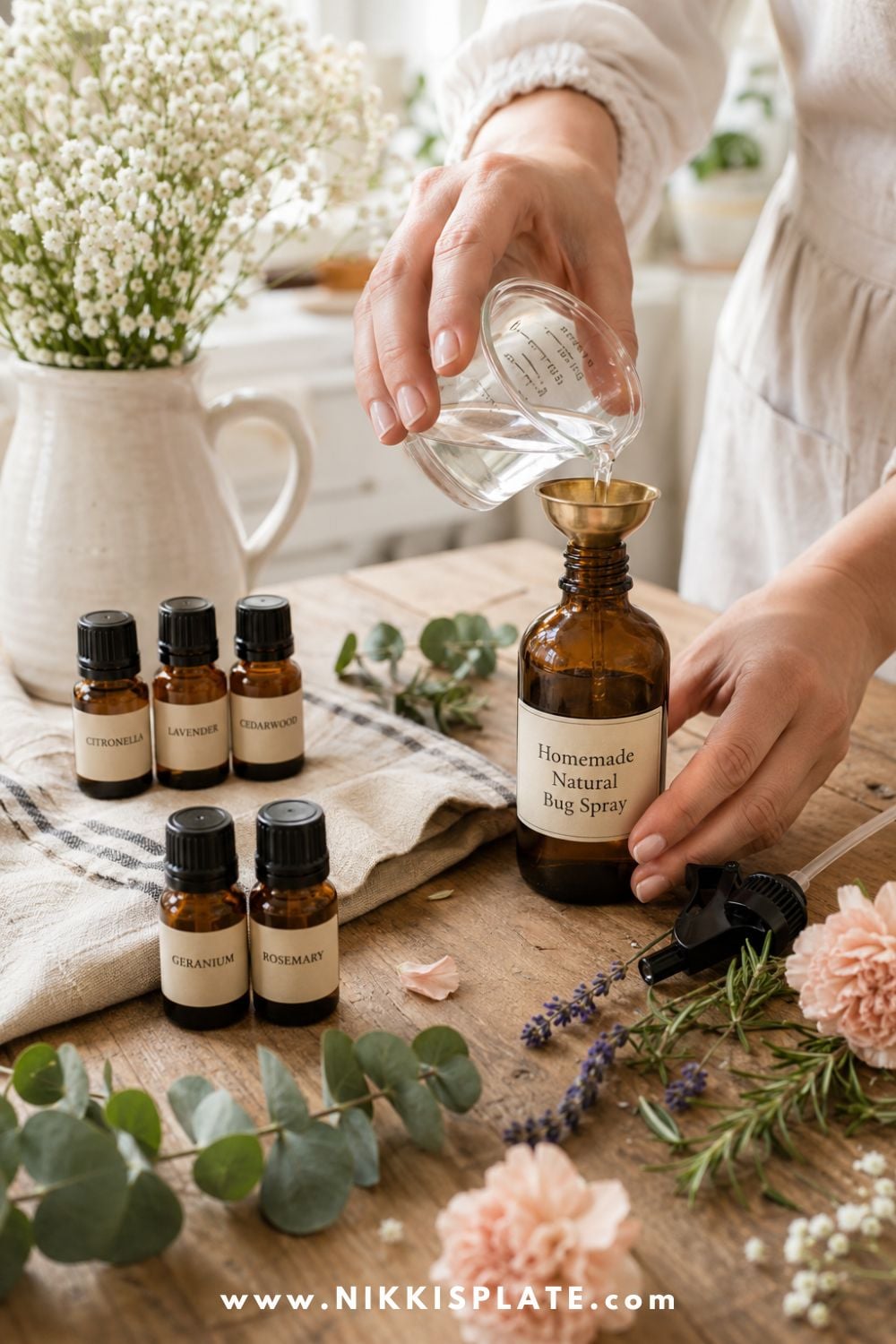
- Pour the witch hazel into a clean spray bottle.
- Add the citronella, lavender, cedarwood, geranium, and rosemary essential oils.
- Add the distilled water, leaving a little room at the top of the bottle.
- Secure the lid and shake the bottle well to combine the ingredients.
- Add a label with the name of the spray and the date it was made.
- Shake well before each use because the essential oils may separate from the water.
How to Use Homemade Bug Spray
Shake the bottle well before every use.
Lightly mist the spray onto clothing or exposed skin before heading outside. Avoid spraying it near the eyes, mouth, face, cuts, or irritated skin.
For facial application, spray a small amount onto your hands first and carefully apply it while avoiding the eye and mouth areas.
The scent will naturally fade over time, so you can refresh it as needed while you are outside.
Important Safety Notes
Essential oils are concentrated, so I always recommend using this spray carefully.
Complete a small patch test before applying the spray to a larger area of skin. Stop using it if irritation occurs.
Do not spray this mixture directly onto babies, young children, pets, or animals. Some essential oils may not be appropriate for children, pets, pregnancy, or certain health conditions. Ask a qualified healthcare professional or veterinarian when you are unsure.
This homemade spray has not been tested or registered as an insect repellent. For areas with a high risk of ticks, mosquitoes, or insect-borne illness, use a registered repellent according to its label.

Essential Oil Substitutions
One of the best things about making your own natural bug spray is that the scent can be customized.
You can replace one of the oils with another essential oil you enjoy, but try to keep the total number of drops about the same.
Some popular options include:
- Lemon eucalyptus essential oil
- Peppermint essential oil
- Lemongrass essential oil
- Tea tree essential oil
- Patchouli essential oil
- Clove essential oil
Keep in mind that some essential oils are stronger or more likely to irritate sensitive skin. When trying a new blend, start with fewer drops and complete a patch test first.
My Favourite Essential Oil Combinations
Fresh and Floral Blend
- 10 drops citronella
- 10 drops lavender
- 6 drops geranium
- 4 drops cedarwood
This combination is light, floral, and perfect for summer afternoons in the garden.
Woodsy Outdoor Blend
- 10 drops cedarwood
- 8 drops citronella
- 6 drops rosemary
- 6 drops lavender
I love this deeper scent for camping trips and evenings around the fire.
Bright Citrus Blend
- 10 drops citronella
- 8 drops lemongrass
- 6 drops lavender
- 4 drops cedarwood
- 2 drops geranium
This version has a fresh, clean scent that feels perfect for warm summer days.
Tips for Making the Best DIY Bug Spray
- Use a Glass Spray Bottle - Essential oils are best stored in glass bottles because they may break down certain types of plastic over time. An amber or dark-coloured bottle also helps protect the oils from light.
- Shake Before Every Use - The essential oils will naturally separate from the water. Give the bottle a good shake before spraying so the ingredients are distributed more evenly.
- Label Your Bottle - Add the name of the spray and the date it was made. This is especially helpful when you have several homemade cleaners, room sprays, or essential oil blends stored together.
- Store It in a Cool Place - Keep the bottle away from direct sunlight and heat. I like storing mine in a cool cupboard near the back door.
- Make Small Batches - Because this homemade bug spray does not contain a commercial preservative, I prefer making a small batch that can be used within a few weeks.
- Discard the spray if the colour, smell, or texture changes.
Other Ways to Help Keep Bugs Away
I like pairing my homemade bug spray with a few simple outdoor habits.
Remove standing water from buckets, flowerpot saucers, toys, and watering cans. Mosquitoes are attracted to areas where water collects.
Keep grass trimmed and remove piles of leaves or yard debris near patios and play areas.
Outdoor fans can also be helpful around a patio or dining area. Mosquitoes are not strong flyers, so moving air may make the space less comfortable for them.
Wearing lightweight long sleeves, pants, and closed shoes can provide extra coverage during hikes, camping trips, or evenings outside.
Homemade Bug Spray FAQs
I prefer using this homemade bug spray within a few weeks. Because it does not contain a commercial preservative, making small batches helps keep it fresh.
Always discard the mixture if it develops an unusual smell, colour, or appearance.
You can use tap water, but distilled water is my first choice. It contains fewer minerals and impurities and may help the mixture stay fresh longer.
Witch hazel can be replaced with high-proof vodka in some homemade spray recipes. I prefer witch hazel because it is easy to find and does not have a strong alcohol scent.
Plain water can also be used, but the essential oils will separate more quickly and the spray will need to be shaken very well.
I do not recommend using this exact essential oil blend on babies or young children. Essential oil guidelines vary depending on age, concentration, and the specific oil being used.
Choose a product made for your child's age or speak with a qualified healthcare professional before using essential oils on children.
Do not spray this homemade bug spray directly onto dogs, cats, or other pets. Essential oils that are suitable for adults may not be safe for animals.
Ask your veterinarian for a pet-safe mosquito, flea, or tick product.
You can lightly mist the spray around an outdoor seating area, but avoid spraying it onto food, dishes, plants, pets, or delicate surfaces.
Test a small hidden area first because essential oils may stain or damage certain materials.
Looking for simple ways to create a healthier home without replacing everything at once? My free non-toxic living checklist includes 25 beginner-friendly swaps for your kitchen, laundry room, bathroom, cleaning routine, and personal care products.
More Homemade Essential Oil Recipes:
Final Thoughts on This Homemade Natural Bug Spray Recipe
This homemade natural bug spray recipe is an easy summer DIY made with witch hazel, distilled water, and a fresh blend of essential oils. I love how quickly it comes together, and the combination of citronella, lavender, cedarwood, geranium, and rosemary gives it such a lovely outdoor scent.
Keep a bottle of this DIY essential oil bug spray near the back door, in your camping supplies, or with your gardening essentials. Shake it well before using, follow the safety tips, and enjoy all those beautiful summer moments outside.
Until next time,

Homemade Natural Bug Spray Recipe
Ingredients
- ½ cup witch hazel
- ¼ cup distilled water
- 10 drops citronella oil
- 4 drops rose geranium essential oil
- 8 drops lavender essential oil
- 2 drops rosemary essential oil
- 6 drops cedarwood essential oil
Instructions
- Pour the witch hazel into a clean spray bottle.
- Add the citronella, lavender, cedarwood, geranium, and rosemary essential oils.
- Add the distilled water, leaving a little room at the top of the bottle.
- Secure the lid and shake the bottle well to combine the ingredients.
- Add a label with the name of the spray and the date it was made.
- Shake well before each use because the essential oils may separate from the water.
Notes

As Seen on TikTok
Come behind the scenes of our farmhouse build, decor projects, and cozy everyday life. Tap a video to watch, then follow @nikkisplate on TikTok for more.
Watch this video on TikTok
Watch this video on TikTok
Watch this video on TikTok




Leave a Reply