
Water damage often starts with something surprisingly ordinary: rainwater that has nowhere sensible to go. When runoff pools beside your foundation, collects on a patio, or sits in low areas of the lawn, it can gradually lead to damp basements, damaged landscaping, soil erosion, and costly repairs.
The good news is that you do not necessarily need to overhaul your entire property. The right yard drainage solutions can redirect water away from vulnerable areas and help your home handle heavy rain, melting snow, and seasonal freeze-thaw cycles much more effectively.
Whether you are building, renovating, or trying to fix a yard that never seems to dry out, start by understanding where the water is coming from and where it should go. These seven practical upgrades will help you create a drainage plan that protects both your house and your landscaping.
1. Watch How Water Moves Around Your Property
Before buying pipes, drains, or gravel, take time to observe your property during or immediately after a steady rain. Water usually leaves clues. Look at where it flows from the roof, how it crosses patios and walkways, and where it settles once it reaches the lawn.
Pay particular attention to the soil around your foundation. A small low spot can collect more water than you might expect, especially when roof runoff is being released nearby.
Common warning signs include:
- Mulch or soil washing out of garden beds
- Puddles that remain long after the rain stops
- Grass that is consistently soggy or thinning
- Erosion near the corners of the house
- Water stains or musty odours in the basement
- Gutters overflowing during ordinary rainfall
- Downspouts emptying directly beside the foundation
Take photos or make a quick sketch of the problem areas. Seeing the full water pattern will help you choose a solution that addresses the cause instead of simply moving the puddle somewhere else.
2. Move Roof Runoff Away From the Foundation
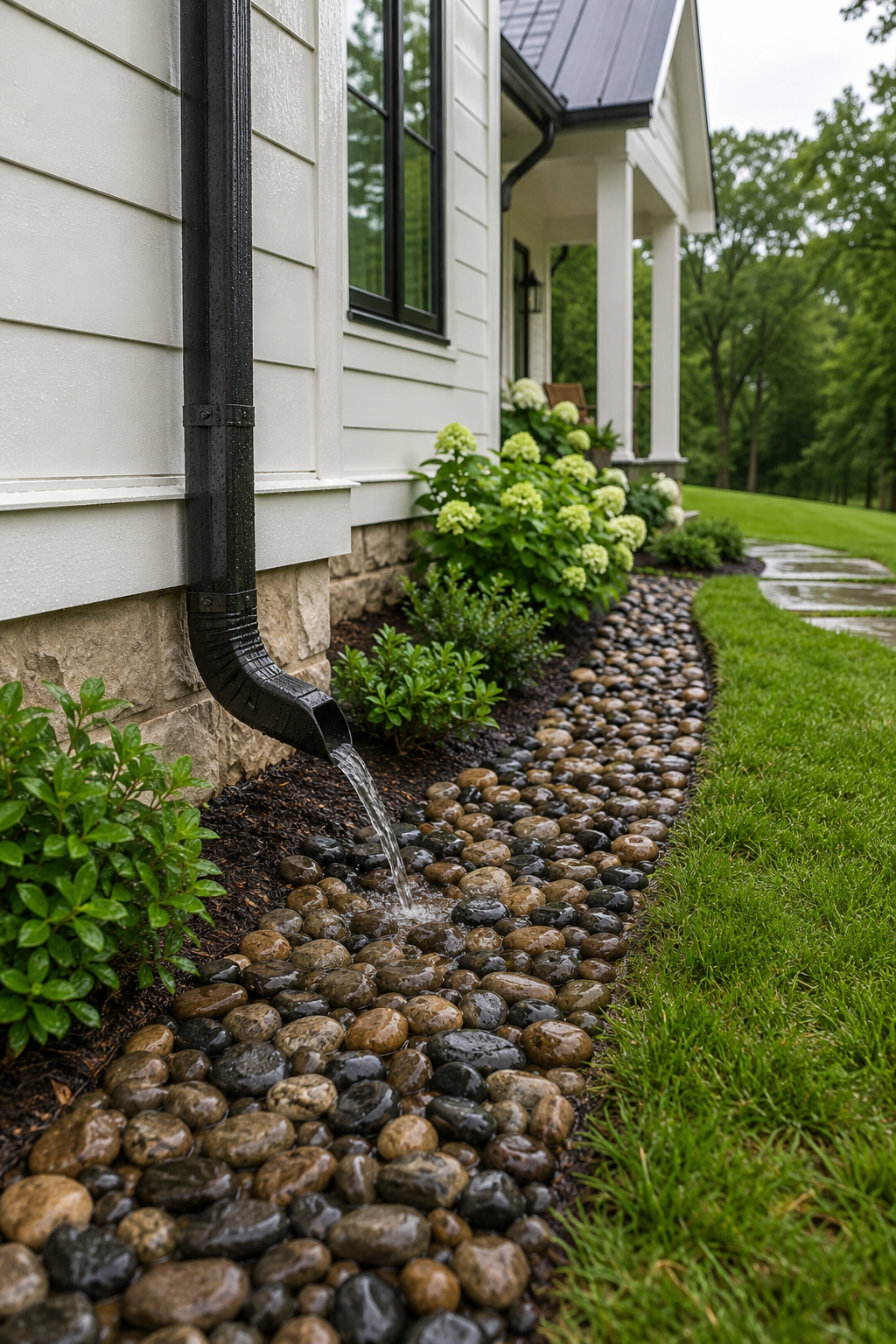
Your roof collects a large amount of rainwater and funnels it into a handful of downspouts. If those downspouts end too close to the house, the soil around the foundation can become saturated surprisingly quickly.
Begin with the basics: clean out leaves and debris, check that the gutters are securely attached, and watch for leaks at seams and corners. Make sure every downspout has a clear route away from the house rather than emptying into a flower bed beside the wall.
Above-ground extensions can be an affordable short-term option, but they are not always attractive or convenient. For a cleaner and more permanent setup, underground downspout drain installations can carry roof runoff to an appropriate discharge area farther from the foundation.
Whatever system you choose, make sure the outlet remains accessible for inspection and does not direct water toward a neighbouring property, septic system, or another vulnerable area.
3. Correct the Grading Around Your Home
Even an excellent drainage system will struggle if the surrounding ground slopes toward the house. Ideally, the soil immediately around your home should gently fall away from the foundation so surface water continues moving outward.
Grading can change over time as soil settles, mulch decomposes, and garden beds are reshaped. This is especially common around newer homes, where disturbed soil may continue to settle after construction.
Inspect these easy-to-miss areas:
- Around window wells
- Beside patios and walkways
- Under decks and stairs
- Near air-conditioning pads
- Along additions, porches, and garage walls
- At fence lines or retaining walls that may trap runoff
Minor low spots can sometimes be corrected by adding and compacting suitable soil, but larger grading problems deserve a thoughtful plan. Avoid piling soil or mulch against siding, brick weep holes, or other parts of the exterior that need to remain exposed.
4. Add Drainage Where Water Naturally Collects
Some properties have low areas that cannot be solved through grading alone. In those spaces, a dedicated drain can collect water and move it toward a safe outlet.
The best option depends on the source of the water, your soil, the slope of the property, and where the water can legally discharge. Possible solutions include catch basins for low lawn areas, channel drains beside patios or garage doors, French drains for consistently saturated soil, dry wells, swales, and pop-up emitters.
A drain should never be installed without a clear destination for the water. Before digging, confirm the route of buried utilities and consider whether heavy clay, tree roots, or a high water table could affect the system. A poorly planned drain can clog, back up, or simply transfer the problem to another part of the yard.
5. Design Patios, Driveways, and Walkways With Drainage in Mind
Hard surfaces do not absorb rain the way soil and planting beds do. Every patio, driveway, and walkway changes the path water takes across your property, which makes the slope and base preparation just as important as the material you choose.
A patio pitched toward the house can send runoff directly to a sliding door or basement wall. A driveway that slopes toward the garage may create pooling at the door every time it rains. Before installing new hardscaping, decide exactly where the water will go once it reaches the surface.
Permeable pavers, gravel sections, channel drains, and properly placed edging can all be incorporated into the design. It is much easier and usually less disruptive to plan these features before the patio or walkway is installed than to retrofit drainage afterward.
6. Use Landscaping to Slow and Redirect Runoff
Landscaping can be beautiful and functional at the same time. Thoughtfully placed plants, stone, and shallow channels can slow moving water, reduce erosion, and help it soak into appropriate areas of the yard.
Useful landscaping ideas include:
- River rock in areas where downspouts release water
- Native plants suited to periodically wet soil
- Dry creek beds that guide runoff through the landscape
- Rain gardens located a safe distance from the foundation
- Ground covers that stabilize slopes and exposed soil
- Mulched beds shaped so they do not trap water beside the house
Be cautious with dense foundation planting. It can hide standing water, make inspections difficult, and keep the surrounding soil damp. Leave enough space to see what is happening along the exterior wall and avoid building up heavy layers of mulch against the house.
7. Maintain Your Drainage System Through Every Season
Drainage is not a one-time project. Leaves can block gutters, roots can enter buried lines, soil can settle, and winter weather can shift grading. A quick seasonal inspection can catch small problems before the next major storm exposes them.
In spring, look for soil that has pulled away from the foundation and areas that remain saturated after the snow melts. During summer storms, check for overflowing gutters and overwhelmed drains. In fall, clear leaves from gutters, catch basins, and outlets. In colder climates, make sure snow is not repeatedly piled where melting water will run back toward the house.
Also inspect pop-up emitters and discharge points to ensure they open freely and are not buried beneath mulch, grass, or debris. If water begins appearing in a new location, investigate it rather than assuming the system is still working as intended.
When Should You Call a Drainage Professional?
Some drainage fixes are manageable DIY projects, such as cleaning gutters, adding a downspout extension, or correcting a very small low spot. More complicated problems require a coordinated plan, particularly when water is reaching the basement or several parts of the property are affected.
Consider getting a professional assessment if you notice:
- Recurring basement dampness or water intrusion after storms
- Foundation-area pooling in more than one location
- Erosion that returns after previous repairs
- Standing water that lasts for days
- Drainage problems connected to a neighbouring property
- A buried system with no obvious or functioning outlet
- Major grading work near utilities, retaining walls, or structural elements
The most effective plan may combine several improvements, such as grading, runoff collection, buried drainage, and landscape changes. Treating only one visible symptom rarely works when the underlying water pattern affects the whole property.
Frequently Asked Questions About Yard Drainage
Can poor yard drainage damage a foundation?
Yes. Water that repeatedly collects beside a home can saturate and erode the surrounding soil, contribute to moisture problems, and place unnecessary stress on the foundation. Keeping roof and surface runoff moving away from the house is an important part of preventative home maintenance.
How do I know whether I need grading or a drain?
Grading is often the first issue to address when surface water naturally runs toward the house or settles in a shallow low spot. A drain may be more appropriate when water must be collected from a specific area and carried to a suitable outlet. Many properties benefit from a combination of both.
Does every wet yard need a French drain?
No. French drains can be helpful in certain consistently saturated areas, but they are not the right answer for every drainage problem. Clogged gutters, short downspouts, poor grading, compacted soil, or an incorrectly sloped patio may be the real cause.
What is the easiest drainage improvement to start with?
Begin by cleaning the gutters, confirming that the downspouts flow properly, and moving roof runoff farther from the foundation. Then observe the property during rain. These simple steps often reveal whether the remaining issue is grading, landscaping, or the need for a dedicated drain.
Protect Your Home Before the Next Heavy Rain
Good drainage is easy to overlook because most of the system quietly works in the background. But when water is managed properly, it protects almost every part of your property-from the foundation and basement to the patios, lawns, and garden beds around them.
Start with the obvious sources, correct the slope where you can, and choose yard drainage solutions that work together rather than relying on one quick fix. A dry basement, stable landscaping, and a yard you can actually enjoy after it rains are well worth the effort.


As Seen on TikTok
Come behind the scenes of our farmhouse build, decor projects, and cozy everyday life. Tap a video to watch, then follow @nikkisplate on TikTok for more.
Watch this video on TikTok
Watch this video on TikTok
Watch this video on TikTok





Leave a Reply