
Download my free non-toxic living checklist with 25 simple swaps for your kitchen, laundry room, bathroom, personal care routine, and more.
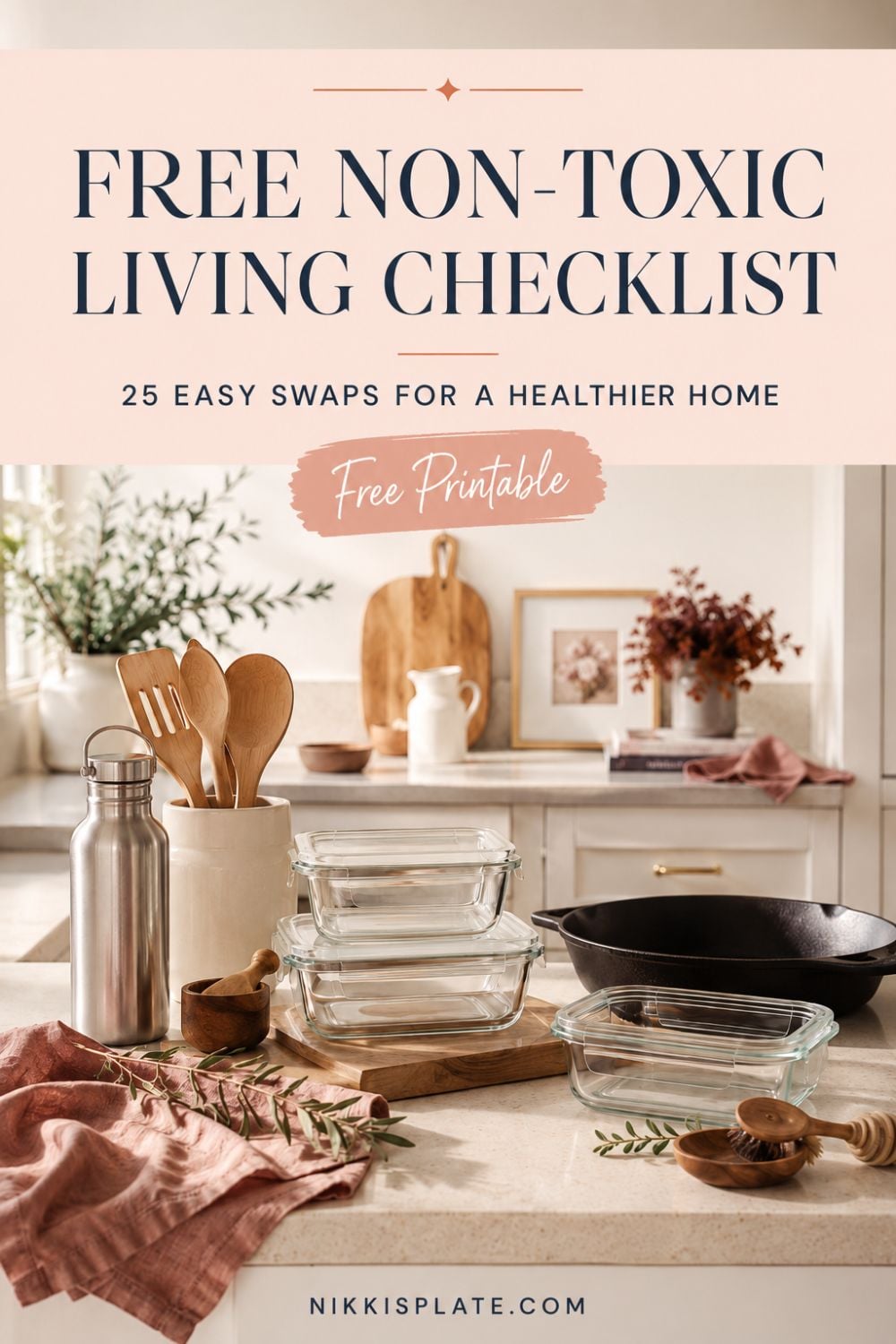
Hi beauties! Starting a non-toxic lifestyle can feel overwhelming, especially when it seems like every product in your home needs to be replaced. The good news is that creating a healthier home does not have to happen overnight. A few simple and realistic swaps can help you gradually reduce your exposure to ingredients and materials you would rather avoid.
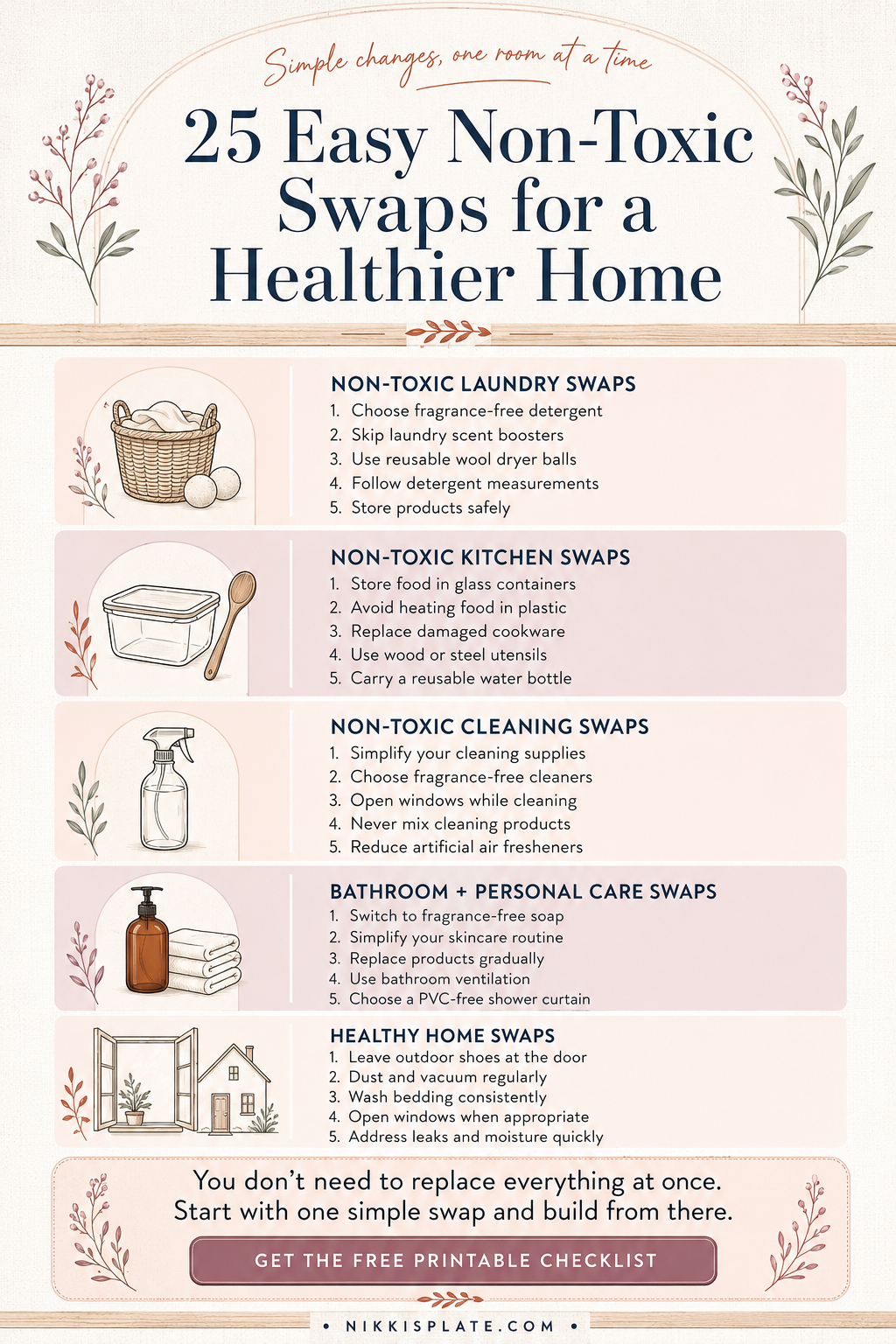
I created this free non-toxic living checklist to make the process easier. It includes beginner-friendly ideas for your kitchen, laundry room, bathroom, personal care routine, and everyday home habits. You can also explore more of my clean living tips and DIY ideas when you are ready for your next simple swap. You can download the printable, work through it at your own pace, and focus on the changes that make the most sense for your family and budget.
Think of this non-toxic home checklist as a helpful starting point-not a list you need to complete in one weekend. Start with products you are already running out of, choose one room at a time, and celebrate every small step toward a happier, healthier homemade lifestyle.
What Is Non-Toxic Living?
Non-toxic living is a simple approach to being more intentional about the products and materials you bring into your home.
I use the term "non-toxic" as a familiar way to describe choosing products with fewer unnecessary ingredients, reducing added fragrances, reading labels, and making thoughtful home swaps whenever possible. You may also hear this called low-tox living.
The goal is not to create a perfectly toxin-free home. That would be unrealistic and stressful. Instead, the goal is to make informed choices and gradually build habits that feel healthier and more manageable for your household.
You also do not need to throw away everything you currently own. In most cases, the easiest and most affordable approach is to use what you have and choose a different option when that product runs out or needs replacing.
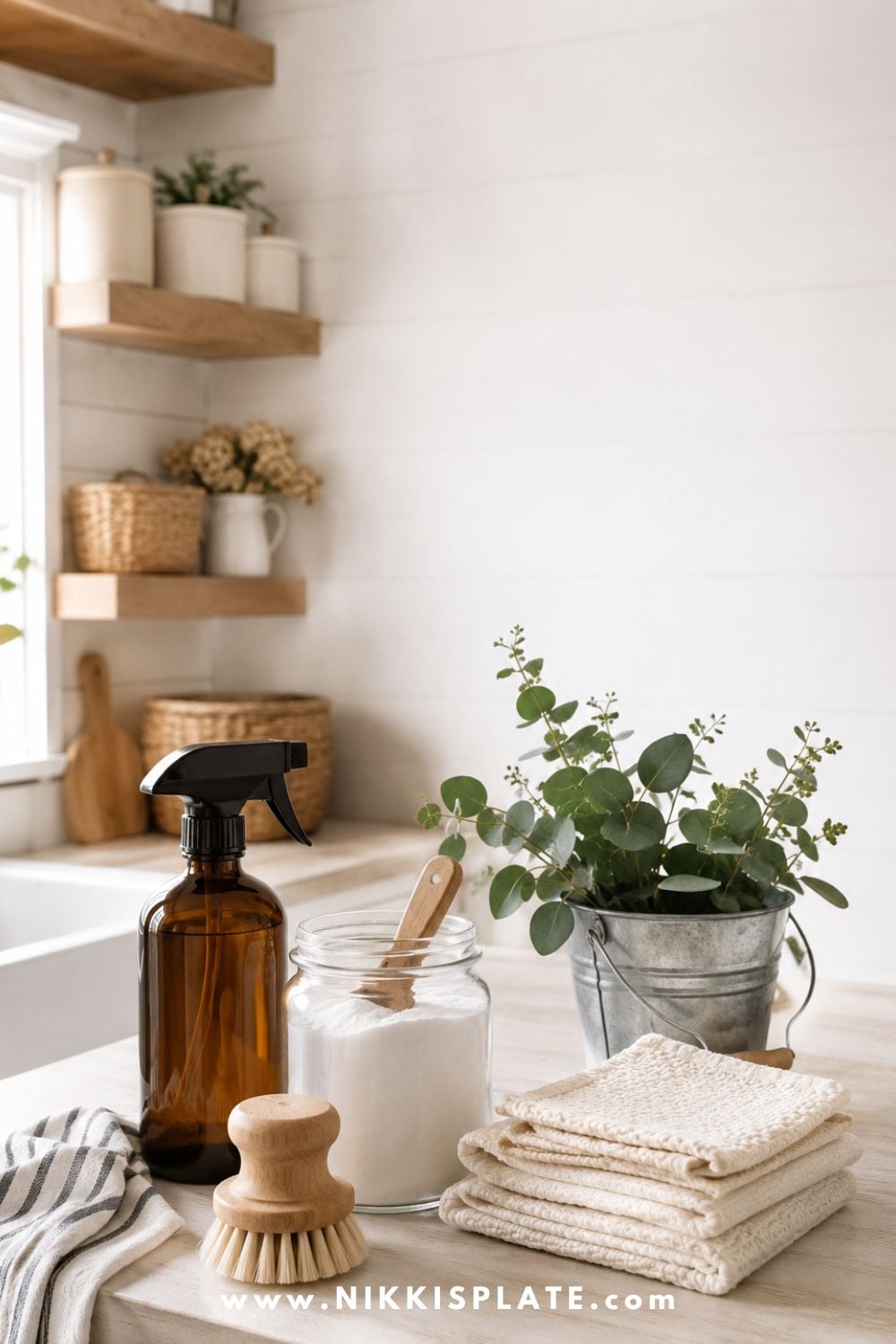
How to Start Non-Toxic Living Without Feeling Overwhelmed
The best way to begin is to keep things simple. You do not need a complicated routine, a huge budget, or an entirely new collection of household products.
Start With One Room
Choose one area of your home instead of trying to change everything at once.
Your laundry room, kitchen, or bathroom can be an easy place to start because these spaces usually contain products you use regularly.
Once you feel comfortable with the changes in one room, move on to another.
Replace Products as They Run Out
There is no need to fill a garbage bag with everything you already own.
Replacing products gradually helps reduce waste and makes non-toxic living much more affordable. When your laundry detergent, hand soap, cleaner, or shampoo runs out, take a few minutes to compare your options before purchasing a replacement.
Focus on Products You Use Most
Begin with the products that are part of your everyday routine.
This might include:
- Hand soap
- Laundry detergent
- Dish soap
- Household cleaners
- Food-storage containers
- Skincare products
- Deodorant
- Cookware
Changing one frequently used product may feel more useful than replacing something you rarely use.
Choose Progress Over Perfection
It is easy to get caught up in finding the "perfect" product. Unfortunately, that can make low-tox living feel stressful instead of helpful.
Choose the best option that fits your current needs and budget. You can always make another change later.
25 Easy Non-Toxic Swaps for Your Home
These beginner-friendly ideas are organized by room so you can work through the checklist at your own pace.
Non-Toxic Laundry Room Swaps
1. Choose a Fragrance-Free Laundry Detergent
Look for a laundry detergent labelled fragrance-free rather than simply unscented. Use white vinegar instead of a fabric softener Fragrance-free products can be a helpful option for anyone who wants to reduce unnecessary scents in their home.
2. Skip Laundry Scent Boosters
Laundry scent beads and boosters are designed to leave a strong fragrance on clothing and bedding. Try skipping them entirely. Clean laundry does not need to smell strongly scented to be fresh. These products are endocrine disrupters!
3. Replace Dryer Sheets With Wool Dryer Balls
Reusable wool dryer balls are a simple alternative to disposable dryer sheets. I like to add pure lavender essential oil drops to the balls before throwing them into the dryer.
They can help separate clothing in the dryer and may help reduce drying time. Add them to your dryer without essential oils for a fragrance-free option.
4. Use Less Laundry Product
More detergent does not always mean cleaner clothing. Follow the directions on your detergent and washing machine. Using too much product may leave residue behind and wastes detergent.
5. Keep Laundry Products Safely Stored
Keep detergents, stain removers, and other laundry products sealed and stored away from children and pets. A tidy laundry space also makes it easier to see which products you already have before buying more.

Non-Toxic Kitchen Swaps
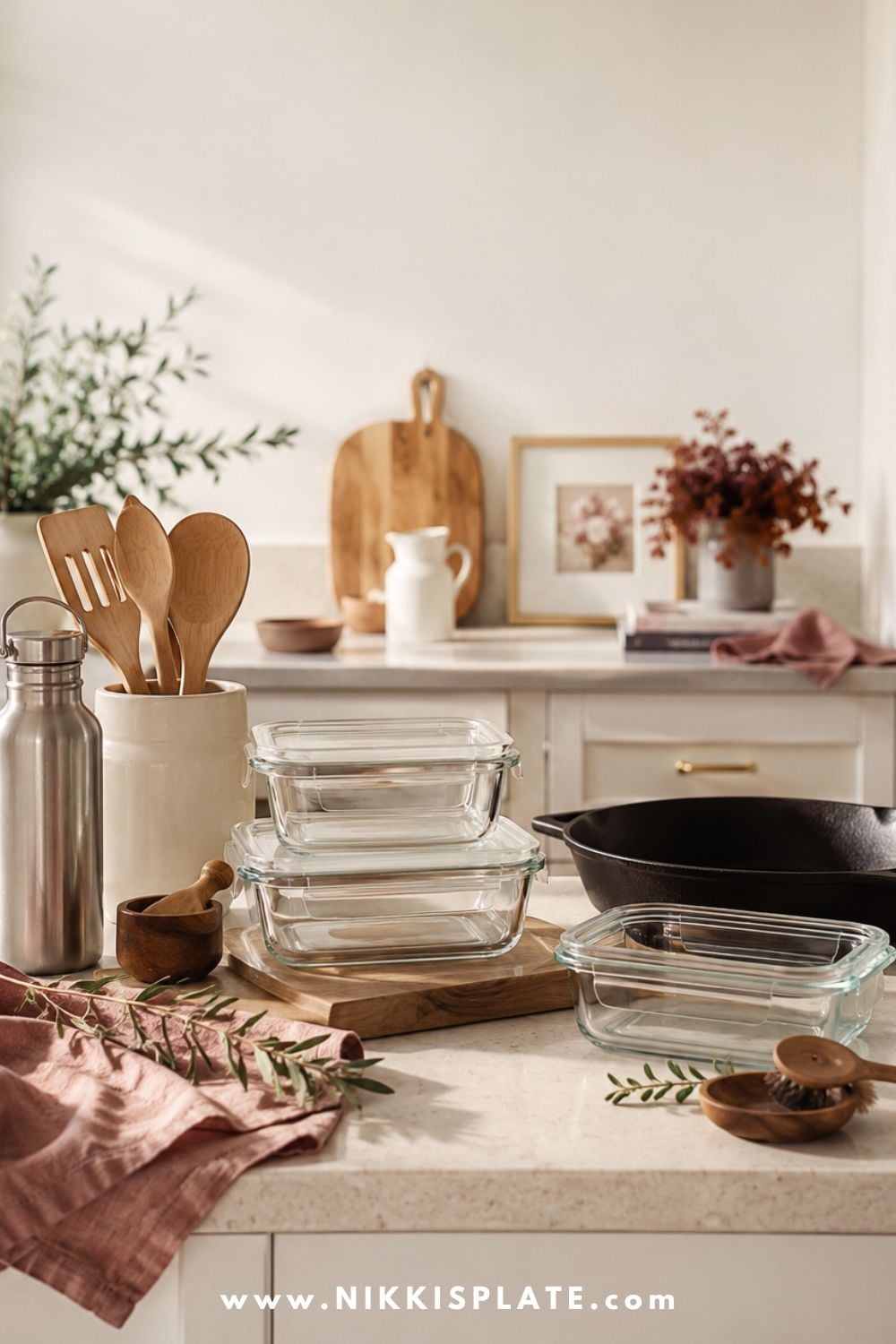
6. Store Food in Glass Containers
Glass containers are durable, reusable, and easy to clean. You do not need to replace every plastic container immediately. Begin by adding glass containers as older storage containers wear out.
7. Avoid Heating Food in Plastic
Transfer food to a microwave-safe glass or ceramic dish before reheating it. Always follow the care and safety instructions provided with your containers and appliances.
Also, stop using plastic wrap and ziplock bags. Try beeswax wrap instead!
8. Use Non-Toxic Pods and Soap
Use natural dishwasher pods and dish soap! Another simple kitchen project to try is my homemade lemon liquid dish soap recipe, made with a small list of everyday ingredients.
9. Choose Stainless-Steel Cookingware
As older plastic utensils crack or melt, replace them with wooden, silicone, or stainless-steel alternatives that are suitable for your cookware. Stop using non-stick pans. Switch to cast-iron pans or stainless steel pans and pots.
10. Carry a Reusable Water Bottle
A reusable stainless-steel or glass water bottle can help reduce your reliance on disposable plastic bottles. I like this stainless steel drinkware! Choose one that is easy to clean so you will actually enjoy using it every day.
Non-Toxic Cleaning Swaps
11. Simplify Your Cleaning Supplies
You probably do not need a separate cleaner for every surface in your home. Reducing duplicate products can also make your cupboards easier to manage, and these stress-free home decluttering tips can help you get started.
A small collection of reliable products can make your cleaning routine easier and reduce clutter under the sink. For another simple kitchen-cleaning idea, try this natural microwave cleaning method using lemon and water.
12. Choose Fragrance-Free Cleaning Products
Strong fragrance does not necessarily mean a surface is cleaner. Look for fragrance-free options when replacing household cleaners, especially if you prefer a home without lingering scents.
13. Ventilate While Cleaning
Open a window or turn on an exhaust fan when using cleaning products, whenever it is safe and practical to do so. Good airflow is especially helpful in small bathrooms and enclosed spaces. While the windows are open, you can also freshen the glass with my natural window and glass cleaner recipe.
14. Never Mix Household Cleaners
Mixing cleaning products can create unsafe reactions. Always follow the instructions on the label and use each product only as directed.
15. Reduce Air Fresheners
Instead of covering odours with strong sprays, plug-ins, or fragranced products, try addressing the source of the smell first. Empty garbage bins, wash fabrics, clean drains, improve ventilation, and open windows when outdoor conditions allow.
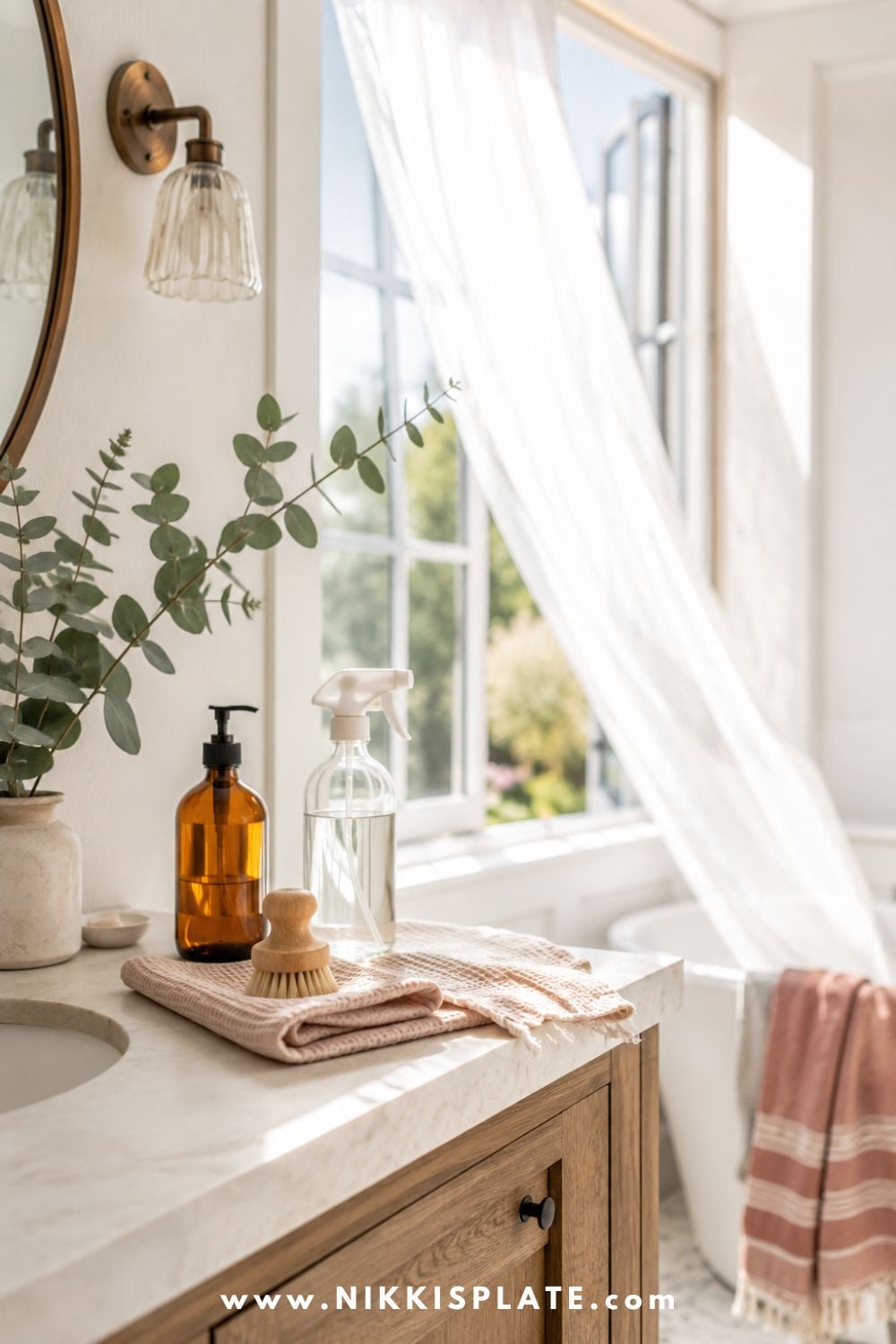
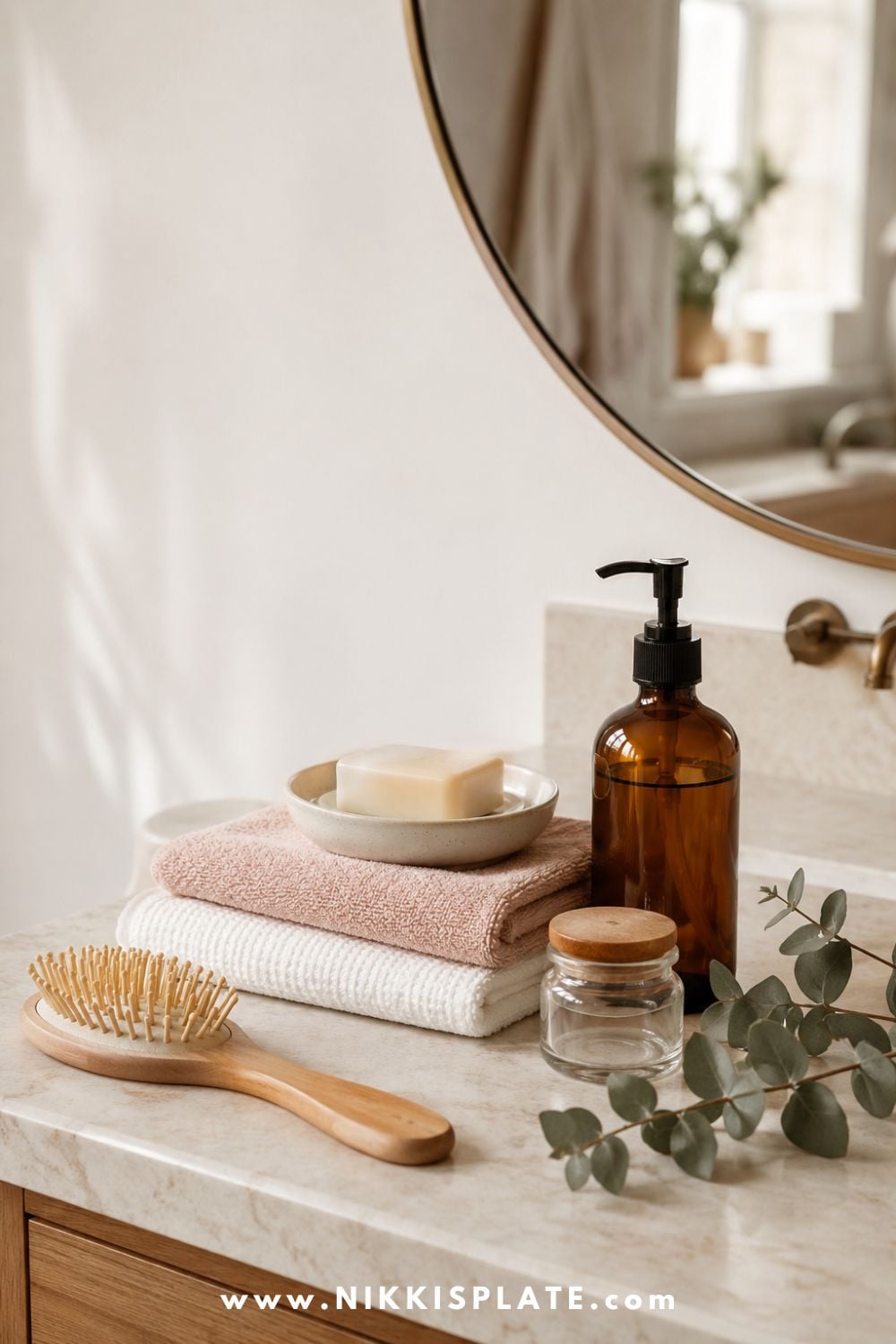
Non-Toxic Bathroom and Personal Care Swaps
16. Switch to a Fragrance-Free Hand Soap
Hand soap is used several times each day, making it a practical first swap. Choose a simple formula that cleans well without leaving a strong scent behind.
17. Simplify Your Skincare Routine
More skincare products do not always create a better routine. Consider keeping the products that work well for you and avoiding unnecessary extras. A simple cleanser, moisturizer, and sunscreen may be easier to maintain than a crowded routine. Opt for Natural sunscreens (avoid ingredients like oxybenzone), Natural bug spray (avoid deet),
18. Replace Personal Care Products Gradually
Do not feel pressured to throw away every shampoo, lotion, deodorant, or cosmetic product you own. Choose new options as your existing products run out. This keeps the process affordable and prevents unnecessary waste.
19. Use Bathroom Ventilation
Run your bathroom exhaust fan during showers and leave it on afterward according to the manufacturer's guidance. Reducing excess moisture can help keep your bathroom feeling cleaner and fresher.
20. Choose a PVC-Free Shower Curtain When Replacing Yours
When your current shower curtain or liner needs replacing, consider looking for an option labelled PVC-free. Fabric shower curtains can also be convenient because many are washable. Always check the care instructions before cleaning them.
Healthy Home Swaps
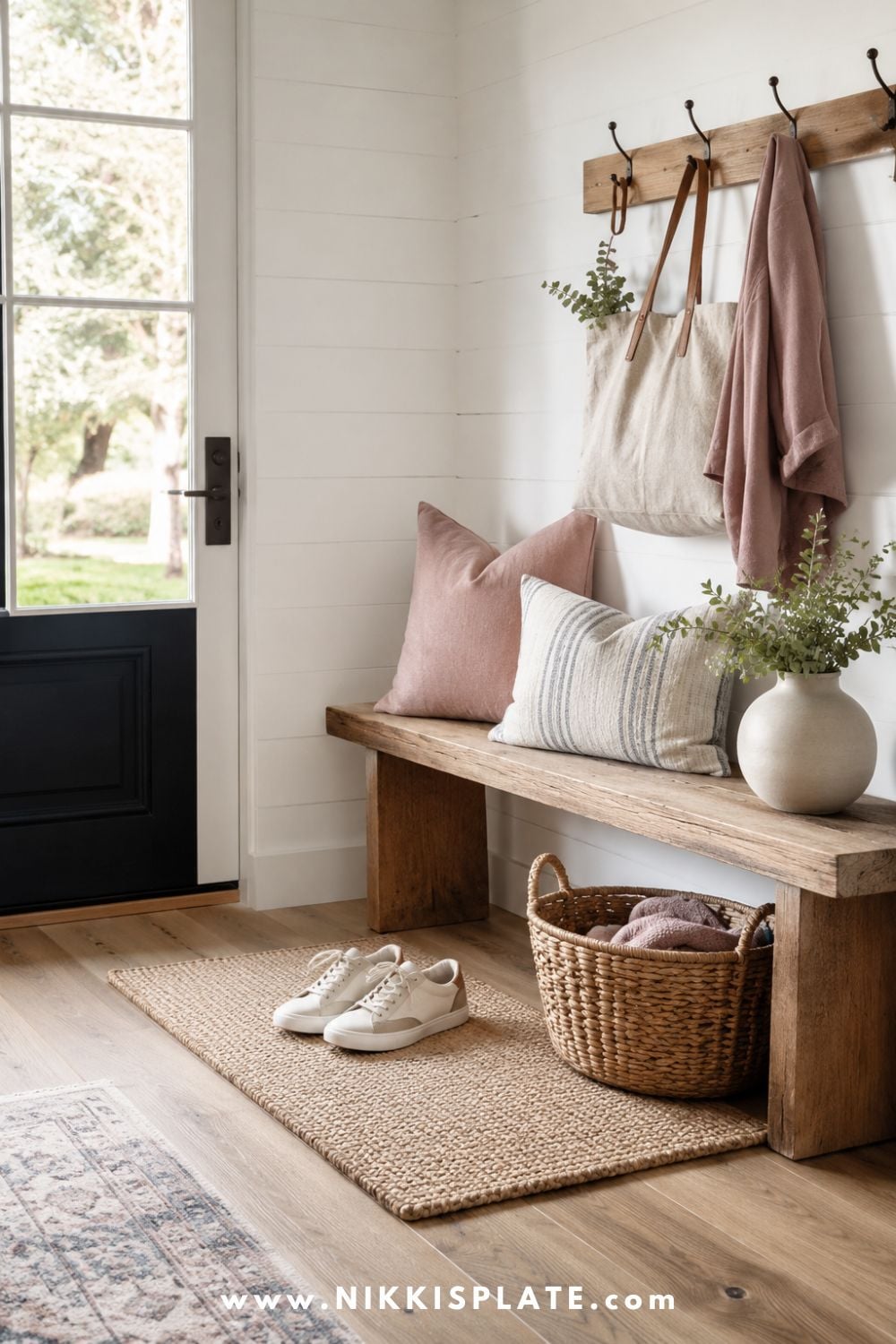
21. Leave Outdoor Shoes at the Door
Shoes can carry dirt and debris through the house. Creating a small shoe-drop area near the entrance can help keep floors cleaner and reduce how often you need to wash them.
22. Dust and Vacuum Regularly
Regular dusting and vacuuming are simple ways to maintain a clean home. Pay attention to high-traffic areas, rugs, upholstered furniture, baseboards, and spaces where dust tends to collect. For fabric furniture, follow my step-by-step guide on how to clean upholstered chairs with baking soda before trying the method on a larger area.
23. Wash Bedding Regularly
Create a bedding-wash schedule that works for your household. Follow the care instructions for sheets, pillowcases, blankets, mattress protectors, and comforters to help them last longer.
24. Open Windows When Conditions Allow
Fresh air can help a room feel less stuffy. Open windows when the outdoor air quality, temperature, weather, and household safety conditions make it appropriate. Opening a window is only one part of the picture, so I also put together these ways to improve your home's indoor air quality. You can also add more houseplants to filter the air.
25. Address Moisture and Leaks Promptly
Keep an eye out for dripping pipes, damp cupboards, condensation, and other signs of excess moisture. Fixing small moisture problems early can help prevent larger household issues later. Learn more about why moisture control in the home matters for everyday spaces such as kitchens, bathrooms, and storage areas.

What Should I Replace First?
You do not need to follow the checklist in a specific order. However, starting with frequently used products can make the process feel more meaningful.
Consider replacing items in this order:
- Products you use directly on your skin every day
- Strongly fragranced laundry and cleaning products
- Damaged cookware and food-storage containers
- Disposable products with easy reusable alternatives
- Larger household items only when they genuinely need replacing
Your priorities may look different depending on your lifestyle, budget, household needs, and personal preferences. That is completely okay.
How to Make Non-Toxic Swaps on a Budget
Non-toxic living can become expensive when it is treated like an all-or-nothing shopping list. Thankfully, you do not need to replace everything at once or purchase every trendy product you see online.
Start by using what you already have. When something runs out, compare a few replacement options and choose the one that fits your needs and budget.
Multipurpose products can also help you save money. Instead of buying several specialized cleaners, look for one or two products that can safely handle multiple household jobs.
Reusable products may reduce repeat purchases, but only buy items you will genuinely use. A reusable swap is not saving money if it sits untouched in a cupboard.
You can also focus on free changes first, including:
- Opening windows when appropriate
- Removing outdoor shoes at the door
- Skipping unnecessary fragrance products
- Using the correct amount of laundry detergent
- Dusting and vacuuming regularly
- Improving ventilation
- Simplifying your routines
Common Non-Toxic Living Mistakes to Avoid
Trying to Replace Everything at Once
Replacing an entire home's worth of products can become expensive, wasteful, and overwhelming.
Start slowly and allow your routines to change naturally.
Assuming Natural Always Means Better
Words such as "natural," "green," and "clean" can sound reassuring, but they do not tell you everything about how a product should be used.
Read the full label, follow the directions, and choose products based on your household's needs.
Buying Products Out of Fear
Your home does not need to be perfect for you to make thoughtful choices.
Avoid fear-based shopping and focus on practical changes that make your daily routines simpler.
Using Essential Oils Everywhere
Essential oils are highly concentrated and are not automatically appropriate for every person, pet, surface, or situation.
Use them cautiously, follow product instructions, and avoid adding them to household products unless you know the combination is suitable.
Forgetting About Ventilation
The products you purchase are only one part of maintaining a comfortable home.
Ventilation, regular cleaning, moisture control, and safe product use are just as important as choosing new household items.
Printable PDF and Checklist
Once you are ready for a deeper seasonal reset, use my free spring cleaning checklist printable to work through your home one area at a time.
Frequently Asked Questions
No. Begin with the products you use most and replace them gradually as they run out or wear out. Slow changes are usually more affordable, less wasteful, and easier to maintain.
Fragrance-free laundry detergent, hand soap, and household cleaners are easy places to begin. You can also skip scent boosters and air fresheners without purchasing anything new.
It does not need to be. Using fewer products, finishing what you already own, choosing multipurpose items, and making gradual replacements can help keep costs under control.
The terms are often used in similar ways. "Low-tox" can feel more realistic because it focuses on reducing unnecessary exposure and making thoughtful choices rather than trying to create a completely toxin-free environment.
Print the checklist or save it to your phone. Choose a few swaps that make sense for your home and check them off as you complete them. You can work through the list by room, product category, or priority. There is no deadline and no perfect order.
Yes! You can begin by skipping scent boosters, using fewer products, ventilating your home, removing shoes at the door, cleaning up moisture, and simplifying your routines.
You may also find my home maintenance checklist by season helpful for keeping up with leaks, ventilation, filters, windows, and other household tasks throughout the year.
Conclusion
Creating a healthier home does not require a perfect routine or an expensive shopping spree. This free non-toxic living checklist is designed to help you make simple, thoughtful changes one step at a time. Begin with the products you use most, replace items as they run out, and choose swaps that work for your home and budget. For another practical way to maintain a fresh home, save my last-minute cleaning routine and printable checklist for busy days.
Save or print the non-toxic home checklist so you can return to it whenever you are ready for your next change. Every realistic swap can help you create a simpler, more intentional home without pressure, fear, or unnecessary waste.
Until next time,



As Seen on TikTok
Come behind the scenes of our farmhouse build, decor projects, and cozy everyday life. Tap a video to watch, then follow @nikkisplate on TikTok for more.
Watch this video on TikTok
Watch this video on TikTok
Watch this video on TikTok





CJ says
I'd love the starter kit for nontoxic living