
Create a spacious, functional kids' room-even in a small UK home. Discover clever storage ideas, smart layouts, flexible furniture and space-saving beds that help your child sleep, play and learn without feeling cramped-perfect inspiration for parents designing compact bedrooms.
Many parents in the UK face the challenge of fitting a growing child's energetic life into a small room. A smaller space demands clever thinking and strategic planning.
When you design a compact space effectively, you create a sanctuary where your child sleeps, plays and learns without feeling cramped. Smart layouts and multifunctional pieces transform tight corners into functional zones, allowing you to reclaim floor space and restore order to the chaos, making the room feel twice as spacious.
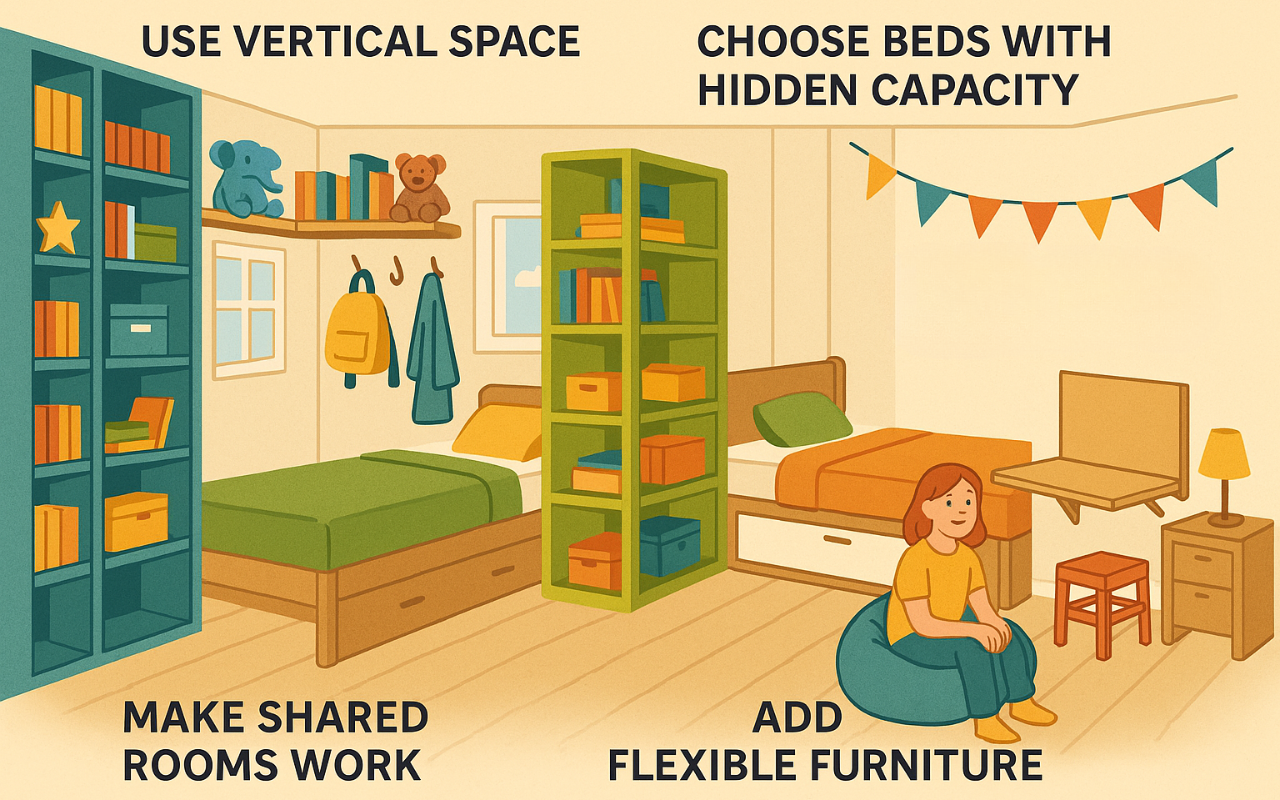
Use vertical space
Floor space disappears quickly in a compact room, so you must look up. Installing floor-to-ceiling shelving units draws the eye upward and maximises every centimetre of the wall. You can place seldom-used items, like out-of-season clothing or sentimental keepsakes, on the highest shelves while keeping daily toys within your child's reach.
Wall-mounted hooks and pegs offer immediate storage for school bags and dressing gowns, keeping them off the floor. Utilise the space above the door for a shelf to hold books or soft toys.
The bed dominates most small bedrooms, so you should make it work harder. A cabin bed or a high sleeper elevates the sleeping platform, creating a cavernous area underneath for a desk, a reading nook, or a chest of drawers. Even standard frames often allow for rolling drawers underneath where you can stow bedding.
If you have siblings sharing, bunk beds for kids remain the classic solution, but modern designs now incorporate staircases with built-in drawers rather than simple ladders. Select a frame that integrates storage to eliminate the need for a separate, bulky wardrobe.
Siblings often struggle for privacy when they share a compact room. You can solve this by creating distinct zones using furniture placement or visual dividers.
Placing beds head-to-head or on opposite walls opens up a central play area. A simple curtain rail or a tall, open shelving unit creates a physical boundary that gives each child a sense of ownership over their territory. Paint the walls behind each bed in different colours or add colourful patterned wallpaper to separate their personal areas visually.
Add flexible furniture
Static furniture eats up valuable square footage when your child isn't using it. Fold-down desks provide a dedicated homework station that disappears against the wall when playtime begins. Bean bags or stacking stools offer seating for friends, but tuck away easily in a corner. You need pieces that adapt to the activity of the moment. Invest in tables with extendable leaves or nesting tables to suit different activities.
Final Thoughts
Designing a small kids' room doesn't have to feel limiting. With the right balance of smart storage, zoned layouts and flexible furniture, even the tiniest bedroom can become a space where your child feels comfortable, inspired and free to play.
By thinking vertically, choosing multifunctional pieces and giving each child a sense of ownership-especially in shared rooms-you create a calm, practical environment that grows with them. With a bit of creativity, any compact room can feel twice as spacious and fully tailored to your family's needs.

As Seen on TikTok
Come behind the scenes of our farmhouse build, decor projects, and cozy everyday life. Tap a video to watch, then follow @nikkisplate on TikTok for more.
Watch this video on TikTok
Watch this video on TikTok
Watch this video on TikTok


Leave a Reply