
Thinking about switching to a tankless water heater? Discover the pros and cons, why hot water takes so long to reach your faucet, and what Denver homeowners should know about installation costs, sizing, and energy savings before making the switch.
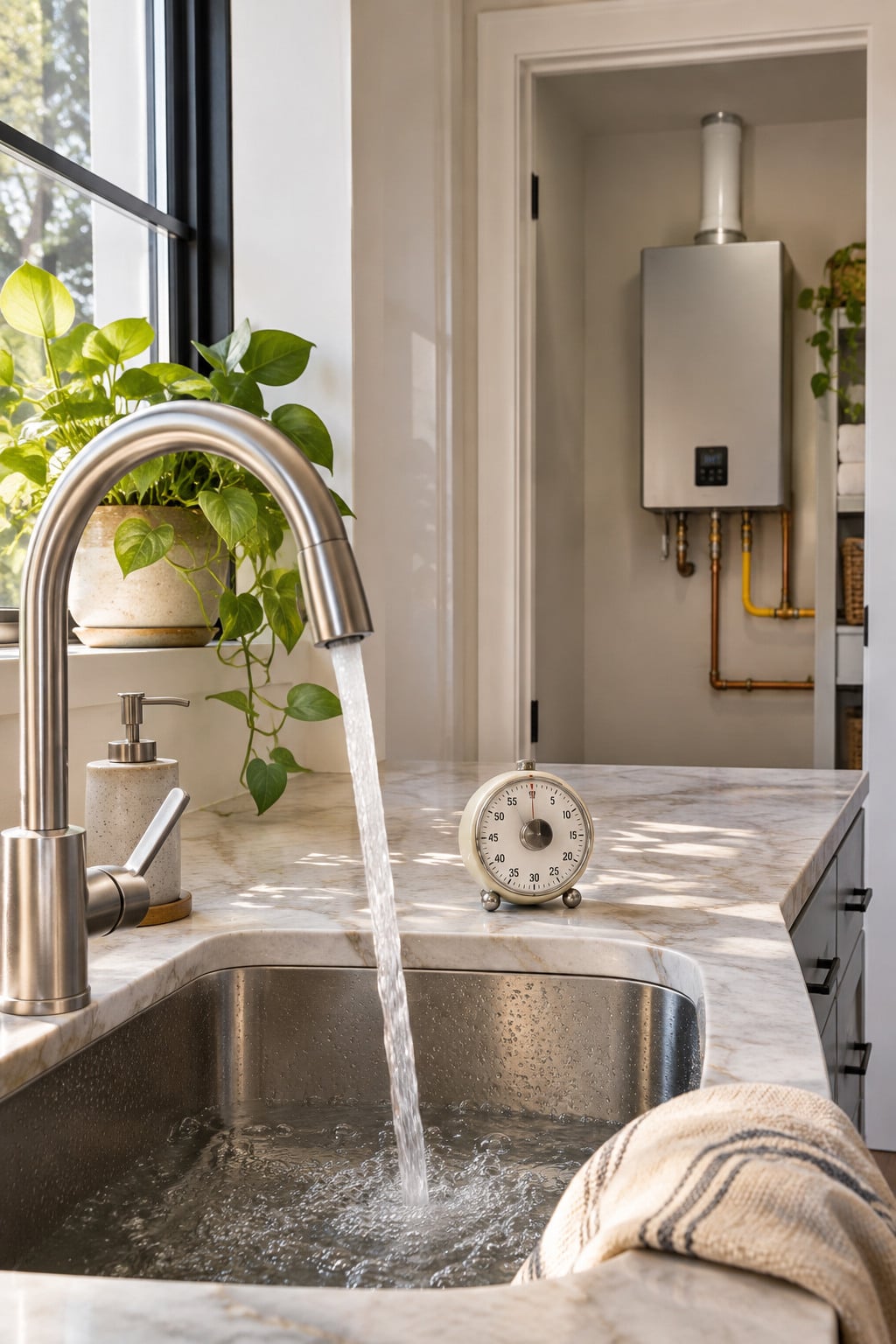
I timed it once. From the moment I turned the kitchen faucet to the moment the water actually ran hot, 41 seconds went by. Forty-one seconds of cold water down the drain, every morning, before coffee. I stood there with my hand under the stream, feeling mildly insulted by my own house.
That little ritual is the reason a lot of people start looking at tankless systems in the first place. The old tank in the basement is still technically working. It is just slow, and it is taking up space, and it is heating a barrel of water all night while everyone sleeps. If you have been circling the idea of swapping it out, this guide is for you: how the math actually works, what changes in a real house, and when it is genuinely worth pulling the trigger.
Around Denver, the calculus gets a little sharper than in most places. Cold incoming water means a tank has to work harder to recover, and older homes with long pipe runs feel every bit of that. Plenty of homeowners end up going with a tankless water heater replacement Denver CO, when the existing unit starts limping, mostly because they want the basement corner back and they are tired of the wait. Fair enough. But let's talk about whether that trade makes sense for your house specifically.
How a tankless unit actually differs from the tank you have now
A conventional tank keeps 40 to 80 gallons hot around the clock, whether you use it or not. A tankless unit heats water on demand as it passes through a heat exchanger. No standing reservoir means no standby loss, which is the energy that leaks out of a tank just sitting there being warm.
That is the whole trick, and it is a real one. According to the Department of Energy, tankless units can trim energy use compared to storage tanks in homes that use hot water moderately, though the savings shrink if you are drawing hot water constantly. That last part matters more than the headline number. A family of two who showers in the morning and runs a dishwasher at night is a very different customer than a household of five with two teenagers and a hot tub.
Here is my honest read: if you are replacing a failing tank anyway, tankless earns its keep. If you are replacing a perfectly healthy ten year old tank purely to chase utility savings, the payback timeline will probably bore you. The upgrade makes the most sense at the moment of forced replacement, when the decision is already on the table.
What the 41 second wait is really telling you
Slow hot water is usually a distance problem, not a heater problem. The water sitting in the pipe between the heater and the faucet has to clear out before the hot stuff arrives. A bigger tank does not fix that. Neither does a fancier shower head.
This is where I would push back on the standard sales pitch. A tankless unit gives you unlimited hot water once it arrives, but it does not shorten the pipe run. If your master bath is a long way from the mechanical room, you may end up waiting just as long, or slightly longer, because the unit has to sense flow and fire up before it starts heating.
Solutions exist. A recirculation loop keeps warm water moving through the lines so the wait drops to a few seconds. It costs more upfront and adds a bit of energy use, but for anyone who has ever stood shivering in a cold bathroom at six in the morning, it is money well spent. Ask about it before the install date, not after, because retrofitting a loop later is the annoying version of that project.
Sizing is where most of these installs go sideways
Tankless heaters are rated by flow rate and by how much the temperature has to climb. Denver's cold groundwater sets the second number higher than it would be in, say, Phoenix. You need a bigger unit here to hit the same output.
The practical version: add up the fixtures you might run at once. A shower is roughly two and a half gallons per minute. A kitchen faucet adds a bit. A dishwasher or washing machine adds more. Two showers at the same time plus laundry is a genuinely different machine than one shower at a time.
| Household pattern | What usually fits | What I would flag |
| One or two people, staggered schedules | Smaller condensing unit, single bathroom | Savings are real but modest |
| Family of four, morning overlap | Larger unit or two units, recirculation loop | Oversize the gas line, not the heater |
| Multiple bathrooms plus laundry at once | Two units or one high capacity unit | Pressure balance can get fussy |
The gas line is the part people forget. Tankless burners pull a lot of fuel when they fire, and older homes often have a supply line sized for a tank. Upgrading it is routine for a plumber, but it is a line item, and it is the one that turns a quoted price into a real price.
The install checklist I would hand a neighbor
Work through these before anyone puts a hole in your wall or a new vent through your roof.
- Get the actual water temperature at the tap measured, in winter, before sizing. Cold supply changes the math.
- Confirm where the vent will go. Condensing units can vent through a sidewall with PVC, which is a big reason they are popular in retrofits.
- Ask whether the gas meter and supply line can handle the new draw, in writing.
- Decide on recirculation now, not later. This is the single biggest comfort decision in the whole project.
- Check whether your utility or state offers rebates. Efficiency programs change, so verify with the Environmental Protection Agency and your local provider rather than trusting a brochure.
- Ask what happens to the old tank. Removal and disposal should be in the quote, not a surprise line item.
One more thing I would not skip: ask how long the install takes in your specific house. A straightforward swap can be done in a day. A house that needs a new gas line, a new vent path, and a relocated water connection is a two day job, and knowing that upfront keeps you from living without hot water on a Tuesday night.
Is it worth it in an older Denver home?
Older housing stock makes this a more interesting question than it looks. A meaningful share of the homes here went up before anyone was thinking about on demand hot water, and the Census Bureau tracks housing age patterns that reflect exactly that. Older mechanical rooms mean tighter clearances, shorter vent runs, and sometimes a panel or gas line that needs attention first.
My stance: in a prewar or midcentury house where the tank is on its last legs, tankless is a good call, provided you size it honestly and plan for the gas line. In a newer build with a healthy tank and one bathroom, I would wait. The upgrade is not a magic trick. It is a good fit for a specific set of circumstances, and a mediocre fit for others.
The space argument is underrated, by the way. A tankless unit hangs on a wall and frees up a closet, a corner, or a chunk of basement floor. In a house where every square foot is doing a job, that counts for something a utility bill cannot capture.
What to do this week
Time your own hot water wait. Write down the number. Then count how many people in the house shower within the same hour, and check the age of your current tank. Those three data points will tell you more about whether this upgrade makes sense than any brochure will.
If the tank is old, the wait is long, and the household schedule overlaps, get a real quote with the gas line and venting spelled out. If you are in the Denver area and want that conversation to start with someone who has seen the inside of a lot of old mechanical rooms, it is worth a call.
And if you have timed your own hot water, I want to know your number. Forty one seconds feels beatable.
Final Thoughts: Are Tankless Water Heaters Worth It?
Switching to a tankless water heater can be a smart investment, especially if your current water heater is nearing the end of its lifespan. Between improved energy efficiency, a continuous supply of hot water, and the extra space you'll save, there are plenty of reasons to consider making the switch.
However, tankless water heaters aren't the perfect solution for every home. Installation costs, proper sizing, and the distance between your water heater and faucets all play a role in whether upgrading makes financial sense. And remember, a tankless system won't necessarily eliminate that frustrating wait for hot water without a recirculation system.
If you're experiencing issues with your current system, check out my guide on what to do when your water heater isn't working before deciding whether to repair or replace it.
For Denver homeowners, the best approach is to evaluate your household's hot water needs, consider the age of your existing system, and get a professional installation quote before making a decision. If you're planning other renovations, you may also find my tips on coordinating HVAC, plumbing, and electrical upgrades helpful for avoiding unexpected expenses.
At the end of the day, the right water heater is the one that fits your home, your budget, and your family's everyday needs. A little planning now can help you enjoy reliable hot water for years to come!


As Seen on TikTok
Come behind the scenes of our farmhouse build, decor projects, and cozy everyday life. Tap a video to watch, then follow @nikkisplate on TikTok for more.
Watch this video on TikTok
Watch this video on TikTok
Watch this video on TikTok




Leave a Reply